Alarming AI Spread... Approximately 560,000 Poultry Culled at Farm Near Sangju
Confirmed High Pathogenicity AI at Poultry Farm in Sangju, Gyeongbuk Following Jeongeup, Jeonbuk
Central Disaster and Safety Countermeasures Headquarters Raises Response Level to Accelerate Early Containment
![[Image source=Yonhap News]](http://www.asiae.co.kr/news/img_view.htm?img=2020120214433543653_1606887815.jpg)
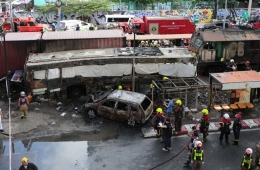
[Sejong=Asia Economy Reporter Kim Hyunjung] As highly pathogenic avian influenza (AI) continues to occur in domestic poultry farms, the government is strengthening its quarantine response. Approximately 560,000 poultry near a layer farm located in Sangju-si, Gyeongbuk, where a recent outbreak occurred, are currently being culled to prevent further spread.
The Central Avian Influenza Countermeasures Headquarters announced on the 2nd that highly pathogenic AI (H5N8 type) was additionally detected at a layer farm in Sangju-si, Gyeongbuk. The farm reported suspected symptoms such as increased layer mortality, decreased laying rate, and reduced feed intake to the quarantine authorities the previous day, and after detailed testing, it was confirmed on the 2nd as highly pathogenic avian influenza of the H5N8 type.
The headquarters is conducting culling not only on the affected farm (188,000 chickens) but also on the owner's other farm (120,000 quails) and three nearby poultry farms within a 3km radius (3 farms, 251,000 chickens). Additionally, a quarantine zone with a 10km radius around the affected farm has been established, and movement restrictions (for 30 days) and surveillance and detailed inspections are being conducted on poultry farms within the quarantine zone (13 farms, 991,000 poultry).
After clinical surveillance of the suspected poultry (chickens) at the affected farm, a rapid test confirmed positive results, and an initial response team was immediately dispatched to the site to control farm access and conduct epidemiological investigations.
A temporary standstill order was issued according to the situation on that day. From 9 p.m. on the 1st, the Gyeongbuk, Chungnam, Chungbuk, and Sejong regions are under a 48-hour standstill, and the Gangwon region for 24 hours. Comprehensive disinfection of poultry farms and livestock-related facilities in the affected areas is also underway. Movement and access to all poultry farms and workers in Sangju-si, the outbreak area, are being restricted for seven days starting from the 2nd.
The government stated that it views the current situation as very "serious," as the influx of migratory birds is expected to increase until January. Since October, AI (H5/H7) antigens have been continuously detected nationwide in wild birds (a total of 28 cases detected, 12 of which are highly pathogenic), and the influx of migratory birds has significantly increased to 706,000 in November last year and 945,000 in 2020. In Europe, 740 cases of highly pathogenic AI (430 in poultry farms, 310 in wild birds) have occurred in 21 countries this year, an 82-fold increase compared to last year (9 cases in 3 countries), and most are the same serotype (H5N8) as in Korea. In Japan, 10 cases of highly pathogenic AI of the same serotype as Korea have occurred in poultry farms across four prefectures to date.
![[Image source=Yonhap News]](http://www.asiae.co.kr/news/img_view.htm?img=2020120214435243655_1606887832.jpg)
During the on-site epidemiological investigation, the Central Headquarters pointed out insufficient measures such as lime application around farms, human disinfection when moving between barns and egg packing facilities, and wearing protective clothing by farm visitors, and plans to further strengthen quarantine measures. Management of layers, which are vulnerable to infection due to frequent entry of egg transport vehicles and contamination spread through egg trays, pallets, plywood, and egg packing facilities, will be intensified.
At the 11 layer-dense farming complexes nationwide, thorough disinfection of vehicles and people is conducted at control posts, and disinfection of access roads to the complexes is strengthened from once to twice or more daily. These 11 complexes are located in Sejong (Bugang-myeon), Pocheon-si (Jail-ri), Chungnam (Pungse-myeon), Jeonbuk (Yongji-myeon), Naju (Gongsan-myeon), Yangsan (Sangbuk-myeon), Bonghwa (Bonghwa-eup), Yeongju (Anjeong-myeon, Jangsu-myeon), Chilgok (Jicheon-myeon), and Gyeongju (Cheonbuk-myeon).
Carcass inspections, previously conducted biweekly at poultry farms within the dense farming complexes, will be increased to once weekly, and inspections of lime belts (access roads and barn perimeters) at poultry farms will also be conducted weekly.
Additionally, telephone monitoring will be strengthened, and layer farms in Gyeongbuk and Jeonbuk where AI has occurred will be tested twice monthly. Administrative guidance and compliance checks will be conducted on egg (table egg) transport vehicles. Poultry farms visited by vehicles that visited outbreak farms will be subject to a 14-day movement restriction, and thorough clinical observation and detailed testing will be conducted to confirm AI infection status. To support these efforts, agricultural organizations such as the Agricultural Products Quality Management Service, Korea Rural Community Corporation, Livestock Products Quality Evaluation Service, and NongHyup will participate.
Hot Picks Today
!["Not Everyone Can Afford This: Inside the World of the True Top 0.1% [Luxury World]"](https://cwcontent.asiae.co.kr/asiaresize/93/2026051507261063923_1778797570.png) "Not Everyone Can Afford This: Inside the World of the True Top 0.1% [Luxury World]"
"Not Everyone Can Afford This: Inside the World of the True Top 0.1% [Luxury World]"
- While All Eyes Were on Samsung and Hynix, This Company Surged 50% to New Highs in Four Days [Weekend Money]
- "Now Our Salaries Are 10 Million Won a Month" Record High... Semiconductor Boom Drives Performance Bonuses at Major Electronic Component Firms
- "150 Trillion-Won National Growth Fund Launches... Construction Stocks Stir Again" [Weekend Money]
- Experts Already Watching Closely..."Target Price Set at 970,000 Won" Only Upward Momentum Remains [Weekend Money]
Lee Jae-wook, Vice Minister of Agriculture, Food and Rural Affairs, emphasized, "The risk of avian influenza virus contamination is very serious at poultry farms nationwide," adding, "Even if poultry farms have 99% quarantine measures in place, the virus can exploit the 1% weak link, so they must maintain 100% perfect quarantine measures with vigilance. Assuming that the outside of barns is contaminated with the virus, please strictly implement the four-step disinfection process including lime application and changing boots."
© The Asia Business Daily(www.asiae.co.kr). All rights reserved.