Seocho-style Safe Fence for 'Honjok' Suffering from Corona Blue
Selected as a 'Good Restaurant for Eating Alone,' Promoting Solo Dining Culture with 'Eommabap Day' for Nostalgic Home-Cooked Meals... Mental Health Care and Youth Health Checkups for Increasingly Isolated Single-Person Households Due to COVID-19

[Asia Economy Reporter Jongil Park] “I came up from the provinces and live alone, and since I was only eating meals my mom made, when I try to cook for myself, I end up eating the same dishes every day. When I go to a restaurant alone, I feel self-conscious, so I wish there were many neighborhood dining friends to eat with or restaurants where I can go alone without feeling burdened.” (Bangbae-dong, woman in her 20s, Ms. Park)
“Because of COVID-19, I can’t even think about gatherings, so I eat alone almost every day, usually convenience store lunch boxes, kimbap, or ramen. The financial burden is heavy, so I try to reduce food expenses, but eating two meals a day is considered a lot, right?” (Yangjae-dong, man in his 50s, Mr. Kim)
The spread of COVID-19 is becoming serious. The endless uncertainty is amplifying the public’s anxiety and depression. Due to the prolonged pandemic, economic difficulties, social isolation, anxiety, and lethargy are appearing simultaneously, and one of the most vulnerable groups is the ‘single-person households.’
Single-person households eat an average of 2.2 meals a day and have ‘meals alone’ five days a week. Compared to the previous year, the average number of meals per day has decreased, but the number of times eating alone has actually increased, possibly due to COVID-19. About 30% of all meals were answered as being ‘roughly substituted’ with cup noodles or snacks, and nearly half of single-person households reported roughly substituting five or more meals a week. (Source: KB Management Research Institute)
To soothe this nutritional imbalance and psychological hunger, Seocho-gu has launched the ‘Eating Alone Project.’
Before the full-scale Eating Alone Project, a survey on the eating habits of single-person households and an idea contest were conducted for two weeks starting at the end of October. Over 400 single-person households participated in the survey, and more than 200 ideas were submitted.
The survey results showed that the difficulties experienced while eating alone included burdens related to large portions and prices, and limited menu options. To solve these problems, respondents wanted the selection and promotion of restaurants suitable for eating alone, shared kitchens and platforms, online and offline communities, and cooking classes for eating alone.
Reflecting the actual needs of single-person households, Seocho-gu first selected ‘restaurants good for eating alone.’ A ‘restaurant good for eating alone’ is a restaurant where one can eat comfortably alone, with single-person menus, home-style meals, and seating arrangements for one. About 130 restaurants, including home-style meal restaurants and Korean restaurants, applied, and after on-site inspections, about 70 restaurants were selected. ‘Good place for eating alone, "Honsikdang"’ stickers will be produced and attached to help single-person households use them without hesitation.
When eating alone, one can’t help but think of the warm home-cooked meals made by mom. For young single-person households who miss mom’s meals, ‘Mom’s Meal Day’ will be held.
This program involves challenging home cooking with a cooking instructor and eating together, held on the 2nd and 4th Saturdays of every month with participant applications. Generously made side dishes or kimchi will be distributed to middle-aged single-person households and elderly living alone in the district through the local community center.
Also, videos providing cooking tips for beginners eating alone, weekly recommended menus, and nutritional information will be produced and posted on YouTube (Seocho Single Talk).
For single-person households who feel lonely eating alone, the ‘Onbap (Online-Bap, 溫밥) Community’ will also be operated. The Onbap community aims to create and share warm home-cooked meals together through real-time online social dining and communities. By creating online social dining and open chat rooms, it will help single-person households living nearby gather to eat together or share opportunities to connect through group purchases and sharing bulk ingredients.
Seocho-gu has started ‘mindfulness’ for the ‘single tribe’ vulnerable to COVID blues. Especially young people are experiencing ‘COVID red,’ which goes beyond COVID blues, feeling anger and fear due to unemployment, housing instability, and an uncertain future.
If specialized counseling for single-person households is needed, they can visit the ‘Seoripul Counselor’ at the Seocho Single-Person Household Support Center. Both face-to-face and telephone counseling are available to maintain social distancing. Psychological counseling is free up to six times a year, and specialized counseling in legal, labor, and financial fields is also provided to solve fundamental problems identified during counseling (free twice a year). From January to November 2020, 202 counseling sessions were conducted, with depression and mental health issues being the most common problems.
‘Youth Mind Coaching Service,’ which provides customized mental health counseling for repeat exam takers and job seekers, is also available in cooperation with universities and specialized academies (exam prep academies, medical and law academies).
Additionally, next year, customized psychological counseling linked with the National Health Insurance Corporation will be provided directly to vulnerable women in their 20s and 30s.
‘Mind Vaccine Vending Machines’ providing mind vaccine packages tailored to symptoms such as loss of employment and burnout syndrome will be installed, and through the outdoor logo projector campaign ‘It’s okay, I’ll listen to you,’ warm messages of comfort will be delivered to places where young people’s eyes can reach.
Seocho-gu will conduct customized health checkups for young people in their 20s and 30s next year. For young people who neglect health management due to instant food, irregular lifestyles, drinking, and smoking, free checkups for a total of 47 items including thyroid, cancer markers, and hepatitis A will be provided. Targeting job seekers, repeat exam takers, and others who have fewer opportunities for regular checkups or tend to neglect health because they are young, the district will carefully manage health by detecting risk factors early and linking them to the Metabolic Syndrome Management Center and specialized medical institutions if necessary.
In the ontact era and home-stay era, with the home training craze, ‘smart home training’ managed by online personal trainers is the trend. Seocho-gu plans to operate ‘Seoripul Zoomt’ from January next year, which links smart scales and mobile apps to provide customized exercise and nutrition prescriptions. Close management through 1:1 customized programs is basic, and participants of the same level can enjoy exercising together and develop into a community. Experience the transformation of ‘home into a fitness center’ with personal training from ‘Seoripul Zoomt.’
Hot Picks Today
 No Bacteria Detected in Arisu After 24 Hours of Repeated Drinking from a Tumbler
- "We Can't Just Let Them Be Damaged Inside"... Samsung Electronics Removes 360,000 Wafers in Preparation for Strike
- "Up to 100 Trillion Won in Losses Feared, It's Not About Second Place but Catastrophe"... Industry Minister: 'Emergency Mediation Unavoidable If Samsung Strike Occurs'
- Wife in $6.7 Million Debt Took Out $3 Million in Husband's Life Insurance, Poisoned Him... US Court: "She Can Never Be Released"
- "He's Handsome, It's Such a Pity?"... Lawyer Responds to Bizarre 'Appearance Evaluation' of High School Girl Murder Suspect
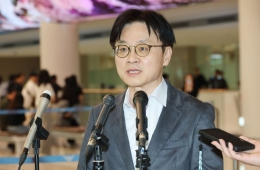
Seocho-gu Mayor Eunhee Cho emphasized her attachment and determination to the single-person household policy, saying, “In the With-Corona era, single-person households are more isolated and struggling. Sometimes we want to be their primary care physician to take care of their physical and mental health, and sometimes be like a mother to provide warm home-cooked meals and be a strong support. We will continue to carefully consider policies that reduce difficulties and add strength.”
© The Asia Business Daily(www.asiae.co.kr). All rights reserved.