'Fiscal Rules and Major Shareholder 300 Million Won' Party-Government Discord in Every Detail... Hong Ultimately Announces Resignation
Hong Nam-ki, Deputy Prime Minister for Economy, Announces Resignation and Submits Resignation Letter... Cheong Wa Dae Rejects It

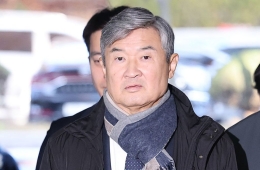
Deputy Prime Minister for Economy Hong Nam-ki attended the plenary meeting of the Planning and Finance Committee held at the National Assembly on the 3rd and adjusted his glasses while receiving questions related to his resignation. Photo by Yoon Dong-ju doso7@
View original image[Asia Economy Reporter Jang Sehee] The Democratic Party of Korea and the government are clashing over economic policies such as fiscal rules and major shareholder criteria, intensifying the controversy. Ultimately, Hong Nam-ki, Deputy Prime Minister and Minister of Economy and Finance, expressed his intention to resign after the decision to maintain the major shareholder capital gains tax threshold at the current 1 billion KRW.
On the 3rd, Deputy Prime Minister Hong attended the full meeting of the National Assembly's Planning and Finance Committee and stated, "Someone needs to take responsibility for the two months of heated debate," adding, "I have taken responsibility for the decision to keep the major shareholder tax at the current standard and have submitted my resignation today."
He continued, "Given the recent increase in global economic uncertainty, the high-level party and government decided to maintain the threshold at 1 billion KRW as it is," and said, "Although I expressed opposition, the decision was made to keep it at 1 billion KRW within a broader framework, so it will remain unchanged." This reflects his willingness to take responsibility for the ruling party and Blue House overriding the government's opposition and deciding to maintain the current 1 billion KRW standard. However, President Moon Jae-in has rejected his resignation, so he is expected to continue in office for the time being.
The Democratic Party also criticized the government over the timing of the fiscal rules. The Ministry of Economy and Finance previously announced plans to introduce Korean-style fiscal rules starting in 2025, managing the national debt ratio at 60% of GDP and the integrated fiscal balance within -3% of GDP, but the Democratic Party strongly opposed this citing expansionary fiscal policy. At that time, Deputy Prime Minister Hong emphasized that fiscal rules should be established now because fiscal soundness has deteriorated due to supplementary budget appropriations.
Hot Picks Today
 "Now Our Salaries Are 10 Million Won a Month" Record High... Semiconductor Boom Drives Performance Bonuses at Major Electronic Component Firms
- 'Still Hesitant? If You're Wondering Whether KOSPI Will Rise, This Is the Number You Must Watch [Weekend Money]'
- "Heading for 2 Million Won": The Company the Securities Industry Says Not to Doubt [Weekend Money]
- Samsung Life Stock Depends More on Samsung Electronics Than Insurance? [Weekend Money]
- Is It Really Like an Illness? "I Can't Wait to Go Again"—Over 1 Million Visited in Q1, Now 'Busanbyeong' Takes Hold [K-Holic]
Some point out that excessive political intervention is undermining policy consistency and leading to policies that do not align with tax fairness. A government official said, "If policies keep changing arbitrarily, the market will lose trust."
© The Asia Business Daily(www.asiae.co.kr). All rights reserved.