[Good Morning Stock Market] US Presidential Election Increasing Volatility... "Buy When It Shakes"
One Week Left... Unpredictable US Presidential Election
Concerns Over Increased Global Stock Market Uncertainty
Relative Strength Expected in Korean Stock Market
Strong COVID-19 Response Leads to Economic 'Outperformance' and KRW Strengthening Begins
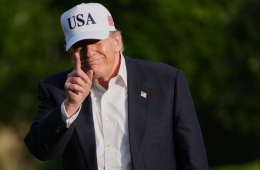
![A photo montage of various expressions of U.S. Republican candidate President Donald Trump and Democratic candidate former Vice President Joe Biden, who clashed in the final U.S. presidential debate on the 22nd (local time). [Image source=Yonhap News]](http://www.asiae.co.kr/news/img_view.htm?img=2020102608030463286_1603666984.jpg)
A photo montage of various expressions of U.S. Republican candidate President Donald Trump and Democratic candidate former Vice President Joe Biden, who clashed in the final U.S. presidential debate on the 22nd (local time). [Image source=Yonhap News]
View original image[Asia Economy Reporter Minwoo Lee] The political issues surrounding the U.S. presidential election are unlikely to determine the trend of the financial markets, which is expected to increase uncertainty in global stock markets. However, the domestic stock market is predicted to maintain relative strength regardless of the election outcome. This is because the differentiated growth momentum of the domestic economy has been proven through effective management of the novel coronavirus infection (COVID-19), and the won's appreciation has already begun.
◆ Kyungmin Lee, Researcher at Daishin Securities= The short-term impact of the U.S. presidential election results is expected to lead to increased volatility. Expectations for economic stimulus policies and contrasting policies between candidates have a high likelihood of shaking investor sentiment and supply-demand dynamics. Numerous uncertainty factors stemming from the U.S. and Trump exist, and these concerns are bound to intensify both before and after the election.
The volatility expansion caused by noise around the U.S. election is viewed as a buying opportunity at the bottom. Various political issues have not determined the trend of the financial markets. Ultimately, the core driver that determines market trends is fundamentals. Even though the Korean stock market had a low degree of openness to external factors, and even after passing through the International Monetary Fund (IMF) crisis and opening the market in the late 1990s, the returns of the Korean stock market under different U.S. administrations have shown significant deviations from the S&P 500. This confirms that the U.S. presidential election has not been a variable determining the direction of the domestic stock market.
![[Good Morning Stock Market] US Presidential Election Increasing Volatility... "Buy When It Shakes"](http://www.asiae.co.kr/news/img_view.htm?img=2020102608034463289_1603667024.png)
The Korean stock market is expected to maintain strength relative to the global market regardless of the U.S. election results. The U.S. election is enhancing the attractiveness of the Korean stock market and will not affect the fundamental environment that can continue in the future. The differentiated momentum and stability of the Korean economy, along with upward revisions in corporate earnings and the won's appreciation that increases asset value attractiveness, have already begun. Korea is one of the few major global countries whose 2021 gross domestic product (GDP) is expected to surpass the pre-COVID-19 level of the previous year. In terms of corporate earnings, Korea's profit growth rate in 2021 is an overwhelming first place at 65.8% compared to the previous year.
If Trump is re-elected, U.S. economic growth and stock market strength will be maintained through tax cuts and eased regulatory burdens on IT companies. In this case, Korea is expected to continue its IT-led upward trend amid the U.S. and global economic recovery. If U.S.-China conflicts escalate due to Trump's re-election, sanctions on Chinese IT companies could provide a positive spillover effect for Korean IT companies.
If Biden is elected, the burdens of tax increases and strengthened IT company regulations are likely to remain issues confined to the U.S. for a considerable period. Rather, these could hinder U.S. growth and accelerate the pace of dollar depreciation. Global liquidity concentrated in the U.S. may move to regions outside the U.S., which could lead to appreciation in currencies and asset values other than the dollar. In this process, the domestic stock market, which has secured differentiated fundamental momentum and stability, is expected to attract attention.
◆ Sangyoung Seo, Researcher at Kiwoom Securities= The domestic stock market is expected to be influenced by ▲ the U.S. presidential election one week away ▲ earnings announcements of major U.S. technology companies ▲ the 5th Plenary Session of the 19th Central Committee of the Chinese Communist Party (5th Plenum). In particular, uncertainty regarding the U.S. election may increase, leading to expanded volatility. This is because President Donald Trump is expected to actively respond to narrow the gap until the very end. Additionally, with daily new COVID-19 cases in the U.S. exceeding 80,000 and rapid increases in Europe, the possibility of economic lockdowns is rising, which is another reason for expected volatility expansion.
However, it is also important to note that the earnings announcements of major U.S. technology companies, which have high expectations for improvement, could offset this. Depending on their results, the debate over a technology bubble could ease. The high expectations for earnings improvements among major Korean companies are also positive. The upcoming 5th Plenum of China scheduled for the 26th is another positive factor. The Chinese government is expected to implement active stimulus measures in 2021, the 'Xiaokang (a moderately prosperous society where all citizens enjoy a comfortable and affluent life) era.' Considering these positive factors, the KOSPI is expected to fluctuate between 2300 and 2420, and the KOSDAQ between 790 and 850.
Hot Picks Today
 "Buy on Black Monday"... Japan's Nomura Forecasts 590,000 for Samsung, 4 Million for SK hynix
- "Plunged During the War, Now Surging Again"... The Real Reason Behind the 6% One-Day Silver Market Rally [Weekend Money]
- The Distributor Asked...How Much Do You Really Know About the Nightlife Scene [ChwiYakGukga]①
- "Samsung and Hynix Were Once for the Underachievers"... Hyundai Motor Employee's Lament
- "That? It's Already Stashed" Nightlife Scene Crosses the Line [ChwiYak Nation] ③
© The Asia Business Daily(www.asiae.co.kr). All rights reserved.