[Concall] LG Chem "New Battery Division Subsidiary Targets 30 Trillion KRW Sales in 2024"
[Asia Economy Reporter Park So-yeon]LG Chem announced that the newly established battery business corporation, LG Energy Solution Co., Ltd., which will be launched on December 1, has set its 2024 sales target at 30 trillion KRW and aims to maintain its global No. 1 position.
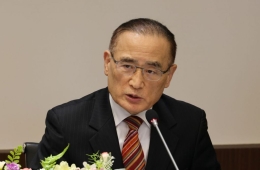
Jang Seung-se, Executive Vice President and Head of Business Strategy at LG Chem's Battery Business Division, said during a conference call following the Q3 earnings announcement, "We have secured the No. 1 position in the electric vehicle battery market, and through the spin-off, we will further strengthen our competitive advantage in the market," adding, "In 2024, we expect to achieve sales of over 30 trillion KRW and an operating profit margin in the high single digits."
The battery division, which achieved record-high sales and operating profit this year, has set its target for next year at the high 18 trillion KRW range in sales and an operating profit margin in the mid-single digits.
Executive Vice President Jang stated, "The newly established corporation scheduled for spin-off has secured orders worth approximately 150 trillion KRW in the global electric vehicle battery sector," and added, "After the establishment of the corporation, we will firmly establish our global No. 1 status across all battery business areas and the entire value chain, including automotive, small batteries, and energy storage systems (ESS)."
Regarding the background of the spin-off of the battery division, Executive Vice President Jang explained, "It is to enable flexible investment and a fast decision-making system required to achieve continuous profit growth together." Some minority shareholders of LG Chem oppose the spin-off of the battery division.
Jang said, "Based on chemical material process technology accumulated over the past 20 years, holding core battery technologies and patents, and long-term battery development and mass production know-how, we will continue to lead the global battery market," adding, "We will actively pursue business-specific growth strategies, ultra-differentiation strategies against competitors, and sustainability initiatives."
LG Chem plans to expand its production capacity from 120 GWh annually this year to about 260 GWh in 2023 by establishing the world's first global four-corner production system among electric vehicle battery manufacturers.
For small pouch batteries, the focus will be on premium devices such as flagship smartphones and wearable devices to improve profitability, and the company also plans to actively promote the energy storage system (ESS) business, which is expected to grow rapidly through solar technology and cost improvements.
Regarding the recent Kona electric vehicle fire issue, he said, "We are jointly investigating the cause with Hyundai Motor Company and will do our best to identify the cause and continue to take responsible measures."
However, since the exact cause of the fire has not yet been determined, it is difficult to disclose the scale of the provision costs or the sharing ratio.
Executive Vice President Jang mentioned, "We set aside a certain portion of monthly sales as provisions, and a considerable amount has been secured."
He also revealed the commercialization timeline for next-generation electric vehicle batteries.
Hot Picks Today
 "Now Our Salaries Are 10 Million Won a Month" Record High... Semiconductor Boom Drives Performance Bonuses at Major Electronic Component Firms
- Living the Homebody Dream? "I Was Shocked by My Spending" How to Cut Costs to 5,000 Won for Essentials [The Principles of Benefits]
- Is It Really Like an Illness? "I Can't Wait to Go Again"—Over 1 Million Visited in Q1, Now 'Busanbyeong' Takes Hold [K-Holic]
- "Heading for 2 Million Won": The Company the Securities Industry Says Not to Doubt [Weekend Money]
- Experts Already Watching Closely..."Target Price Set at 970,000 Won" Only Upward Momentum Remains [Weekend Money]
Jang said, "Lithium-sulfur batteries are expected to be commercialized between 2024 and 2025," and forecasted, "All-solid-state batteries are likely to be commercialized around 2030, with technology development sufficient for testing expected around 2026 to 2027."
© The Asia Business Daily(www.asiae.co.kr). All rights reserved.