52% of Domestic Travelers Say They Will Travel Abroad If a Travel Bubble Is Established
Incheon Airport Corporation Investigates Impact of Travel Bubble Agreements on Overseas Travel for Domestic and Foreign Nationals

[Asia Economy Reporter Yu Je-hoon] A survey revealed that 52% of domestic travelers said they would travel abroad if a Travel Bubble agreement is established between countries with excellent responses to COVID-19.
Incheon International Airport Corporation announced on the 20th that it conducted a survey from the 22nd to the 28th of last month targeting a total of 1,000 people, including 600 domestic residents and 600 foreigners (from China and Vietnam), to examine the impact of Travel Bubble agreements on the intention to travel abroad.
The Travel Bubble refers to a system that eases entry measures such as exempting mutual entrants from 2-week self-quarantine through agreements between countries with excellent COVID-19 responses. In the aviation industry, voices calling for finding an escape route through Travel Bubble agreements are not few, as international passenger traffic has decreased by about 94% due to COVID-19.
According to the corporation, before the Travel Bubble agreement, the intention to travel abroad was only 11.2% among domestic respondents and 20.8% among foreigners. In contrast, after the agreement, it was considerably higher at 52.8% for domestic respondents and 72.2% for foreigners.
The main reason for the increased intention to travel abroad after the Travel Bubble agreement was "because it seems there is no risk of COVID-19 infection," accounting for 32.6%, followed by "to explore new travel destinations" and "because it is a preferred city/region," which ranked second and third at 25.6% and 7.4%, respectively.
The overwhelming reason for not intending to travel even after the Travel Bubble agreement was concern about COVID-19 infection at 61.6%. Other reasons included the burden of vacation costs (9%) and health reasons (7.4%).
Regarding preferred countries for the Travel Bubble, domestic respondents favored Southeast Asia (20.3%), while foreigners preferred Korea (32.4%). For travel purposes, domestic respondents mostly chose enjoying natural scenery and visiting historical sites (52.8%), whereas foreigners mostly chose food and gourmet exploration (34.6%).
Regarding awareness of the Travel Bubble policy, 30.3% of domestic respondents and 66% of foreigners answered affirmatively.
Hot Picks Today
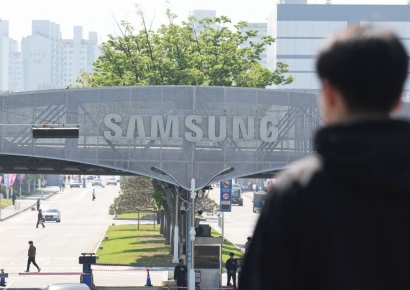 "We Can't Just Let Them Be Damaged Inside"... Samsung Electronics Removes 360,000 Wafers in Preparation for Strike
- No Bacteria Detected in Arisu After 24 Hours of Repeated Drinking from a Tumbler
- U.S. Treasury Secretary: "Discussing Establishment of Board of Investment with China... Pre-Screening Role"
- Wife in $6.7 Million Debt Took Out $3 Million in Husband's Life Insurance, Poisoned Him... US Court: "She Can Never Be Released"
- "He's Handsome, It's Such a Pity?"... Lawyer Responds to Bizarre 'Appearance Evaluation' of High School Girl Murder Suspect
Acting President Lim Nam-su stated, "The Travel Bubble policy is expected to help the gradual recovery of international air routes," and added, "The corporation will continue to make multifaceted efforts with the government and related agencies to restore the aviation industry."
© The Asia Business Daily(www.asiae.co.kr). All rights reserved.