What Are the 'Major Shareholder Requirements and Fiscal Rules' That Faced Criticism at the National Audit?

Deputy Prime Minister for Economy Hong Nam-ki is attending the National Assembly's Planning and Finance Committee hearing on the Ministry of Economy and Finance on the 8th, responding to lawmakers' questions. Photo by Yoon Dong-joo doso7@
View original image[Asia Economy Reporter Joo Sang-don] During the two-day National Assembly Budget and Accounts Committee audit of the Ministry of Economy and Finance starting on the 7th, there was a heated debate over fiscal rules and the major shareholder requirements for stocks.
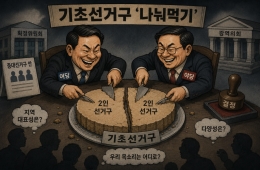
On the 8th, Go Yong-jin, a member of the Democratic Party of Korea, argued at the audit site, "Not only should the household aggregation be abolished, but the major shareholder threshold should not be lowered from 1 billion KRW to 300 million KRW and should be postponed."
The opposition party also voiced a unified opinion. Ryu Seong-gil, a member of the People Power Party, said, "We already submitted a bill to amend the Income Tax Act as of October 6th," adding, "We submitted a bill excluding the parts involving multiple families, which is evaluated as a modern-day collective punishment system, rather than just family, household, or individual. Who is the major shareholder requirement in Article 157 of the Income Tax Act for?"
The government is maintaining the 300 million KRW standard. However, since the calculation of stock holdings includes the shares held by spouses and direct lineal relatives (including maternal grandparents, grandchildren, etc.), which has drawn criticism as a "family collective punishment system," the government decided to keep the major shareholder threshold at 300 million KRW but is considering changing to an individual aggregation method. On the 7th, Hong Nam-ki, Deputy Prime Minister and Minister of Economy and Finance, stated, "We are reviewing the change from the household aggregation method to the individual aggregation method."
Under current law, if the holding amount per stock exceeds 1 billion KRW, the shareholder is defined as a major shareholder and is subject to capital gains tax of 22-33% (including local tax) on the capital gains. According to the '2017 Tax Law Amendment,' the major shareholder requirements will be gradually expanded, and the capital gains tax criteria will be strengthened. Accordingly, from April 2021, shareholders holding more than 300 million KRW per stock must pay capital gains tax on the gains.
Regarding fiscal rules, both ruling and opposition parties criticized, but for different reasons. The ruling party argued that fiscal rules restrict active fiscal roles, while the opposition criticized them as too lax.
On the 5th, the government announced fiscal rules aiming to manage the national debt ratio at 60% and the consolidated fiscal balance within -3% starting from the 2025 fiscal year. However, there are many exceptions where compliance with the rules is not required, and the national debt ratio limit of 60% of Gross Domestic Product (GDP) is criticized as excessively loose.
Hot Picks Today
 No Bacteria Detected in Arisu After 24 Hours of Repeated Drinking from a Tumbler
- Trump: "Xi Jinping Expresses Willingness to Help Keep Strait of Hormuz Open"
- "We Can't Just Let Them Be Damaged Inside"... Samsung Electronics Removes 360,000 Wafers in Preparation for Strike
- Wife in $6.7 Million Debt Took Out $3 Million in Husband's Life Insurance, Poisoned Him... US Court: "She Can Never Be Released"
- "He's Handsome, It's Such a Pity?"... Lawyer Responds to Bizarre 'Appearance Evaluation' of High School Girl Murder Suspect
Democratic Party member Hong Ik-pyo asked, "Why introduce fiscal rules when they have effectively become obsolete even in the European Union (EU)?" Deputy Prime Minister Hong replied, "Although the national debt ratio reached 44% during the COVID-19 crisis, this is not just for one year; it is expected to rise to the high 50% range in four years, so fiscal rules are necessary." People Power Party member Choo Kyung-ho pointed out, "From 2039, the consolidated fiscal balance will be in deficit due to the National Pension, so how loosely do you intend to manage the limit?" In response, Deputy Prime Minister Hong said, "The consolidated fiscal balance has exceeded -4% (deficit ratio), and -3% is very strict."
© The Asia Business Daily(www.asiae.co.kr). All rights reserved.