Assemblyman Song Gap-seok: "Gwangju's Foreign Direct Investment Rate Ranks Lowest for 5 Consecutive Years"

[Asia Economy Honam Reporting Headquarters Reporter Yoon Jamin] The foreign direct investment (FDI) rate in the Gwangju region has ranked the lowest among the 17 cities and provinces nationwide for five consecutive years.
According to the foreign direct investment trends submitted by the Ministry of Trade, Industry and Energy to National Assembly member Song Gap-seok (Democratic Party of Korea, Gwangju Seo-gu Gap), the total scale of domestic foreign direct investment over the past five years amounted to 83 trillion won based on the arrival amount.
Since 2015, South Korea has attracted more than 20 billion USD (23 trillion won) annually, establishing a trend of attracting FDI in the 20 billion USD range. However, the gap between the metropolitan area and non-metropolitan areas has deepened, continuing the era of the metropolitan area black hole.
The metropolitan area, including Seoul and Gyeonggi, attracted 61.5 trillion won, accounting for the highest nationwide share of 74.29%. This was followed by the Yeongnam region at 13.08%, the Chungcheong region at 5.98%, and Gangwon and Jeju at 5.6%.
The total investment amount in the Honam region was only 1.06%, or 870 billion won.
Seoul attracted the largest investment, with 42 trillion won, accounting for 51.5% of the total investment.
Gyeonggi Province accounted for 12.17% with 10 trillion won, and Incheon City accounted for 10.62% with 7 trillion won, placing the three metropolitan areas at the top ranks. In contrast, Gwangju City recorded only 52.6 billion won, or 0.06%.
Gwangju City recorded 15.1 billion won in 2016, but thereafter attracted only 9.3 billion won in 2017, 8.2 billion won in 2018, and 8.1 billion won last year.
This represents a 46.36% decrease compared to 2016. Daejeon and Jeju also showed declines of 80% and 65.34%, respectively.
To revitalize foreign direct investment (FDI), the government has designated a total of nine economic free zones since starting with the Incheon Free Economic Zone in 2003.
Companies located within the economic free zones receive various supports such as tax reduction benefits, national subsidies, and deregulation. Recently, four core industrial complexes in Gwangju and Ulsan were designated as economic free zones.
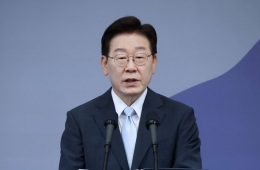
Assemblyman Song Gap-seok said, “Economic disparities between regions are also widening in proportion to foreign direct investment,” adding, “Most foreign investors prefer investing in the metropolitan area over incentives in non-metropolitan areas, causing regional imbalance.”
Hot Picks Today
 "Stocks Are Not Taxed, but Annual Crypto Gains Over 2.5 Million Won to Be Taxed Next Year... Investors Push Back"
- "Don't Throw Away Coffee Grounds" Transformed into 'High-Grade Fuel' in Just 90 Seconds [Reading Science]
- Signed Without Viewing for 1.6 Billion Won... Jamsil and Seongbuk Jeonse Prices Jump 200 Million Won in a Month [Real Estate AtoZ]
- Despite Warnings of "Do Not Enter, You May Not Make It Out Alive"... Foreign Tourist Stranded After Unauthorized Climb on Jeju Sanbangsan
- "Even With a 90 Million Won Salary and Bonuses, It Doesn’t Feel Like Much"... A Latecomer Rookie Who Beat 70 to 1 Odds [Scientists Are Disappearing] ③
He emphasized, “Especially to enhance the competitiveness of newly designated economic free zones like Gwangju and Ulsan, the government should actively consider providing additional incentives to non-metropolitan areas.”
© The Asia Business Daily(www.asiae.co.kr). All rights reserved.