Private Equity Funds and New Deal Funds... Financial Authorities Hold Their Breath Anticipating an 'Unprecedented National Audit'
All Pressing Issues Are Serious
Private Equity and New Deal Funds Expected to Face Fierce Opposition
[Asia Economy Reporter Kim Hyo-jin] As the National Assembly's Political Affairs Committee's audit begins on the 12th, the tension level among financial authorities and financial institutions is rising. They have to defend not only against major issues such as the private equity fund scandal that caused massive losses, the recent surge in credit loan management, and financial support related to the novel coronavirus infection (COVID-19), but also the controversy surrounding the New Deal Fund, which the government and the Blue House are vigorously promoting. Inside and outside the financial authorities, there are even predictions that this audit will be an unusually tough, 'historic-level' audit compared to previous years.

Yoon Seok-heon (left), Governor of the Financial Supervisory Service, and Eun Sung-soo, Chairman of the Financial Services Commission / Photo by Jin-hyung Kang aymsdream@
View original imageAccording to financial authorities on the 6th, Financial Services Commission Chairman Eun Sung-soo and Financial Supervisory Service Governor Yoon Seok-heon have given up their internal and external schedules this week to focus on reviewing current issues in preparation for the audit. The Financial Services Commission and the Financial Supervisory Service have also minimized the distribution of materials for policy promotion and guidance. A financial authority official said, "Overall, you can say we are in 'study mode,'" adding, "There are many issues to respond to, and each one carries significant weight and seriousness, so the burden is quite heavy."
The opposition is expected to focus on the New Deal Fund, which was established to secure resources for the Moon Jae-in administration's Korean New Deal, during this audit. An opposition lawmaker from the Political Affairs Committee said, "The basic stance is that the New Deal Fund has limitations like the old government-controlled funds," and added, "We intend to scrutinize it carefully at the audit."
The People Power Party launched a 'Special Committee for Government Policy Oversight' the day before and targeted the Korean New Deal, which is expected to involve 160 trillion won (114 trillion won in national funds). The opposition's view of the New Deal Fund can be summarized as "the government is creating a government-controlled fund and forcibly dragging financial companies by twisting their arms."
The financial authorities hold the position that, amid rapidly increasing liquidity and low interest rates during the COVID-19 phase, the New Deal sector can be a viable avenue for investment. They see the announcement of investment plans worth several trillion to tens of trillions of won by major financial holding companies following the government's Korean New Deal plan as part of their own management strategies considering this point.
In explanatory materials released last month, the financial authorities rebutted the criticism that "fund losses will be covered by taxpayers' money," stating, "Since safeguards are necessary to smoothly attract private funds, a certain level of fiscal input is required."
Alongside the New Deal Fund, private equity funds are expected to be a hot issue during the audit. The People Power Party is expected to launch a major offensive during this audit centered on its 'Special Committee for Prevention of Private Equity Fund Corruption and Victim Relief,' which has been operating since July. The party is particularly expected to focus its firepower on the fact that ruling party figures are consistently mentioned in connection with private equity fund scandals such as Lime and Optimus. The opposition is also focusing on the authorities' supervisory and management failures.
People Power Party Prepares for 'Fund Audit' Centered on Special Committee
Questions regarding management measures for household loans, including credit loans that have recently surged, are also expected to pour in. Regarding this, a financial authority official said, "In the case of household loans, it is very difficult to draw a clear line because it is intertwined with COVID-19 financial support," adding, "We are continuously monitoring issues such as high-income or high-credit borrowers using credit loans as a means to circumvent real estate speculation."
Regarding the 'debt investment' problem spreading like a trend mainly among young people, it was explained that it is necessary to observe the effects of the banking sector's interest rate hikes and other restraint measures implemented around the last Chuseok holiday.
Hot Picks Today
 "Now Our Salaries Are 10 Million Won a Month" Record High... Semiconductor Boom Drives Performance Bonuses at Major Electronic Component Firms
- Experts Already Watching Closely..."Target Price Set at 970,000 Won" Only Upward Momentum Remains [Weekend Money]
- [Breaking] Prime Minister Kim Minseok Issues Public Statement on Samsung Electronics Strike: "Welcoming Resumption of Negotiations... Effectively the Last Opportunity"
- "Heading for 2 Million Won": The Company the Securities Industry Says Not to Doubt [Weekend Money]
- Is It Really Like an Illness? "I Can't Wait to Go Again"—Over 1 Million Visited in Q1, Now 'Busanbyeong' Takes Hold [K-Holic]
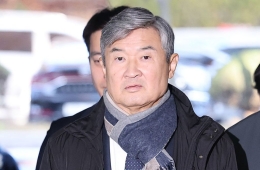
KDB Industrial Bank Chairman Lee Dong-gul is also expected to face attacks from the opposition. This is due to the controversy over his "20 more years" toast at the book launch event of former Democratic Party leader Lee Hae-chan. The opposition's stance is that it is a serious problem for the head of a national policy bank, who is required to be politically neutral, to openly wish for the extension of the current administration.
© The Asia Business Daily(www.asiae.co.kr). All rights reserved.