Game Industry Focuses Solely on Chinese Licenses Amid COVID Resurgence
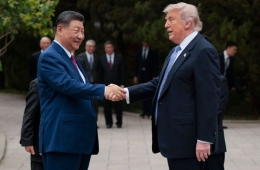
Expectations for Lifting Hanhan-type Restrictions with President Xi Jinping's Visit to Korea
However, President Xi's Visit Within the Year Uncertain Due to Prolonged COVID-19 Situation

[Asia Economy Reporter Jin-gyu Lee] The gaming industry is solely awaiting the resumption of China's game distribution license (panho) issuance amid the resurgence of the novel coronavirus (COVID-19). There are expectations that the issuance of panho will resume around the time of Chinese President Xi Jinping's visit to South Korea. However, some voices express concern that the prolonged COVID-19 situation is continuously delaying President Xi's visit, and the resumption of panho issuance may extend beyond this year.
According to the industry on the 4th, if President Xi's visit to South Korea takes place in the second half of this year, there is growing anticipation that the lifting of the Hanhanryeong (Korean Wave ban) will lead to the resumption of panho issuance for domestic games.
Seo Hoon, Director of the National Security Office at the Blue House, met with Yang Jiechi, a member of the Political Bureau of the Chinese Communist Party responsible for foreign affairs, last August to discuss the early visit of President Xi. Initially, both countries planned President Xi's visit in the first half of the year, but the schedule was postponed due to the COVID-19 situation. However, the condition for President Xi's early visit included the caveat "when the COVID-19 situation stabilizes and conditions are met," leaving it uncertain whether the visit will occur within this year.
Given the ongoing COVID-19 situation domestically, optimism about the resumption of panho issuance is limited. While the industry had hopes that the panho issuance issue could be resolved with President Xi's visit, the prolonged pandemic has made it difficult to expect panho issuance within the year.
Previously, the Chinese government has not issued panho to Korean games since March 2017, using the THAAD (Terminal High Altitude Area Defense) conflict as a pretext. The last Korean game to receive panho and be officially released in China was Fincon's "Angel Stone" in November 2016, meaning the export route to China has been blocked for nearly four years.
The domestic gaming industry has suffered considerable revenue losses due to the inability to introduce new games to China. According to the Korea Creative Content Agency's "2019 Game White Paper," the Chinese game market was valued at approximately 31 trillion won in 2018, making it the second largest globally after the United States (around 42 trillion won). Additionally, the Chinese-speaking region (including Taiwan and Hong Kong) accounted for 46.5% of Korea's game export market share, remaining the largest segment.
Panho is an approval number issued by the Chinese National Press and Publication Administration to authorize game publishing and operation locally. To service games in China, obtaining panho is mandatory. Foreign game companies receive foreign-invested panho, while Chinese companies receive domestic panho.
Hot Picks Today
 "Suspicious Timing?"...Trump Traded Stocks After Praising Wartime Capabilities
- "Even If I Lose My Investment, the Government Will Cover It"... The Fund Attracting Retail Investors' Attention [Weekend Money]
- There Is a Distinct Age When Physical Abilities Decline Rapidly... From What Age Do Strength and Endurance Drop?
- "I Went to 10 Convenience Stores and Still Couldn't Buy It": The Bread Sensation That Sold 100 Million Units Already [The Way We Shop Now]
- "Contact Me First If Houses Are Built": Wealthy Clients Eyeing... Will Ultra-High-End Residences Worth 20 Billion Won Be Developed? [Real Estate AtoZ]
China halted the issuance of both foreign-invested and domestic panho in March 2018 but resumed domestic panho issuance in December of the same year. Since last year, foreign-invested panho has been issued to overseas games from countries such as Japan, the United States, and the United Kingdom, but Korean games have been excluded from panho issuance. Recently, foreign-invested panho was issued to Japanese games like Nintendo's, but domestic games ultimately failed to receive panho. An industry insider stated, "The more issues are raised domestically regarding China's panho issuance, the more damage domestic companies may suffer, so we are holding our breath and only watching the Chinese government's stance."
© The Asia Business Daily(www.asiae.co.kr). All rights reserved.