"The Church Was at Fault..." 10 Million Citizens' Pause Week, Intensified Public Criticism of the Church
Social Distancing Level 2.5 and Ten Million Citizens' Pause Week... Growing Criticism of Churches
Citizens "Churches Ruined Everyday Life" Outraged
Experts "Criticism of Churches Driven by Anxiety and Attempts to Shift Responsibility"

On the 28th, a notice of facility closure was posted on the entrance door of Bitgaon Church in Nowon-gu, Seoul, which was closed due to the occurrence of a new coronavirus infection (COVID-19) patient. Photo by Yonhap News
View original image[Asia Economy Reporter Kim Ga-yeon] "Why do I have to suffer the damage?", "I feel like my daily life has been taken away because of the church."
As the government and Seoul City strengthen quarantine measures amid the resurgence of the novel coronavirus infection (COVID-19), criticism against churches is intensifying. Since the Gwanghwamun rally in Seoul on the 15th, confirmed cases related to Sarang Jeil Church in Seongbuk-gu, Seoul, have been steadily occurring, and there have been ongoing cases of cluster infections originating from churches, including some churches defying administrative orders and holding in-person worship services.
Citizens are expressing frustration, saying their daily lives have been restricted due to some church members. Experts analyze this as behavior aimed at relieving anxiety through division and shifting responsibility. They also see anxiety playing a role amid the COVID-19 spread phase.
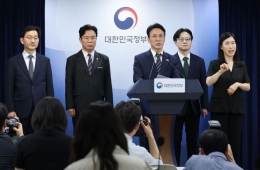
The government announced on the 28th that it will implement enhanced level 2.5 social distancing starting from the 30th, as the level 2 social distancing measures failed to show effects in curbing the spread of COVID-19. Previously, the government had applied level 2 first in the metropolitan area on the 16th and expanded it nationwide on the 23rd.
Seoul City also designated the period until the 6th of next month as the "Ten Million Citizens Pause Week," repeatedly urging citizens to comply with social distancing.
Seo Jeong-hyeop, Acting Mayor of Seoul, said in an online briefing on the 30th, "From today, for one week, please be determined to give up your daily life and thoroughly adhere to living quarantine," adding, "If we cannot curb the spread even by enduring the pain now, the worst situation where our economy stops indefinitely may come. I earnestly ask for a little more patience and active participation in quarantine measures."
The problem lies in the behavior of some church members. Although the government and local governments recommend "giving up daily life" and urge compliance with social distancing, some churches are still violating quarantine rules and forcing in-person worship services.
According to Gwangju City on the 30th, 12 local churches were found to have violated administrative orders banning collective worship and held services. Gwangju City plans to investigate the intentionality and attendance of these 12 churches, take legal action, and claim compensation for treatment and testing costs if cluster infections occur.
On the same day, 42 churches in the Busan area were also found to have violated quarantine rules and held in-person worship services. Among them, 8 churches were under administrative orders banning gatherings. The city plans to issue administrative orders banning gatherings to the remaining 34 churches.
Lim Young-moon, President of the Busan Christian Council, met with reporters after finishing the morning service at Peace Church in Busanjin-gu, where he serves as pastor, and claimed, "South Korea has religious freedom," adding, "The extralegal government is doing what communist societies do. The government should not drive a wedge between the people and the church but should promote harmony."

On the afternoon of the 15th, Pastor Jeon Gwang-hoon of Sarang Jeil Church is speaking at a rally condemning the government and ruling party held in front of Donghwa Duty Free Shop in Jongno-gu, Seoul. Photo by Yonhap News
View original imageAs a result, voices of criticism are emerging among citizens, saying, "The church made the mistake, but the citizens suffer all the damage," and "The church feels like a hateful facility." It is pointed out that due to the selfish actions of some church members, most citizens are experiencing inconveniences in daily life, and small business owners and vulnerable groups are threatened in their livelihoods.
Park, a 23-year-old university student living in Seodaemun-gu, Seoul, raised her voice, saying, "Because COVID-19 is an infectious disease, I didn't want to blame anyone, but how many times has cluster infection occurred because of the church already?"
Park said, "Because of COVID-19, my working hours were reduced, I was laid off from my part-time job, and I cannot attend classes normally. The exam schedules I planned for job preparation have all been messed up," adding, "Why can't worship be held at home? I don't understand why it's so important that it ruins other people's lives."
Kim, a 30-year-old office worker currently working from home, also said, "Church members say that restrictions on in-person worship are church oppression, but I really don't understand," and criticized, "Why can't they realize that their actions can affect other people's lives?"
He added, "The people who caused the damage are living their daily lives like that, but I, who did nothing, don't understand why I have to suffer."
As criticism from citizens grows over some church members' violations of quarantine rules, experts analyze that anxiety about the spread of COVID-19 is behind this.
Professor Kwak Geum-ju of the Department of Psychology at Seoul National University explained in a phone interview with Asia Economy on the 31st, "Because it is uncertain when COVID-19 will end, anxiety is highly activated," adding, "Since the cause of anxiety is something uncontrollable, it can be seen as behavior to shift responsibility."
Professor Kwak added, "By dividing groups and blaming others, people gain relief thinking 'My group is not the cause,' and there is also a tendency to overgeneralize organizations that provide some pretext, such as churches."
Meanwhile, according to the Central Disease Control Headquarters on the 31st, as of 12 noon that day, 248 new COVID-19 cases were confirmed, bringing the total to 19,947.
Hot Picks Today
 "Now Our Salaries Are 10 Million Won a Month" Record High... Semiconductor Boom Drives Performance Bonuses at Major Electronic Component Firms
- Wallets Open Wide on Big News...300 Trillion Won Heads to the U.S., "Tax Breaks" Fail to Keep Funds at Home
- "Hope You Enjoy the 'Welfare' for Bereavement of Children"... Ridicule of Strike Non-Participants Intensifies Union Conflict at Samsung Electronics
- "Heading for 2 Million Won": The Company the Securities Industry Says Not to Doubt [Weekend Money]
- Experts Already Watching Closely..."Target Price Set at 970,000 Won" Only Upward Momentum Remains [Weekend Money]
The number of confirmed cases related to Sarang Jeil Church increased to 1,035, and those related to the Gwanghwamun rally were 369. In addition, there have been confirmed cases related to religious facilities such as Geun Gwon Neung Church in Yeongdeungpo-gu (17 cases), Seoul Theological Seminary in Dongjak-gu (22 cases), and Seohae-ro Church in Pyeongtaek-si, Gyeonggi Province (10 cases).
© The Asia Business Daily(www.asiae.co.kr). All rights reserved.