"Smartphones, Facing Another C-Shock? Lowering Prices and Resuming Trade-In Programs"

On the 23rd, when social distancing level 2 was expanded nationwide, citizens gathered at the Galaxy Note20 experience center set up in a large shopping mall in Yeongdeungpo, Seoul. Photo by Dongju Yoon doso7@
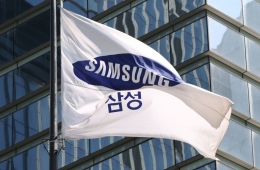
View original image[Asia Economy Reporter Joselgina] Samsung Electronics and LG Electronics have proactively responded to so-called C-shock concerns by lowering the price of their new smartphones and independently resuming trade-in promotions that add up to 100,000 KRW more. This is due to worries that the rapid resurgence of COVID-19 in South Korea could once again negatively impact the smartphone market. Additionally, the second half of the year is expected to see a series of new smartphone launches from competitors, including Apple's first 5G iPhone.
According to industry sources on the 24th, LG Electronics' LG Q92, which will be released on the 26th through the three major telecom carriers and unlocked channels, is priced at 499,400 KRW, making it the cheapest domestic 5G smartphone. This is a further price reduction from the initially expected 500,000 KRW range. On the other hand, its performance has been enhanced by equipping a higher-end Qualcomm Snapdragon 765G processor, which is superior to the AP used in the premium LG Velvet model released earlier this year.
This move is interpreted as being mindful of Samsung Electronics' strategy, which compensated for the sluggish sales of the Galaxy S20?hit hard by COVID-19 in the first half?by gaining traction with its affordable 5G series. The recent surge in COVID-19 cases domestically, raising concerns about consumer sentiment contraction, was also taken into account. Given the prolonged global COVID-19 situation, the companies have launched a '400,000 KRW range 5G phone' as a value-for-money gambit.
Samsung Electronics has pulled out a special trade-in promotion card in the domestic market for the first time in a year and a half. Although the recently launched Galaxy Note20 has been evaluated as performing well with 432,000 units activated in its first week despite the COVID-19 impact, additional measures were needed to sustain initial momentum amid the three carriers’ official subsidies being only half of those for the previous model.
The special trade-in promotion offers customers who purchase the Galaxy Note20 series up to 100,000 KRW more than the used market price when they return their old devices. Samsung Electronics, having faced the COVID-19 blow with the Galaxy S20?labeled as the 'unfortunate phone'?and now encountering the variable of COVID-19 resurgence at the early launch stage of the Galaxy Note20, has also expanded early purchase benefits compared to previous years.
An industry insider said, "Sales effects tend to continue only after carrier subsidies are fully released post-official launch, but currently, it is difficult to expect an increase in subsidies that have been halved compared to the previous model," adding, "Manufacturers’ marketing efforts to avoid missing the golden sales period immediately after launch will be more active than in previous years, not only domestically but also in the global market."
![[Image source=Yonhap News]](http://www.asiae.co.kr/news/img_view.htm?img=2020082408394139985_1598225981.jpg)
Initially, Samsung Electronics and LG Electronics had anticipated an expansion of so-called 'revenge consumption' demand in the smartphone market from the second half of the year and pursued a two-track strategy by consecutively unveiling premium and mid-to-low-end smartphones. It was expected that consumers who had closed their wallets and postponed smartphone purchases due to the COVID-19 blow earlier this year would release pent-up consumption, leading to a surge in sales.
However, the recent resurgence of COVID-19 has increased uncertainty about a V-shaped recovery. The contraction of consumer sentiment and the lengthening of smartphone replacement cycles are expected to act as negative factors for smartphone manufacturers. According to market research firm Strategy Analytics (SA), the global average smartphone replacement cycle has surged to 45 months, compared to 28 months in the early market phase. Moreover, replacement demand has concentrated on mid-to-low-end models.
Hot Picks Today
 "Suspicious Timing?"...Trump Traded Stocks After Praising Wartime Capabilities
- "Even If I Lose My Investment, the Government Will Cover It"... The Fund Attracting Retail Investors' Attention [Weekend Money]
- There Is a Distinct Age When Physical Abilities Decline Rapidly... From What Age Do Strength and Endurance Drop?
- "I Went to 10 Convenience Stores and Still Couldn't Buy It": The Bread Sensation That Sold 100 Million Units Already [The Way We Shop Now]
- "Contact Me First If Houses Are Built": Wealthy Clients Eyeing... Will Ultra-High-End Residences Worth 20 Billion Won Be Developed? [Real Estate AtoZ]
Meanwhile, smartphone launch plans for the second half of the year continue to line up. Once Apple releases its first 5G smartphone, the iPhone 12, market competition to maintain market share is expected to intensify. Chinese manufacturers like Xiaomi and Huawei, who emphasize ultra-low-cost strategies, are preparing smartphones priced in the 100,000 KRW range. An industry insider added, "With Apple’s first 5G iPhone launch imminent, there is likely an intention to counter competitors’ new products."
© The Asia Business Daily(www.asiae.co.kr). All rights reserved.