"Do Not Contact Me During Vacation" Conflicts Among Office Workers in Vacation Season, What Do You Think?
Contacting Employees During Vacation... "Unavoidable for Work" vs "Violation of Rest Rights"
1 in 2 Workers Have Received Work Messages During Vacation
France, Germany Guarantee the 'Right to Disconnect' by Law
South Korea's 'KakaoTalk Ban Law' Pending in Parliament for 4 Years

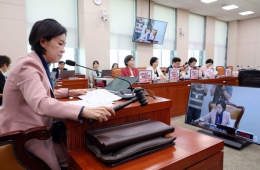
The number of office workers expressing stress due to work-related contacts during their vacation is increasing. Photo by Yonhap News
View original image[Asia Economy Reporter Kim Ga-yeon] "Can I leave KakaoTalk during vacation?", "Please don't contact me."
As the peak summer vacation season approaches, more office workers are complaining about stress caused by work-related contacts from their bosses or colleagues during their time off.
With the full-fledged entry of the millennial generation in their 20s and 30s (born from the early 1980s to early 2000s) into society, corporate culture is also changing, with a growing pursuit of 'Work and Life Balance' (Work and Life Balance) and demands for workers' right to rest. However, the distinction between working hours and rest time is still unclear, leading to frequent conflicts in the workplace over contact issues during vacations.
While many office workers express frustration, wanting to delete company group chats and messengers during their vacation, some argue that it is inevitable. Since they are still employed by the company even when temporarily away on vacation, they claim that contacting them for unavoidable work situations is unavoidable.
According to a survey, one in two office workers has experienced work-related contact during their vacation.
Last year, job platform Saramin surveyed 963 office workers about whether they had received work-related contact during their vacation. 49.8% of respondents answered "yes." Among them, 87.9% said they "handled the work immediately." In summary, four out of ten office workers handled work even during their vacation.
Among those who received work-related contact, the average summer vacation taken was 4 days, and they were contacted an average of 4.4 times during that period. The means of contact were identified as 'phone calls' (72.9%, multiple responses), 'KakaoTalk and other messengers' (60%), 'text messages' (20%), and 'emails' (10.8%).
As a result, office workers say that contact from work itself is stressful and unanimously express a desire to be free from work at least during their vacation. While encouraging the use of annual leave, there are also criticisms that giving work instructions during break times infringes on the right to rest.
Office worker A in their 30s said, "It's not like I'm taking months off; at most, I take 3 to 4 days off, but during that time, I really want to be completely free. Every office worker feels that way." He added, "Getting work-related KakaoTalk notifications is very stressful. I want to leave the group chat at least during my vacation."
Office worker B (25), who recently returned from vacation, also complained, "I was annoyed because I received work-related messages and calls every day." He said, "I don't understand why everyone thinks people hate work contact on weekends but contacts them casually during vacations."

Last year, Saramin, a job search platform, conducted a survey of 963 office workers on whether they received work-related contacts during their vacation. According to the survey, 49.8% of respondents answered "Yes."
Photo by Yonhap News
On the other hand, some argue that situations may arise where contact is necessary to proceed with work and that such situations should be understood. This is because if work is not conducted individually, contact is unavoidable when the person in charge is absent.
In other countries, there is a trend to enact related laws guaranteeing the 'right to disconnect,' which ensures that workers do not receive work-related contact outside of designated working hours. This need arose as the boundary between work and rest became blurred due to the development of smartphones, emphasizing that workers should be able to enjoy complete rest away from work.
France was the first in the world to implement the 'Right to Disconnect Law' (El Khomri Law) in 2017, clearly distinguishing between work and rest. Accordingly, companies must establish internal rules regarding contact outside working hours in consultation with workers, and compensation must be paid for contact outside working hours. Additionally, Germany protects workers' rights through the 'Anti-Stress Law,' and Italy through the 'Smart Worker Protection Law.'
Meanwhile, in South Korea, a partial amendment to the Labor Standards Act banning work-related contact outside working hours (the law banning KakaoTalk after work) was proposed in 2016 but has been pending in the National Assembly for four years.
Former lawmaker Shin Kyung-min (Democratic Party) proposed this bill in 2016, which prohibits work instructions via phone (including mobile phones), text messages, or SNS outside working hours under the Labor Standards Act.
At that time, the Environment and Labor Committee, in its review report, stated, "The legislative intent of the amendment is valid," but also analyzed, "There are cases where urgent contact is necessary even outside working hours, and conditions vary greatly by industry, making it difficult to uniformly prohibit by law."
Hot Picks Today
 "Now Our Salaries Are 10 Million Won a Month" Record High... Semiconductor Boom Drives Performance Bonuses at Major Electronic Component Firms
- Living the Homebody Dream? "I Was Shocked by My Spending" How to Cut Costs to 5,000 Won for Essentials [The Principles of Benefits]
- Is It Really Like an Illness? "I Can't Wait to Go Again"—Over 1 Million Visited in Q1, Now 'Busanbyeong' Takes Hold [K-Holic]
- "Heading for 2 Million Won": The Company the Securities Industry Says Not to Doubt [Weekend Money]
- Experts Already Watching Closely..."Target Price Set at 970,000 Won" Only Upward Momentum Remains [Weekend Money]
It further pointed out, "It is necessary to consider the practical enforceability of the law, such as the difficulty in proving whether the contact is work-related and the low possibility of enforcement of the legal provisions."
© The Asia Business Daily(www.asiae.co.kr). All rights reserved.