Erasing Traces of Japanese Colonial Legacy Lasting Over 70 Years
Ownership Settlement of Collective Shared Land in Ssangnim-dong 182 Area, Jung-gu, Seoul

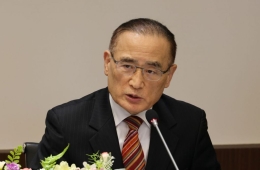
June 30th, Seoyangho, Mayor of Jung-gu, attending a resident briefing session at Gwanghui-dong Community Center
View original image[Asia Economy Reporter Jong-il Park] Jung-gu, Seoul (Mayor Seoyangho) is set to begin the individual ownership arrangement of 86 parcels including Ssangnim-dong 182, which have been collectively owned land for over 70 years as remnants of Japanese colonial rule.
In June, the district signed a business agreement with the law firm L-Plus and the notary office of Jeongju Son to organize the ownership of the collectively owned land in the Ssangnim-dong 182 area.
Following resident briefings, individual guidance, and persuasion, in July, 100% of the landowners participated in a joint lawsuit to arrange sole ownership.
When checking the registry copies of 87 parcels in Ssangnim-dong 182, Jung-gu, the number of pages exceeds several hundred, making it difficult for one adult to hold them with both hands. This is because about 80 landowners have been collectively owning the parcels for over 70 years. Every time one landowner changed, real estate transaction reports and registry updates for all 87 parcels were required, causing significant inconvenience to residents.
The related lands were Japanese forfeited properties that were granted to relatives and national merit recipients about 70 years ago through registration share transfers and were subdivided into 87 parcels in 1954.
However, at that time, the parcels were not registered as sole ownership but remain collectively owned by about 80 owners. Attempts to register division of shared property were hindered by missing persons, preventing the essential unanimous consent of all owners. Currently, individual ownership can only be arranged through litigation, and only five parcels have been resolved due to the complex legal procedures and litigation costs.
Accordingly, the district signed a business agreement with the law firm and notary office to propose a joint lawsuit involving all landowners with confirmed specific divided ownership, assisting residents.
Through resident briefings and individual guidance, and by contacting local or overseas residents via tenants, acquaintances, mail, email, and SNS, the district made great efforts to achieve 100% participation in the joint lawsuit.
Prior to this, the district formed a task force team to expedite the lawsuit process and conducted a rights analysis investigating the registry ownership and occupancy area of the 87 parcels. The number of ownership confirmations for Ssangnim-dong 182 alone reached 568 cases, with a total of about 50,000 ownership confirmations.
This allows residents to significantly reduce fees related to rights analysis and delivery fees for joint plaintiff lawsuits. According to the agreement, no additional success fees are paid except for the initial fee. As a result, the cost savings on litigation amount to approximately 2 billion KRW.
Additionally, the district operates a consultation center (☎02-3396-5921) to provide guidance so that landowners in the area can inquire about the progress at any time.
Hot Picks Today
 "Now Our Salaries Are 10 Million Won a Month" Record High... Semiconductor Boom Drives Performance Bonuses at Major Electronic Component Firms
- Living the Homebody Dream? "I Was Shocked by My Spending" How to Cut Costs to 5,000 Won for Essentials [The Principles of Benefits]
- Is It Really Like an Illness? "I Can't Wait to Go Again"—Over 1 Million Visited in Q1, Now 'Busanbyeong' Takes Hold [K-Holic]
- "All Industrial Accident Responsibility Shifted to Subcontractors"... 720 Million Won Fine for Three Construction Firms Over Unfair Clauses
- Experts Already Watching Closely..."Target Price Set at 970,000 Won" Only Upward Momentum Remains [Weekend Money]
Mayor Seoyangho stated, "The Ssangnim-dong 182 area was land forfeited during Japanese rule, and its traces remain unresolved. Since this has been a long-standing issue causing residents distress for over 70 years, we will provide full support to erase these scars. We will continue to engage in proactive administration that listens closely to residents' inconveniences."
© The Asia Business Daily(www.asiae.co.kr). All rights reserved.