[Full Text] Kim Tae-nyeon, Negotiation Group Leader's Speech... "In an Era of Great Transformation, Let's Turn Crisis into Opportunity"
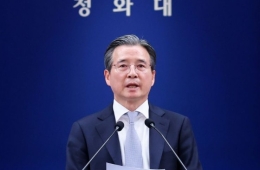
[Asia Economy Reporter Jeon Jin-young] On the 20th, Kim Tae-nyeon, the floor leader of the Democratic Party of Korea, delivered a representative speech of the negotiating groups at the National Assembly, emphasizing the preparation of follow-up measures to eradicate real estate speculation. He also requested the opposition party's cooperation regarding the 'Working National Assembly Act' and related matters. The following is the full text of the speech.
"In an era of great transformation, let's turn crisis into opportunity."
1. The era of great transformation has begun.
Respected citizens!
Speaker of the National Assembly Park Byeong-seok, senior and fellow lawmakers!
Prime Minister Chung Sye-kyun and members of the Cabinet!
I am Kim Tae-nyeon, floor leader of the Democratic Party of Korea.
Since the outbreak of the COVID-19 pandemic,
the world has been engulfed in upheaval and shock.
The global division of labor system has collapsed due to border and regional lockdowns.
Some countries have repeatedly experienced cycles of lockdowns, lifting restrictions,
and resurgence of infections.
However, South Korea is an exception.
Without border or regional lockdowns,
we have effectively blocked overseas imported infections and domestic cluster infections.
While implementing social distancing,
we successfully conducted nationwide elections,
and students' school attendance and economic activities have continued.
Among independent countries established after World War II,
South Korea is the only one
that has achieved the miracles of industrialization and democratization,
and we have also achieved the world's only success in responding to the COVID-19 crisis.
This is thanks to the high civic consciousness of our citizens,
who have demonstrated the power of solidarity and cooperation.
We thank the great people who have shown the world the capabilities of K-quarantine and K-democracy.
Respected citizens,
the world is now facing
unprecedented disasters and economic crises
simultaneously.
The tasks before us
are serious and heavy.
We must fight and overcome the COVID-19 pandemic.
We must also lead the new economic order in the post-COVID era.
None of these tasks are easy.
But we can do it.
We will turn the current crisis into an opportunity for leapfrogging
to become a leading country of the 21st century.
2. We must turn the COVID-19 crisis into an opportunity!
■ We will overcome the crisis with the Korean New Deal.
Respected citizens,
senior and fellow lawmakers,
we started the five-year economic development plan
in a country devastated by war,
achieving remarkable progress.
During the IMF financial crisis, we proactively fostered the information industry,
laying the foundation for a digital powerhouse.
We have the resilience to turn crises into opportunities.
In the post-COVID era, we can create opportunities for development and leapfrogging
with new strategies.
The Korean New Deal promoted by the Democratic Party and the government
is the core strategy.
By changing lifestyles through the Digital New Deal and Green New Deal
and innovating the economic and industrial systems,
we can achieve another turnaround that turns crisis into opportunity.
The Digital New Deal starts with building data infrastructure.
The Democratic Party expanded the base of South Korea's data industry
by passing the 'Three Data Economy Acts' earlier this year.
Now, we will build a to accumulate vast public data
and lay a to establish global infrastructure.
We will also consider establishing a new and
to intelligently process the accumulated data.
We will establish comprehensive concepts and systems
covering everything from data transaction standards to personal information protection.
In 2001, when the Electronic Government Act was first implemented worldwide,
the government's vision was an 'online open government.'
From now on, the goal is a more advanced
From 2022, South Korea will allow public services to be used anytime, anywhere
with mobile IDs.
The
on various deadlines and fine payments.
All citizens will receive personalized financial and medical services
from birth to death through the
The South Korean government will lead as the government that best utilizes AI.
Moreover, in the near future, South Korea will transform into a space
where eco-friendly autonomous vehicles and AI drones roam freely.
Smart farms built in buildings will cultivate agricultural products using AI,
and students will have experiential classes in virtual spaces.
We will establish smart energy infrastructure capable of producing and managing electricity
within cities,
and predict and prevent natural disasters such as fine dust using big data.
In a
all urban problems can be experimented with to find solutions.
This is not science fiction.
It is the basic concept of the 'Smart City National Pilot Cities' already started in Sejong and Busan.
The Democratic Party will ensure the success of the 'Smart City National Pilot Cities'
to make the digital revolution lead to spatial revolution.
With bold investments in AI and big data,
we will make South Korea the most eco-friendly and smartest country.
To this end, the Democratic Party will establish basic legislation and systems.
We will create New Deal funds with private companies,
invest sufficient budgets, and ensure the success of the Digital New Deal.
■ The Green New Deal is not an option but an essential task.
Even before the COVID-19 crisis,
humanity faced an unbearable climate crisis.
If we fail to solve climate change,
there will be no clean air or water for us in 30 years.
The core of the Green New Deal is energy transition.
We have the world's number one solar power technology.
We also possess world-class material, component, and equipment technologies
in electric vehicles and secondary batteries.
We are leading the hydrogen economy by advancing hydrogen vehicle production technology.
However, our renewable energy share is among the lowest in OECD countries.
More aggressive energy transition policies are needed.
The Democratic Party announced a mid- to long-term plan to realize a carbon-neutral society by 2050
as a pledge in the 21st general election.
We will incorporate the huge wave of climate response and energy transition
into the
We will establish advanced standards for climate response, energy circulation, and resource recycling policies.
The Korean-style Green New Deal can proactively solve climate crisis and job issues.
We will foster future cars, smart buildings, smart industrial complexes, and green energy industries
to drive innovation.
Environment and economy are no longer opposing values.
Over 240 global companies worldwide, including Google, Facebook, and BMW,
have declared the 100% renewable energy use campaign, 'RE100.'
Now, if products are not produced with renewable energy,
it is becoming impossible to trade with them.
We must hurry as well.
The Democratic Party will transform the domestic industrial environment
into a renewable energy-based industrial structure.
We will introduce a direct renewable energy purchase system
to support corporate participation.
We will revise the
to set an example starting from public institutions.
We will also expedite the
We will boldly expand subsidies for future cars and R&D support for electric vehicles.
We will promote the
which integrates renewable energy technology and advanced digital technology in schools.
Currently, South Korean educational facilities
have monotonous designs and matchbox-like classroom structures.
Such a bleak environment is not desirable for children's emotions.
By combining open systems and creative designs,
we will create environments where students and local residents harmonize
and that meet future education needs.
Additionally, if various types of subject classrooms are prepared
and future-oriented digital education platforms are built,
it will greatly help students' emotions and achievement.
We will start future-oriented spatial innovation work from old schools first,
and ensure eco-friendly digital education begins in all schools nationwide.
3. The National Assembly must take responsibility for the lives of the people.
Respected citizens,
senior and fellow lawmakers,
although the COVID war is said to be only at the beginning,
one lesson is clear.
The neoliberal values that have governed the international order so far
cannot survive this war.
The state must protect its citizens under any circumstances.
Citizens must have a strong sense of community and belonging
to be able to unite.
Companies and workers must prioritize the value of coexistence,
make concessions, and cooperate.
The Democratic Party will turn the current crisis
into an opportunity to strengthen employment and social safety nets.
We will break the fixed notion that inequality is inevitable for growth.
We will increase good jobs and social services
to resolve the gap of polarization.
■ Employment and social safety nets are the foundation of the Korean New Deal.
As of the end of May, the number of basic livelihood security recipients approached 2 million.
Since the COVID-19 crisis, it has increased by 110,000.
Income polarization has worsened.
The Democratic Party will gradually expand the nationwide employment safety net.
We will expedite amendments to the Employment Insurance Act
to apply employment insurance to special employment workers, freelancers, and platform workers by 2022.
We will further strengthen the social safety net, including abolishing the support obligation standard.
There is concern that jobs in traditional industries will decrease
during the transition to the digital economy.
However, new jobs will be created in the digital transition process.
The Democratic Party and the government announced creating more than 1.9 million jobs
through the Korean New Deal and social safety net strengthening.
About 910,000 jobs in the Digital New Deal, including 5G and AI convergence,
about 700,000 in smart green cities and green industry ecosystems,
and about 340,000 in employment and social safety net strengthening.
The Democratic Party will revise related laws and increase education and investment
to enable more people to work in new industrial fields.
We will focus on nationwide education to bridge the digital divide
and secure jobs.
■ Social grand compromise and economic justice are stepping stones for inclusive growth.
We have overcome many crises, but
social inequality remains unresolved.
Polarization worsened after the 1998 financial crisis,
and the gap widened further after the 2008 financial crisis.
The process of overcoming the COVID crisis
must be clearly different from the past.
No one should be left behind in the crisis,
and the community must not collapse.
Growth based on someone else's suffering is unsustainable.
We must open the path for all economic actors to grow evenly.
To this end, the Democratic Party will promote legislation
for coexistence between large and small and medium enterprises, protection and support for small business owners,
and coexistence and revitalization of local commercial districts in this extraordinary session.
We will also consult with the opposition party to advance amendments to the Fair Trade Act
and Commercial Act, which were not discussed in the 20th National Assembly.
We will minimize inequality between industries benefiting from innovation
and those excluded from innovation.
Without trust that innovation benefits are shared,
social conflicts will grow, and sustaining innovation will be difficult.
The Democratic Party will promote a tripartite grand compromise involving economic and labor organizations,
and achieve social grand compromises across all classes and sectors.
Last year, we led a compromise between the carpool new industry and the taxi industry.
I actively participated in that process and had many dialogues.
We could reach an agreement overcoming numerous difficulties
because both sides created a trustworthy coexistence plan.
We must create more grand compromises in the future.
Solidarity and compromise must be achieved in all areas and sectors,
including new and traditional industries, large and small and medium enterprises, platform companies and self-employed.
Since becoming floor leader, I have held weekly meetings called 'Heart-to-Heart'
to meet various social sectors.
I have had dialogues with leaders of the four major economic organizations and plan to meet labor representatives as well.
The Democratic Party and the government will take responsibility and support
to ensure the success of tripartite agreements and minimize employment crises.
The National Assembly will take the lead in creating places for dialogue and compromise
involving various stakeholders.
■ We will create a society where workers are safe.
As a result of the Moon Jae-in administration's efforts to reduce industrial accidents as a national agenda,
the number of industrial accident deaths decreased by more than 10% last year compared to the previous year.
This is the largest decrease since statistics began in 1999.
However, industrial safety in South Korea is still shameful.
Among OECD countries, the industrial accident death rate is the highest.
Still, two workers die every day from accidents at industrial sites.
In most cases, even when workers die due to employers' negligence,
punishments are lenient.
In the 2008 cold storage fire incident where 40 people died,
the penalties for responsible parties were fines of 20 million won and suspended sentences.
The Kim Yong-gyun Act, which increased penalties for employers, has been in effect since January this year.
However, to enhance the law's effectiveness,
sentencing guidelines by courts must change.
The government has already submitted opinions to the Supreme Court Sentencing Commission
to raise sentencing standards for industrial accident deaths.
The Supreme Court should actively accept this.
The Democratic Party will also improve the contradictory structure
where subcontractors bear industrial accident insurance premiums,
while primary contractors are considered accident-free and receive premium reductions.
■ We will eradicate real estate speculation and guarantee housing rights.
In Seoul and the metropolitan area,
it is impossible to buy a house even after saving money for decades.
Even homeowners feel deprived seeing skyrocketing housing prices in big cities.
Excess liquidity with nowhere to go further fuels housing price increases.
This is not justice.
The housing market must not be filled with planning, speculation, and luck.
Unearned income from housing must no longer be tolerated.
On the 10th, the party and government announced supplementary real estate measures.
They decided to raise related tax rates for multi-homeowners and corporations
to realistic levels.
The housing rental business system, which became a tax-saving tool for multi-homeowners,
will also be drastically reduced.
In short, multi-homeownership and speculation will not be tolerated.
The Democratic Party will complete legislation on this in the July National Assembly.
Housing is a basic right that must be protected for individuals' lives and happiness.
Without guaranteeing basic housing rights,
the community cannot be properly maintained.
To guarantee basic housing rights,
we will strengthen regulations on sales, acquisition, and possession
of multi-homes other than one owner-occupied house,
and establish a system to recover excess profits.
We will increase publicness in housing construction, supply, and housing rights guarantee.
■ To achieve balanced national development, the administrative capital must be completed.
For the first time this year, the population of the metropolitan area surpassed that of non-metropolitan areas.
Births have decreased for 53 consecutive months until April,
and our society is heading toward a population cliff.
Conversely, the population growth in the metropolitan area is steep.
Population inflow to the metropolitan area worsens jobs and housing.
Local extinction will cause serious problems for the growth and development of the entire Republic of Korea.
Efforts have been made to relocate many public institutions to local areas
for balanced national development, but it is insufficient.
The effect has been halved due to delays in completing the administrative capital.
The achievements of administrative capital construction and public institution relocation are clear.
According to research by the National Balanced Development Committee,
public institution relocation delayed metropolitan concentration by about eight years.
A new approach for balanced development is needed again.
To this end, I propose properly completing the administrative capital.
To reduce street-level directors and KakaoTalk managers,
the entire National Assembly must move to Sejong City.
Furthermore, through more active discussions,
the Blue House and government ministries should also relocate.
By doing so,
we can alleviate overcrowding and real estate problems in Seoul and the metropolitan area.
Moving government administrative functions to local areas
does not risk deteriorating public services.
Many institutions have already relocated and provide services online.
New York in the U.S. and Shanghai in China, ranked among the world's best cities, are not administrative capitals.
Seoul will continue to grow as the representative economic and global city of South Korea.
Completing the administrative capital is a prerequisite and essential strategy
for balanced national development and regional innovative growth.
It requires the National Assembly's decision.
4. We will restart the Korean Peninsula peace process.
It has been two years since the historic inter-Korean summit at Panmunjom.
The summit impressed the power of dialogue and peace on all citizens.
Since North and South Korea began meeting, missile and nuclear tests have stopped,
and all DMZ guard posts except one have been dismantled.
However, the peace process has stalled due to the breakdown of negotiations between North Korea and the U.S.
Recently, the joint inter-Korean liaison office was blown up,
an extreme situation.
North Korea's provocations are unacceptable for any reason.
If North Korea wants reform and opening,
their demands must be made acceptable to the international community.
If they seek attention through harsh language and reckless provocations,
the international community will no longer consider North Korea a partner.
To prevent further provocations,
we must continue efforts for peace on the Korean Peninsula.
While broad agreements are necessary,
we must hurry with feasible steps.
Mount Kumgang tourism can start even before progress in North Korea-U.S. negotiations.
The U.S. and South Korea have already agreed to exempt Mount Kumgang tourism from sanctions.
The Kaesong Industrial Complex should also be recognized as an exempted project and be resumed.
Cooperation on quarantine to prevent COVID-19 spread must start immediately.
As seen in the African swine fever case,
there are no ceasefire lines or barriers against infectious diseases.
Recognizing that North and South are a community of shared destiny,
we hope dialogue and exchanges at all levels, including COVID-19 quarantine cooperation, will be activated.
The National Assembly will actively work to advance the peace process.
Before the U.S. presidential election in November this year,
the ruling and opposition parties will form a parliamentary delegation
to visit Washington and Beijing.
Although cautious due to COVID-19,
active parliamentary diplomacy is necessary for peace and prosperity on the Korean Peninsula,
even if it requires quarantine.
We hope the opposition party will join bipartisan diplomacy for peace.
Confirmation hearings for the Minister of Unification and the Director of the National Intelligence Service will be held soon.
The Democratic Party judges the candidates
to be suitable to lead the peace process.
The important thing is a proactive will to advance inter-Korean relations.
We request the new diplomatic and security team to lead inter-Korean exchanges and cooperation more boldly.
5. Success or failure after COVID-19 depends on political reform.
Respected citizens, senior and fellow lawmakers,
The COVID-19 war has continued for seven months.
During this war, 14 million people worldwide
have been infected with the COVID-19 virus.
Deaths have reached 600,000 in just seven months.
In that short period, more people have died than in the nine-year Syrian civil war. It is tragic.
Currently, 200,000 new cases occur daily.
Deaths exceed 5,000 daily.
Many countries face shortages of medical facilities.
Some cities have left bodies on the streets due to lack of funeral facilities.
Human dignity is collapsing beyond medical collapse.
Economic damage is snowballing.
In May, the Asian Development Bank forecasted
economic losses from the COVID-19 pandemic
to exceed 1,000 trillion won.
This is about 10% of the world's GDP.
The OECD's forecast for global economic growth this year is pessimistic.
The U.S. is expected to shrink by 7.3%,
and G20 countries by an average of 5.7%.
France, the U.K., and Italy are expected to shrink by an average of 11%,
the largest economic downturn.
In contrast, South Korea's economic growth rate is expected to be -1.2%.
Considering our industry's high external dependence,
this is the best among the 37 OECD member countries.
This is all thanks to the people's capabilities and the power of democracy.
Success in quarantine and economic crisis management
are due to the people's will and wisdom.
We must seize this opportunity.
The National Assembly and politics must work and repay at the people's level.
■ We will change the National Assembly first.
Respected senior and fellow lawmakers,
to catch up with changes in the era, life, industry, and economy,
the National Assembly's decision-making speed must increase.
The National Assembly must not hinder innovation.
The Democratic Party proposed the Working National Assembly Act as the first party bill of the 21st National Assembly.
The Working National Assembly Act will completely change the National Assembly.
First, except for designated recess periods,
the National Assembly will always be open.
Schedules for plenary sessions and standing committees will be specified in the National Assembly Act,
eliminating time wasted on schedule discussions.
Multiple bill subcommittees and first-in-first-out principles will be introduced
to dramatically increase legislative speed.
Lawmakers who do not attend standing committees and committees that do not hold proper meetings
will face definite disadvantages.
Names will be disclosed, salaries cut, and strong responsibilities and disgrace will follow.
The authority of the Legislation and Judiciary Committee to review the system and rules will be abolished,
and a system and rules review body under the Speaker will be established.
Necessary bills will not be delayed by political disputes or missed timing,
causing citizens to suffer or businesses to be hindered.
If the National Assembly works properly,
the government organization act to strengthen quarantine systems and capabilities
can be passed within July.
We will introduce multiple vice ministers in the Ministry of Health and Welfare,
upgrade the Korea Centers for Disease Control and Prevention to the Korea Disease Control and Prevention Agency,
and strengthen expertise and independence.
We will expand and reorganize the National Institute of Infectious Diseases
and establish a National Public Medical School
to respond to new infectious disease crises and continue the success of K-quarantine.
Since the 21st century, the world has rapidly changed preparing for the Fourth Industrial Revolution.
COVID-19 accelerates these changes.
Regulations are necessary for market stability.
However, if the era changes rapidly,
regulations must also change in speed and direction suitable for the future environment.
Remote education, future cars, AI, sharing economy, and smart cities
require regulatory innovation to proceed swiftly.
During the COVID-19 response, South Korea emerged as a clean production base.
Tracing infection routes, early response, and transparent disclosure
made the so-called K-brand the global standard for quarantine.
The status as a clean production base will help attract foreign companies.
It will also promote reshoring of Korean companies abroad.
Regulatory innovation for this must not be delayed.
The National Assembly should take the lead
in redesigning regulations across all socio-economic fields.
The 'COVID-19 Overcoming National Assembly Economic Special Committee' proposed by Speaker Park Byeong-seok
can be an effective means.
It will be an efficient body to discuss and conclude regulatory innovation.
We urge the opposition party to take responsible roles
in forming the economic special committee and legislating regulatory innovation.
Reforms of power institutions must also be realized as promised to the people.
The Corruption Investigation Office for High-ranking Officials (CIO) currently requires opposition party recommendations
to appoint its head.
The Democratic Party boldly accepted the opposition's concerns about power concentration in the CIO.
Now, we ask for the opposition's cooperation
to allow the CIO to launch following the legal procedures.
We will expedite reforms of the National Intelligence Service and the police.
We will complete amendments to finalize NIS reform.
We will promptly pass legislation for police reform, including the introduction of autonomous police, establishment of the National Investigation Headquarters, and information police.
The Democratic Party feels great responsibility for the unfortunate incidents involving affiliated metropolitan government heads.
We apologize to the victims.
We will actively work to protect victims, investigate facts, and prepare countermeasures.
We will strengthen legislation to protect victims of sexual harassment and sexual violence
and prevent recurrence.
We will strengthen punishment for sexual misconduct by superiors, especially high-ranking public officials,
and review and supplement prevention measures in local governments and public institutions.
6. Let's make South Korea a world-leading country.
Respected senior and fellow lawmakers,
The responsibility of the 21st National Assembly is heavy.
We must proactively prepare for the second wave of COVID-19 and economic shocks.
Our citizens living in the COVID era
feel uncertain and fearful about the future.
The National Assembly has the responsibility
to turn citizens' anxiety and fear into courage and hope.
President Moon Jae-in stated in his opening speech
that he would expand communication with the National Assembly
without insisting on the form of dialogue.
Although there was a three-year period for cooperation,
the National Assembly and government failed to make the most of it.
But let's not blame each other.
From now on, it is important to broaden communication with a new mindset.
In the face of the COVID crisis, all citizens
earnestly hope for cooperation between the National Assembly and the government.
Even if parties and positions differ,
if we prioritize citizens' lives and South Korea's future,
the path to cooperation will not be far.
I propose resuming the 'Ruling and Opposition Parties' Standing Consultative Body' as soon as possible
to seek politics of communication and cooperation.
I expect a positive response from the opposition party.
Respected citizens, senior and fellow lawmakers,
world-renowned science writer Ann Druyan urged,
"To stop the global disasters humanity has recently realized,
please let South Korea lead the world."
In this era of great transformation where new risks and values intersect,
just as we have overcome past crises,
let's show the world that we can turn the current crisis into an opportunity.
Hot Picks Today
!["Buy Before June" - Securities Firms Recommend Stocks Expected to Rise Until 2028 [Weekend Money]](https://cwcontent.asiae.co.kr/asiaresize/93/2026050909404555844_1778287245.jpg) "Buy Before June" - Securities Firms Recommend Stocks Expected to Rise Until 2028 [Weekend Money]
"Buy Before June" - Securities Firms Recommend Stocks Expected to Rise Until 2028 [Weekend Money]
- From Next Year, "Name Your Price": Tokyo Real Estate Soars to 33-Year High [Mwonilissyu]
- "If It Has Hangul, It Sells Well": Booming Sales Despite Triple the Price... 'Hangul Marketing' Expands Overseas
- "Will It Climb Even Higher?" Target Price Raised to 1.03 Million Won for This Stock [Weekend Money]
- "President Yoon, I Love You"... The Beautiful Woman in Her 20s Who Shouted 'Yoon Again' Was Actually
The 21st National Assembly must be the starting point.
Let's overcome the COVID-19 national crisis through bipartisan cooperation.
With new politics and a working National Assembly,
let's make South Korea a world-leading country.
Thank you.
© The Asia Business Daily(www.asiae.co.kr). All rights reserved.