Pangyo, the Frontline Base for K-Chips... "Anyone, Anytime Can Design Semiconductor Chips"
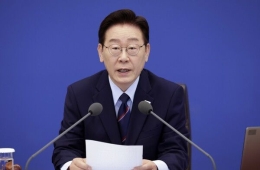
Minister Sung Yun-mo of the Ministry of Trade, Industry and Energy Attends Opening Ceremony of Pangyo System Semiconductor Design Support Center
100 Billion KRW Fund Investment from July... "Supporting Fabless Startups and Scale-ups"
Ministry of Trade, Industry and Energy and Ministry of Science and ICT to Support Next-Generation Intelligent Semiconductor Development with 1 Trillion KRW
New Industry-Academia Cooperation Semiconductor Contract Departments Linked to Employment Established... 'Yonsei University-Samsung, Korea University-SK'

[Asia Economy Reporter Moon Chaeseok] "Anyone can design chips using semiconductor design tools without cost burden 24 hours a day, 365 days a year, as long as they have an idea."
The government announced this on the 29th at the 'System Semiconductor Design Support Center Opening Ceremony and Corporate Meeting' held at the 2nd Pangyo Gyeonggi Business Growth Center.
The event was attended by government and related organization officials including Sung Yun-mo, Minister of Trade, Industry and Energy, Jang Seok-young, 2nd Vice Minister of Science and ICT, and representatives from supporting companies such as Samsung Electronics Foundry (semiconductor contract manufacturing).
At the meeting, the government shared the achievements and improvement directions of the 'System Semiconductor Vision and Strategy' announced last April with the industry and listened to companies' suggestions.
The newly opened System Semiconductor Design Support Center is a comprehensive growth platform that provides one-stop support for the entire lifecycle from startup to growth of fabless companies.
Here, anyone can design chips using 'EDA Tools' used for semiconductor design without cost burden 24 hours a day, 365 days a year, as long as they have an idea.
The government also supports the cost of implementing prototype chips designed by fabless companies at foundries. It covers 70% of the Multi-Project Wafer (MPW) cost, which is essential for prototype production.
Additionally, to develop semiconductor design assets (IP) of domestic fabless companies and expand the use of domestic IP, the government supports commercialization and general-purpose development costs.
Nine resident companies specializing in AI, Touch IC, autonomous vehicle sensors, etc., have been selected and are supported to design chips in office spaces. An additional 11 companies will be selected by next year.
A government official said, "We plan to continuously expand the role of the center and utilize it as a forward base for nurturing fabless companies and developing system semiconductors."
At the subsequent corporate meeting, Minister Sung, 2nd Vice Minister Jang, and company representatives attended.
Kang Kyung-sung, Director of Industrial Policy at the Ministry of Trade, Industry and Energy, presented the progress of the 'System Semiconductor Vision and Strategy' over the past year.
According to Director Kang, the government has established design and manufacturing bases for fabless and foundry companies and created an environment to promote investment through funding and tax incentives.
The 100 billion KRW system semiconductor dedicated fund established last December will be fully operational starting next month.
Director Kang explained that the Ministry of Trade, Industry and Energy and the Ministry of Science and ICT are jointly promoting the 'Next-Generation Intelligent Semiconductor Technology Development Project,' investing 1 trillion KRW over 10 years until 2029. The project team will be launched in August.
To cultivate system semiconductor experts, the Korea Polytechnic University Anseong Campus was converted into a Semiconductor Convergence Campus in January. Currently, seven departments including semiconductor design are operating.
Industry-academia cooperation is also active. Major domestic universities and leading semiconductor companies have collaborated to establish semiconductor contract departments linked to recruitment.
Yonsei University and Samsung Electronics have established the Department of System Semiconductor Engineering admitting 50 students annually, and Korea University and SK (SK Hynix) have established the Department of Semiconductor System Engineering admitting 30 students annually. They plan to recruit freshmen next year.
The government and companies have been investing 1:1 since this year to cultivate master's and doctoral level talent. They are promoting new projects to train high-level personnel in promising next-generation fields such as future vehicles, smart home appliances, and advanced robots.
Minister Sung emphasized, "We will faithfully implement the 'System Semiconductor Vision and Strategy' to strengthen the competitiveness of system semiconductors in promising 4th industrial revolution fields such as AI, future vehicles, and bio, as well as the domestic materials, parts, and equipment ecosystem. We will strengthen connections between demand companies and fabless, fabless and foundry, and support industrial competitiveness through professional workforce training and research and development (R&D) by leveraging our strengths to leap forward as a system semiconductor powerhouse."
Hot Picks Today
 "Stocks Are Not Taxed, but Annual Crypto Gains Over 2.5 Million Won to Be Taxed Next Year... Investors Push Back"
- "Don't Throw Away Coffee Grounds" Transformed into 'High-Grade Fuel' in Just 90 Seconds [Reading Science]
- Signed Without Viewing for 1.6 Billion Won... Jamsil and Seongbuk Jeonse Prices Jump 200 Million Won in a Month [Real Estate AtoZ]
- "Groups of 5 or More Now Restricted"... Unrelenting Running Craze Leaves Citizens and Police Exhausted
- "Even With a 90 Million Won Salary and Bonuses, It Doesn’t Feel Like Much"... A Latecomer Rookie Who Beat 70 to 1 Odds [Scientists Are Disappearing] ③
2nd Vice Minister Jang said, "In the AI era, the AI semiconductor market is a new semiconductor paradigm and a global battleground. We must quickly secure competitiveness through private sector innovation capabilities and strategic government support. Starting with neural processing units (NPU), we will create demand through next-generation memory-processor integration (PIM) technology development and cooperate with the Ministry of Trade, Industry and Energy to establish the AI semiconductor ecosystem early."
© The Asia Business Daily(www.asiae.co.kr). All rights reserved.