The 21st National Assembly with the First Female Vice Speaker Sees a Sharp Increase in Female Staff Ratios

On the 29th, ahead of the opening of the 21st National Assembly, a large banner celebrating the opening of the 21st National Assembly was hung at the main building of the National Assembly. Photo by Yoon Dong-ju doso7@
View original image[Asia Economy Reporter Wondara] In the 21st National Assembly, which produced the first female Deputy Speaker in the history of the constitution, the proportion of female aides also surged. The number of female aides, which had remained in the low 30% range until the 20th National Assembly, jumped to the 40% range for the first time in the 21st National Assembly.
According to the National Assembly Secretariat on the 24th, the number of female aides belonging to the offices of the 21st National Assembly members was counted as 43% (683 people) as of the 8th. This is an increase of 11 percentage points compared to 32% (486 people) at the same time in the 20th National Assembly. Considering that it was 31% (474 people) in the 19th and 32% (410 people) in the 18th, the 40% female aide ratio, which was perceived as a "glass ceiling," has finally been broken.
A National Assembly official said, "Recently, not only female lawmakers but also male lawmakers are hiring a majority of female aides."
Earlier, on the 5th, Kim Sang-hee was elected as the female Deputy Speaker representing the Democratic Party at the National Assembly plenary session. At that time, Representative Kim said in her acceptance speech, "Today has become a historic day that set a meaningful milestone in the 73-year history of the constitution," adding, "I will do my best to be recorded in history as the first female Deputy Speaker who contributes to advancing a gender-equal society."
A staff member from Representative Kim Sang-hee's office analyzed the increase in the proportion of female aides, saying, "Isn't it that the spirit of the times is gradually being reflected?" and "The Democratic Party, which holds 177 seats and has a flexible mindset toward women, seems to have accelerated such changes."
However, among the six standing committee chairs confirmed as of the 24th, only one female lawmaker, Han Jeong-ae, chair of the Health and Welfare Committee, holds a position. This is why there are criticisms that the glass ceiling in high-ranking positions in the National Assembly still exists. According to data released by 'GukhoeFemi,' a group voluntarily formed by female workers in the National Assembly, the proportion of women among level 4 aides was only 8.6%. On the other hand, the proportion of women among level 9 secretaries reached 64.3%. A National Assembly aide said, "The number of female aides in lower ranks such as administrative secretaries is still overwhelming."
Hot Picks Today
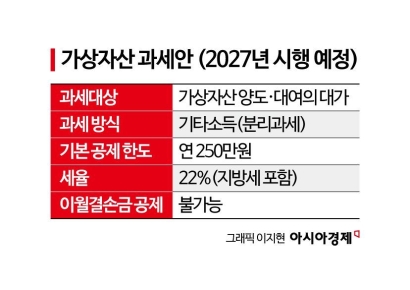 "Stocks Are Not Taxed, but Annual Crypto Gains Over 2.5 Million Won to Be Taxed Next Year... Investors Push Back"
- "Not Jealous of Winning the Lottery"... Entire Village Stunned as 200 Million Won Jackpot of Wild Ginseng Cluster Discovered at Jirisan
- "Even With a 90 Million Won Salary and Bonuses, It Doesn’t Feel Like Much"... A Latecomer Rookie Who Beat 70 to 1 Odds [Scientists Are Disappearing] ③
- "Jeong Yu-kyung Is a Neighbor"...Itaewon Standalone House with Record 23.2 Billion Won Appraisal Up for Auction [Real Estate AtoZ]
- "How Did an Employee Who Loved Samsung End Up Like This?"... Past Video of Samsung Electronics Union Chairman Resurfaces
Meanwhile, the proportion of female lawmakers in the 21st National Assembly stands at 57 (19%), maintaining a male-centered trend. It was 51 (17%) in the 19th National Assembly and 47 (15.7%) in the 18th. The largest increase in the proportion of female lawmakers in history was in the 17th National Assembly (13%), which was about twice that of the 16th National Assembly (5.9%). The main reason for the sharp increase in the proportion of female politicians at that time was the amendment of the Political Parties Act to allocate 50% of proportional representation seats to women in the National Assembly elections.
© The Asia Business Daily(www.asiae.co.kr). All rights reserved.