Korea-Japan Mark 55 Years of Diplomatic Relations Amid Worsening Ties... Intensified Conflicts in History, Economy, and Security
June 22, 1965: Signing of the Korea-Japan Basic Treaty and Korea-Japan Claims Agreement... Mutual Signatures but Increased Conflicts
Unilateral Export Restrictions, GSOMIA Termination, WTO Complaints, and the Increasingly Tangled Knot
![[Image source=Yonhap News]](http://www.asiae.co.kr/news/img_view.htm?img=2019122417544163104_1577177681.jpg)
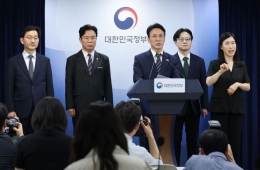
[Asia Economy Reporter Lim Cheol-young] Although June 22 marked the 55th anniversary of the signing of the normalization of diplomatic relations agreement between South Korea and Japan, the bilateral relationship is deteriorating to its worst state ever. The conflict between South Korea and Japan, triggered by Japan's backlash against the South Korean Supreme Court's ruling on forced labor, has deepened through export restrictions, a World Trade Organization (WTO) complaint, and the termination of the General Security of Military Information Agreement (GSOMIA).
Fifty-five years ago on this day, then South Korean Foreign Minister Lee Dong-won and Japanese Foreign Minister Shiina Etsusaburo signed the Treaty on Basic Relations between Japan and the Republic of Korea, known as the Korea-Japan Basic Treaty, along with the Agreement on the Settlement of Problems concerning Property and Claims and Economic Cooperation between Japan and the Republic of Korea, commonly called the Korea-Japan Claims Agreement, in Tokyo, Japan. They also signed four supplementary agreements.
Although it was the day the first normalization of diplomatic relations agreement was signed, this signing later became a source of ongoing conflict in Korea-Japan relations. Even with new governments, solutions for Korea-Japan relations were often elusive and the relationship drifted.
Relations worsened further under the Moon Jae-in administration. Japanese Prime Minister Shinzo Abe politically leveraged Korea-Japan relations, which led the South Korean government to adopt a tougher stance.
The full-scale conflict began with the South Korean Supreme Court's forced labor compensation ruling in October 2018. The 1965 Korea-Japan Basic Treaty confirmed that all treaties and agreements before and including August 22, 1910, were null and void and finalized the resolution of claims issues between the two countries.
Japan maintained that all issues had been resolved, but the South Korean Supreme Court ruled that the forced labor victims' lawsuits against Japanese companies were valid, declaring Japan's colonial rule over the Korean Peninsula illegal and ordering compensation. The court's ruling emphasized that the 1965 Basic Treaty did not cover individual victims' claims.
In July 2019, Japan, claiming the Supreme Court ruling violated the agreement, unilaterally imposed export restrictions on key semiconductor materials targeting South Korea. Despite South Korea's protests, Japan ignored them, which led to a voluntary boycott of Japanese products by South Korean consumers.

The South Korean government did not remain passive. Persistently urging the withdrawal of export restrictions, South Korea initiated WTO dispute resolution procedures related to the export controls and threatened to terminate GSOMIA. The termination was dramatically postponed when both governments agreed to dialogue efforts just one day before the GSOMIA expiration.
The underlying conflict erupted again. Although the Korea-Japan conflict seemed to pause during the COVID-19 pandemic, Japan did not present active measures to lift export restrictions. Consequently, on June 2, the South Korean government announced the resumption of WTO complaint procedures. On June 1, South Korean courts also moved to liquidate assets of Japanese wartime companies in South Korea, continuing from the 2018 forced labor compensation ruling.
Moreover, tensions have intensified over the Meiji Industrial Revolution Sites in Japan, registered as UNESCO World Cultural Heritage. In 2015, UNESCO decided to list the sites after Japan promised to take measures to fully acknowledge the history, including forced labor, but the Japanese government has not fulfilled this commitment.
On June 15, the Industrial Heritage Information Center, which introduces the World Cultural Heritage sites to the public, installed exhibits denying forced labor and discriminatory treatment, contrary to Japan's earlier promises, sparking controversy.
The South Korean government plans to send a letter this month, signed by Park Yang-woo, Minister of Culture, Sports and Tourism, demanding the cancellation of the World Heritage registration for 23 modern industrial facilities in Japan.
Although it is the 55th anniversary of the Korea-Japan diplomatic normalization signing, without a progressive change in Japan's stance, conflicts in historical, economic, and security areas are expected to deepen further.
Hot Picks Today
!["Not Everyone Can Afford This: Inside the World of the True Top 0.1% [Luxury World]"](https://cwcontent.asiae.co.kr/asiaresize/93/2026051507261063923_1778797570.png) "Not Everyone Can Afford This: Inside the World of the True Top 0.1% [Luxury World]"
"Not Everyone Can Afford This: Inside the World of the True Top 0.1% [Luxury World]"
- While All Eyes Were on Samsung and Hynix, This Company Surged 50% to New Highs in Four Days [Weekend Money]
- "Now Our Salaries Are 10 Million Won a Month" Record High... Semiconductor Boom Drives Performance Bonuses at Major Electronic Component Firms
- "Sold Out Everywhere" The Surprising Story of the 'Purple Gold' Philippine Yam That Has Captivated the World [Delicious Stories]
- Experts Already Watching Closely..."Target Price Set at 970,000 Won" Only Upward Momentum Remains [Weekend Money]
![[Image source=Yonhap News]](http://www.asiae.co.kr/news/img_view.htm?img=2020061612542197544_1592279662.jpg)
© The Asia Business Daily(www.asiae.co.kr). All rights reserved.