[Weekly Review] Will Next Year's 550 Trillion Super Budget Pass... Continuing Employment Crisis Caused by Corona

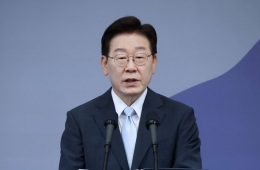
Hong Nam-ki, Deputy Prime Minister for Economy and Minister of Economy and Finance, is delivering opening remarks at the '6th Emergency Economic Central Countermeasures Headquarters Meeting' held on the 11th at the Government Seoul Office in Jongno-gu, Seoul. Photo by Kang Jin-hyung aymsdream@
View original image[Asia Economy Reporter Kim Bo-kyung] To overcome the aftermath of the novel coronavirus infection (COVID-19), the government is expected to prepare a 'super budget' exceeding 550 trillion won next year. The number of employed persons has been declining for three consecutive months, continuing the employment crisis caused by the 'COVID shock.' The COVID-19 situation has emerged as the biggest issue between labor and management in the minimum wage deliberations.
◆Government ministries request a total of 543 trillion won for next year's budget... Super budget expected= On the 12th, government ministries submitted their budget requests for next year, totaling 543 trillion won, to the Ministry of Economy and Finance. Considering that the final budget size passed by the National Assembly has increased compared to the government's requested budget in recent years, the actual budget for next year is expected to be a super budget in the 550 trillion won range.
The total budget request and fund operation expenditure plan for 2021 requested by each ministry amounted to 542.9 trillion won, an increase of 30.7 trillion won (6.0%) compared to this year's budget. The increase rate in budget requests has recorded 6% for four consecutive years: 6.0% in 2018, 6.8% in 2019, 6.2% this year, and 6.0% next year.
By sector, the industrial, small and medium enterprises, and energy sectors requested 26.6 trillion won, up 12.2% from this year, due to the promotion of the Korean New Deal. The health, welfare, and employment sectors requested 198 trillion won, up 9.7% from this year, due to strengthening employment and social safety nets such as the National Employment Support System. The Ministry of Economy and Finance plans to finalize next year's budget based on the ministries' requests and submit it to the National Assembly by September 3.
◆Number of employed persons decreases for three consecutive months... Unemployment indicators at 'worst'= According to the 'May Employment Trends' announced by Statistics Korea, the number of employed persons decreased by 392,000 compared to the same month last year due to the employment market shock caused by the spread of COVID-19 last month. Although the decrease was smaller than the previous month, the decline has continued for three consecutive months, indicating that the employment market remains difficult. This is the first time since the global financial crisis period from October 2009 to January 2010 (four consecutive months) that the number of employed persons has decreased for three consecutive months.
By industry, the number of employed persons decreased in wholesale and retail trade (-189,000), accommodation and food services (-183,000), associations and organizations, repair and other personal services (-86,000), education services (-70,000), and manufacturing (-57,000).
The number of unemployed persons increased by 133,000 to 1,278,000, and the unemployment rate rose by 0.5 percentage points to 4.5%. Both the number of unemployed and the unemployment rate are the highest since statistics began to be compiled in the same month in 1999.

Citizens are waiting to receive consultations for unemployment benefits application and employment support at the Seoul Employment Welfare Plus Center in Jung-gu, Seoul. Photo by Mun Ho-nam munonam@
View original image◆OECD forecasts South Korea's economic growth rate at -1.2% this year= The Organisation for Economic Co-operation and Development (OECD) has downwardly revised South Korea's economic growth forecast for this year to -1.2% due to the impact of COVID-19.
On the 10th (local time), the OECD presented its economic outlook, forecasting South Korea's real gross domestic product (GDP) growth rate for this year at -1.2% assuming no second wave of COVID-19. This is a 3.2 percentage point decrease from the 2.0% forecast released in March. The growth rate for next year is expected to be 3.1%, 0.8 percentage points higher than the March forecast of 2.3%. However, if a second wave of COVID-19 occurs, this year's growth rate is expected to worsen to -2.5%, and next year's growth rate is projected at 1.4%.
Nevertheless, the OECD expects South Korea to perform the best among the Group of Twenty (G20) and the 37 OECD member countries. The OECD stated, "If COVID-19 resurges throughout the year, the global economic recession will affect South Korea's exports, leading to reduced investment and employment," but also noted that "the Korean New Deal, centered on digital and green projects, could act as an upward factor for investment and employment." The OECD also lowered growth forecasts for countries worldwide. Assuming scenarios with and without a second wave, the U.S. is forecasted at -7.3% and -8.5%, China at -2.6% and -3.7%, the Eurozone at -9.1% and -11.5%, and Japan at -6.0% and -7.3%, respectively.
◆Minimum wage deliberations begin... Seeking solutions amid COVID-19 crisis= The deliberations on the minimum wage to be applied next year have officially started. On the 11th, the Minimum Wage Commission held its first plenary meeting at the Government Complex Sejong and began discussions on the minimum wage. The roles of the minimum wage amid the COVID-19 crisis sharply divided the positions of labor and management.
Ryu Ki-jung, Executive Director of the Korea Employers Federation and a user representative, emphasized that the business sector is struggling due to the economic downturn and maintained the position that the burden on companies should not increase because of the minimum wage.
Lee Dong-ho, Secretary-General of the Korean Confederation of Trade Unions and a worker representative, argued that raising the minimum wage is necessary to protect low-wage workers who have been hit hard by COVID-19 and to reduce income disparity and inequality.
Park Jun-sik, Chairman of the Minimum Wage Commission, said, "No matter how good the system and intentions are, if there is no prescription that can be used most efficiently and timely, it will not be effective." This was a subtle reference to the importance of an effective 'prescription' for utilizing the minimum wage system amid the COVID-19 crisis.
![[Image source=Yonhap News]](http://www.asiae.co.kr/news/img_view.htm?img=2020061210083190894_1591924111.jpg)
◆Exports rebounded in early June but... Daily average exports decreased by 9.8%= Although export performance in early June rebounded by more than 20% compared to last year due to base effects and the number of working days, the daily average export value decreased by about 10% due to the impact of COVID-19. According to the export-import status announced by the Korea Customs Service on the 11th, exports from June 1 to 10 amounted to 12.28 billion dollars, an increase of 20.2% compared to the same period last year.
Among major export items, semiconductors (22.6%), wireless communication devices (35.8%), and pharmaceuticals (136.7%) increased, while petroleum products (-32.8%), passenger cars (-37.0%), and automobile parts (-30.2%) decreased. By country, exports to China (35.7%), the U.S. (15.1%), Vietnam (7.7%), the EU (European Union, 22.2%), and Japan (10.0%) increased, whereas exports to the Middle East (-7.3%) and Australia (-29.5%) decreased.
Hot Picks Today
 "Stocks Are Not Taxed, but Annual Crypto Gains Over 2.5 Million Won to Be Taxed Next Year... Investors Push Back"
- "Don't Throw Away Coffee Grounds" Transformed into 'High-Grade Fuel' in Just 90 Seconds [Reading Science]
- Signed Without Viewing for 1.6 Billion Won... Jamsil and Seongbuk Jeonse Prices Jump 200 Million Won in a Month [Real Estate AtoZ]
- Despite Warnings of "Do Not Enter, You May Not Make It Out Alive"... Foreign Tourist Stranded After Unauthorized Climb on Jeju Sanbangsan
- "Even With a 90 Million Won Salary and Bonuses, It Doesn’t Feel Like Much"... A Latecomer Rookie Who Beat 70 to 1 Odds [Scientists Are Disappearing] ③
This export rebound was largely influenced by the number of working days. During this period, the total number of working days was eight, two more than the same period last year. Considering the number of working days, the daily average export value was 1.54 billion dollars, a decrease of 9.8% (160 million dollars) compared to the same period last year. This indicates that the global trade volume decline and economic contraction caused by COVID-19 continue to have an impact. Additionally, the poor export performance in early June last year is analyzed to have caused a base effect.
© The Asia Business Daily(www.asiae.co.kr). All rights reserved.