"Era of Economic Nationalism"... The Beginning of Middle Power Trade Solidarity
Promotion of New Southern and New Northern FTAs - Discussions on Expanding Supply Chains for US and EU Medical, Bio, and Future Cars
"First Results of 'Bilateral and Multilateral Digital Trade Agreements' Expected This Year"
Extension of Essential Workforce Mobility Agreements with Singapore, Canada, Australia, and New Zealand
Minister Sung Yun-mo's Post-COVID-19 8 Major Tasks Includes Strategy to Demonstrate Global Trade Leadership

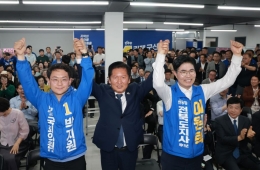
Yoo Myung-hee, Chief Negotiator of the Ministry of Trade, Industry and Energy. / Photo by Moon Ho-nam munonam@
View original image[Asia Economy Reporter Moon Chaeseok] Nationalism has become the fundamental principle of modern nation formation since the 19th century. It is a word that means independence from foreign countries. The government has declared that the era of 'economic nationalism' has begun and aims to lead middle power trade cooperation to win the competition in reorganizing the global value chain (GVC).
On the 20th, the Ministry of Trade, Industry and Energy held a 'Post-COVID New Trade Strategy Industry Meeting' chaired by Yoo Myung-hee, the head of trade negotiations. Officials from the ministry, businesspeople from companies such as Samsung Electronics and Hyundai Motor Company, and representatives from related organizations like the Korea Chamber of Commerce and Industry attended to discuss the direction of Korean trade after the COVID-19 pandemic from the perspective of businesses.
Director Yoo anticipated that economic nationalism would emerge during the economic recovery process after COVID-19. As the multilateral system that led globalization faces a crisis, he expected countries to continue responding in a 'every country for itself' manner. He judged that the boundary between security and trade would disappear as trade and investment restrictions under the pretext of national security spread to various fields and new tools for protecting domestic industries emerged.
With the vulnerability of GVCs based on globalization revealed, it is expected that GVCs will be reorganized to prioritize stability and resilience over efficiency. The digital-based contactless economy is rapidly growing, and competition among major countries will intensify in fostering the digital economy and establishing related international norms.
Director Yoo stated that after COVID-19, Korea will maintain an open economic stance and establish the global trade order through 'middle power cooperation' with countries similar to Korea. Earlier, on the 6th, Minister of Trade, Industry and Energy Sung Yun-mo mentioned 'building a production base without shutdowns' and presented 'exercising global trade leadership' as one of the eight post-COVID tasks.
First, bilateral and multilateral networks will be activated to restore trade routes and human exchanges. To prepare for the constant crisis, Korea will lead the establishment of global trade and investment guidelines. In response to the reorganization of GVC supply chains, customized trade cooperation will be promoted by key countries and regions. Specifically, FTAs will be pursued with New Southern and New Northern countries to support the diversification of supply chains for Korean companies.
Hot Picks Today
!["Not Everyone Can Afford This: Inside the World of the True Top 0.1% [Luxury World]"](https://cwcontent.asiae.co.kr/asiaresize/93/2026051507261063923_1778797570.png) "Not Everyone Can Afford This: Inside the World of the True Top 0.1% [Luxury World]"
"Not Everyone Can Afford This: Inside the World of the True Top 0.1% [Luxury World]"
- "Now Our Salaries Are 10 Million Won a Month" Record High... Semiconductor Boom Drives Performance Bonuses at Major Electronic Component Firms
- While All Eyes Were on Samsung and Hynix, This Company Surged 50% to New Highs in Four Days [Weekend Money]
- Train and Bus Collide in Bangkok, Thailand: At Least 8 Dead, Over 30 Injured
- Experts Already Watching Closely..."Target Price Set at 970,000 Won" Only Upward Momentum Remains [Weekend Money]
With advanced countries in the Fourth Industrial Revolution technologies such as the US and EU, supply chains will be expanded focusing on promising sectors like medical, bio, and future cars, and cooperation for industrial structure advancement will be pursued. Bilateral and multilateral digital trade agreements will be actively promoted to achieve the first results within the year. Digital cooperation projects by major countries will be discovered and promoted alongside improvements in domestic systems.
© The Asia Business Daily(www.asiae.co.kr). All rights reserved.