Slow Recovery of Korea-Japan Economic Exchange Amid COVID-19... Contrast with Korea-China 'Fast Track'
Prospects for Recovery of Korea-Japan Economic Exchange Diverge... Closely Watching Japanese Measures
![[Image source=Yonhap News]](http://www.asiae.co.kr/news/img_view.htm?img=2019122417554463109_1577177743.jpg)
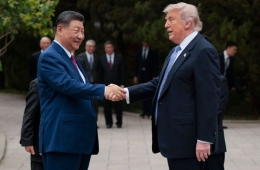
[Asia Economy Reporter Lim Cheol-young] Although ministerial and working-level meetings between South Korea and Japan have continued, difficulties persist in restoring economic exchanges that were severed due to the novel coronavirus infection (COVID-19). Considering that over 460 South Korean business delegations have entered China and are gradually resuming business activities through the third week of the Korea-China business ‘fast track’ system, the situation with Japan is very slow.
According to the Ministry of Foreign Affairs and related departments on the 19th, the Japanese government, which has effectively blocked entry from South Korea since the 3rd of last month, still maintains a very conservative stance on lowering the border threshold. Despite inquiries through various diplomatic channels about exceptions for essential personnel entry to Japan, no significant changes have been achieved.
A diplomatic source said, “From the ministerial level to working-level officials, continuous consultations are being held at all levels to convey our position,” but added, “We are closely monitoring the Japanese government’s response.” This is quite a different atmosphere compared to April, when there was high anticipation for early implementation during the introduction of the fast track system with China.
Earlier, on the 15th, the Korea-China-Japan health ministers’ meeting, which had not been held due to the COVID-19 pandemic, took place to discuss measures such as allowing essential personnel movement, but Japan appeared to place more emphasis on domestic issues.
On that day, Japan’s Minister of Health, Labour and Welfare Kato Katsunobu requested South Korean Minister of Health and Welfare Park Neung-hoo and Chinese National Health Commission Director Ma Xiaowei to share their COVID-19 experiences but showed a passive stance regarding the expansion of essential personnel movement. In particular, Japanese Foreign Minister Motegi Toshimitsu stated at a press conference the same day, “It is necessary to control the spread of infection within Japan,” and “We will review all information, including the spread of infection in the counterpart countries.”
Prospects for the recovery of economic exchanges between South Korea and Japan are mixed. Local media such as the Mainichi Shimbun reported that the Japanese government is considering allowing entry for business and research purposes from about ten countries, including South Korea, China, and the United States. Some speculate that since the South Korean government has notified Japan to provide a response regarding export regulations by the end of this month, follow-up measures may be announced around the end of May.
Negative outlooks are also not few. The Japanese government unilaterally imposed export restrictions last year, citing the South Korean Supreme Court’s forced labor ruling, and the issue expanded to the Korea-Japan military information protection agreement (GSOMIA). Moreover, during the COVID-19 pandemic, Japan’s entry restrictions on arrivals from South Korea without prior consultation have further worsened bilateral relations.
Regarding the highly sensitive export restriction measures, the positions of both countries remain sharply opposed. In a recent telephone consultation between Korea and Japan’s foreign affairs directors, Kim Jeong-han, Director of the Asia-Pacific Bureau of the Ministry of Foreign Affairs, urged the Japanese government to withdraw its unfair export restrictions while explaining Korea’s amendments to the Foreign Trade Act and other measures. Meanwhile, Takizaki Shigeki, Director of the Asia and Oceania Bureau of Japan’s Ministry of Foreign Affairs, reportedly reiterated Japan’s existing position.
Hot Picks Today
![Airlines Set to Benefit in the Long Term Despite Fuel Cost Surge: "It's Actually Good" [Weekend Money]](https://cwcontent.asiae.co.kr/asiaresize/93/2025062508161320621_1750806973.jpg) Airlines Set to Benefit in the Long Term Despite Fuel Cost Surge: "It's Actually Good" [Weekend Money]
Airlines Set to Benefit in the Long Term Despite Fuel Cost Surge: "It's Actually Good" [Weekend Money]
- "Suspicious Timing?"...Trump Traded Stocks After Praising Wartime Capabilities
- "I Went to 10 Convenience Stores and Still Couldn't Buy It": The Bread Sensation That Sold 100 Million Units Already [The Way We Shop Now]
- There Is a Distinct Age When Physical Abilities Decline Rapidly... From What Age Do Strength and Endurance Drop?
- "Contact Me First If Houses Are Built": Wealthy Clients Eyeing... Will Ultra-High-End Residences Worth 20 Billion Won Be Developed? [Real Estate AtoZ]
Professor Hwang Jae-ho of the Department of International Studies at Hankuk University of Foreign Studies analyzed, “Japan is likely to focus on domestic issues, so it is expected that there will be little progress in Korea-Japan relations in the immediate future,” adding, “Prime Minister Abe Shinzo, who values domestic political stability, is also likely to manage Korea-Japan relations rather than improve or worsen them.”
© The Asia Business Daily(www.asiae.co.kr). All rights reserved.