[Asia Exclusive] "Post-Corona, Reshoring and Supply Chain Diversification Begin"

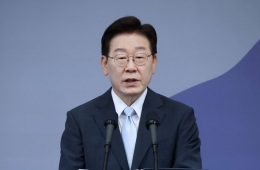
Haejun Bae, CEO of HMM, is being interviewed by Asia Economy on the 27th. / Photo by Mun Ho-nam munonam@
View original image[Asia Economy Reporter Yu Je-hoon] Bae Jae-hoon, CEO of HMM, identified supply chain diversification and onshoring (the return of overseas manufacturing companies to the domestic market) as key issues in the 'post-COVID-19' era. He also forecasted that changes in transportation networks would become visible accordingly.
In an interview with Asia Economy on the 8th at the headquarters on Yulgok-ro, Jongno-gu, Seoul, CEO Bae stated, "Right after the outbreak of COVID-19 in the first quarter, many factories in China, a major manufacturing country, shut down, causing the supply chain to collapse. Going forward, the flow of cargo that used to go from China to the Americas and Europe will be dispersed to Southeast Asia and other regions."
Regarding the impact of COVID-19, CEO Bae said, "Once consumers move away from contactless situations, 'revenge consumption,' which increases the consumption that was previously reduced, can begin in earnest. This depends on how quickly the COVID-19 containment phase arrives." He predicted, "Once stabilized, consumption and production can return to normal trajectories."
Accordingly, HMM's vision, which defines the future of the shipping industry as 'eco-friendly' after 2020, is expected to remain unchanged despite the adverse effects of COVID-19. Earlier, the International Maritime Organization (IMO) began enforcing regulations from January 1 this year to reduce sulfur oxide (SOx) emissions in ship exhaust gases worldwide from 3.5% or less to 0.5% or less. In response, HMM is installing 'scrubbers' (desulfurization devices) on new ships including the Algeciras and existing medium and large vessels to reduce SOx emissions.
He emphasized the need to prepare for changes in the supply chain in the post-COVID era. Since countries worldwide faced supply shocks due to China's shutdown caused by COVID-19 earlier this year, some production bases may partially relocate to other regions such as Vietnam and Indonesia or return to the home country as onshoring for hedging purposes.
CEO Bae said, "For example, if cargo volumes from China to Europe and the U.S. decrease from 80 to 60, the remaining regions such as Southeast Asia will increase from 20 to 40, showing a dispersion of cargo volumes. Companies that have onshored may also seek overseas markets if they find it difficult to absorb products in the domestic market." He added, "Accordingly, the number of routes passing through new production bases in regions like the New Southern Policy area may increase."
The concern is that automation spread due to COVID-19 may lead to a decrease in cargo volumes. Many people may lose jobs due to automation, which could reduce product consumption and consequently decrease cargo volumes. CEO Bae said, "If work automation progresses rapidly after the COVID-19 era, unless the population increases significantly, a sharp increase in shipping cargo volumes may not occur."
Hot Picks Today
 "Stocks Are Not Taxed, but Annual Crypto Gains Over 2.5 Million Won to Be Taxed Next Year... Investors Push Back"
- "Groups of 5 or More Now Restricted"... Unrelenting Running Craze Leaves Citizens and Police Exhausted
- Despite Warnings of "Do Not Enter, You May Not Make It Out Alive"... Foreign Tourist Stranded After Unauthorized Climb on Jeju Sanbangsan
- Signed Without Viewing for 1.6 Billion Won... Jamsil and Seongbuk Jeonse Prices Jump 200 Million Won in a Month [Real Estate AtoZ]
- "Even With a 90 Million Won Salary and Bonuses, It Doesn’t Feel Like Much"... A Latecomer Rookie Who Beat 70 to 1 Odds [Scientists Are Disappearing] ③
◇ Bae Jae-hoon, CEO of HMM ▲ Born in 1953 in Daegu ▲ Graduated from Baemyung High School ▲ Graduated from Korea University with a degree in Electronic Engineering ▲ Head of LG Semiconductor Americas ▲ Vice President of LG Electronics MC Overseas Marketing ▲ CEO of Bumhan Pantos ▲ Vice President of Woosong Information College ▲ Current CEO of HMM
© The Asia Business Daily(www.asiae.co.kr). All rights reserved.