Passage of Passenger Transport Act Amendment Sparks Strong Backlash from Mobility Industry
[Asia Economy Reporter Yoo In-ho] The 'Mobility Innovation Committee,' composed of experts from various fields such as transportation, venture, and consumer sectors to derive benefits for stakeholders in the mobility industry and the public, will be launched next month.
The mobility industry, including Tada, has strongly opposed the so-called 'Tada Ban Act,' declared a suspension of services, and plans not to participate in the government's Mobility Innovation Committee, raising concerns about conflicts between the industry and the government.
On the morning of the 31st, the Ministry of Land, Infrastructure and Transport announced that the amendment to the 'Passenger Transport Service Act,' a mobility innovation law institutionalizing various platform businesses, was approved at the Cabinet meeting held at the Blue House presided over by President Moon Jae-in. Earlier, on the 6th, the amendment to the Passenger Transport Service Act, known as the Tada Ban Act, had passed the National Assembly plenary session.
Accordingly, the simple transportation service market centered on taxis has transformed into a transportation service directly developed and operated by platform operators. The system is reorganized around users, providing standardized services based on platforms, including taxis and services that connect users and vehicles in new ways beyond simple call methods.
Regarding this, the Ministry of Land, Infrastructure and Transport explained that the foundation for mobility innovation was established through social compromise. While user dissatisfaction with existing taxi services had accumulated, platform operators attempted new services, but the taxi industry raised issues such as threats to their livelihood and illegality, leading to severe social conflicts and controversies.
Since March last year, when the government, National Assembly, taxi industry, and platform industry agreed on the mutual development of taxis and platforms, communication and adjustment of interests with the industry have taken place, resulting in the preparation of the 'Taxi System Reform Plan for Innovative Growth and Mutual Development' in July of the same year. Subsequently, after the amendment proposal in October, there were several difficulties during the National Assembly's discussion process.
The Ministry of Land, Infrastructure and Transport plans to work on stipulating detailed institutionalization measures in subordinate laws based on the amended law. It will allow operators to flexibly choose calculation methods such as revenue linkage and usage frequency, while easing burdens by reducing contributions for small startups.
In fact, several countries such as Australia and the United States have introduced contribution systems to resolve conflicts arising from the introduction of platform businesses and to establish mutual growth systems.
However, some mobility companies, including Tada, oppose the Tada Ban Act based on the contribution system. The Ministry plans to proceed with legislative notice as early as July based on the measures prepared by the 'Mobility Innovation Committee' launched in April, but it is known that Tada will not participate.
VCNC, the operator of Tada, has stated that it does not intend to pay contributions. Earlier, VCNC announced that it would suspend services on April 11 following the passage of the Tada Ban Act.
Within the mobility industry, there are criticisms that it is meaningless for Tada to engage in dialogue with the government under the framework of the Tada Ban Act. The business type called 'platform transport operator,' proposed by the Ministry as a compromise, allows vehicles to operate only within the government's defined scope, and companies are required to pay mandatory contributions for the taxi industry, which will only increase indefinite costs.
Hot Picks Today
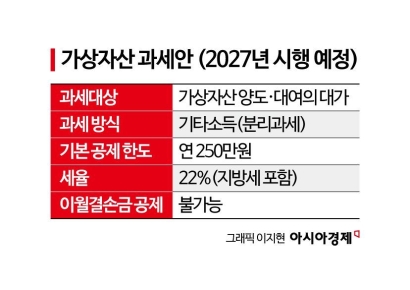 "Stocks Are Not Taxed, but Annual Crypto Gains Over 2.5 Million Won to Be Taxed Next Year... Investors Push Back"
- "Not Jealous of Winning the Lottery"... Entire Village Stunned as 200 Million Won Jackpot of Wild Ginseng Cluster Discovered at Jirisan
- "Jeong Yu-kyung Is a Neighbor"...Itaewon Standalone House with Record 23.2 Billion Won Appraisal Up for Auction [Real Estate AtoZ]
- "How Did an Employee Who Loved Samsung End Up Like This?"... Past Video of Samsung Electronics Union Chairman Resurfaces
- "Even With a 90 Million Won Salary and Bonuses, It Doesn’t Feel Like Much"... A Latecomer Rookie Who Beat 70 to 1 Odds [Scientists Are Disappearing] ③
A mobility industry official said, "Although the Ministry of Land, Infrastructure and Transport says it will support contributions, the standards are still unclear, and it is uncertain how many vehicles will be permitted to operate," adding, "Unless a definite support plan is presented immediately, it will be difficult for Tada to come to the negotiation table."
© The Asia Business Daily(www.asiae.co.kr). All rights reserved.