[Good Morning Market] Global Stock Markets Moving Backward... Challenging Process of Confirming the 'Bottom'
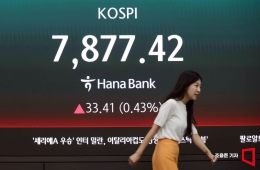
[Asia Economy Reporter Oh Ju-yeon] On the 18th (local time), the U.S. stock market in New York plunged again. The Dow Jones Industrial Average fell 6.30% to close at 19,898.92, breaking below the 20,000 mark for the first time in 3 years and 2 months. The S&P 500 index dropped 5.18% to 2,398.10, and the Nasdaq index closed down 4.70% at 6,989.84.
Despite comprehensive stimulus measures including monetary and fiscal policies, the panic in the stock market caused by the novel coronavirus infection (COVID-19) has not been calmed.
It is pointed out that fundamental solutions require a slowdown in the increase of COVID-19 confirmed cases, stabilization of oil prices, and market participants' confidence in economic recovery. Meanwhile, the domestic stock market may see limited declines as concerns about the global economy have already been partially reflected in the previous day.
![[Image source=Yonhap News]](http://www.asiae.co.kr/news/img_view.htm?img=2020031815532128928_1584514401.jpg)
◆ Lee Jin-woo, Researcher at Meritz Securities = The global financial market is moving out of the 'normal market' territory because it is unable to autonomously form prices. This phenomenon is appearing not only in stocks but also in other assets such as bonds. Currently, the market is exposing the limits of its mechanisms, and intervention is needed to stabilize the market.
U.S. index futures have not been functioning properly since last week. The S&P 500 futures have been alternating between upper and lower circuit breakers. This indicates that sentiment is very unstable and that the balance between buyers and sellers has been lost. When the price formation function weakens, the market's sensitivity to each issue inevitably increases. If the system is unstable, concerns about 'liquidity' are naturally triggered. This is because the psychology to secure liquidity immediately becomes stronger than the judgment of appropriate prices. The boundary between risky assets and safe assets is becoming blurred, and fear is spreading.
Looking at daily fund flows in U.S. ETFs, since mid-February, funds have been flowing out mainly from high-yield and corporate bonds. This coincides with the start of the U.S. stock price correction. High-yield bonds are classified as relatively risky assets within bonds, so fund outflows are not unusual. The problem lies with investment-grade bonds. Despite strong inflows since the beginning of the year, possibly due to the attractiveness of low interest rates, strong outflows have occurred since the sharp drop in oil prices in early March. This is likely the result of market anxiety spreading even to safe assets. The trend is similar for U.S. Treasury bonds.
If the liquidity-securing sentiment spreads more than the safe asset preference as it is now, policy authorities need to intervene more quickly. The financial market functions must normalize for policy effects to be expected.
◆ Seo Sang-young, Researcher at Kiwoom Securities = Amid the rapid increase in COVID-19 confirmed cases in the U.S., the New York stock market fell due to fear of economic damage. Additionally, international oil prices plunged 24%, marking the third-largest drop in history, which is expected to burden the Korean stock market. However, the sharp drop in international oil prices may be a temporary phenomenon caused by position adjustments ahead of U.S. futures and options expiration, so its impact is expected to be limited. In fact, WTI fell 24%, but Brent crude only dropped 11%, and the decline in the energy sector, which has high debt, was limited.
Meanwhile, the dollar index showed strength by surpassing 100 dollars, and the U.S. suspension of all visa services is expected to have a negative impact.
However, considering that concerns about the global economy have already partially affected the Korean stock market the previous day and that the U.S. stock market narrowed losses due to rebound buying before the close, the Korean stock market is expected to rebound on the 19th. Especially, although fear spread in the U.S. stock market, some stocks rebounded, showing a recent trend of finding positive factors amid fear.
◆ Lee Kyung-min, Researcher at Daishin Securities = The Korean stock market continues to show relative weakness amid the sharp fluctuations in global markets. Although the spread of COVID-19 in Korea is calming, there are limitations due to the economy's high dependence on external factors. In particular, global economic recession and credit risk issues are critical. Moreover, the recent intensification of currency depreciation in vulnerable emerging countries is causing fluctuations in the won-dollar exchange rate. Increased exchange rate volatility negatively affects foreign investor demand and increases downward pressure on the KOSPI.
Since March, within just half a month, the U.S. has moved to zero interest rates and implemented large-scale quantitative easing and corporate bond purchases. Global policy coordination is also strengthening, and large-scale economic stimulus policies by major countries are becoming visible. This may partially curb the panic market, but it is not a fundamental solution. Ultimately, a slowdown in the increase of COVID-19 confirmed cases and stabilization of high-yield spreads due to oil price stabilization are necessary. Especially, trust that the global economy will not worsen further is needed for a trend reversal.
A similar pattern was observed during the bottom confirmation process in 2008-2009. In October 2008, the U.S. began purchasing corporate bonds, confirming a short-term bottom, and in March 2009, Citigroup's earnings surprise triggered a mood reversal and signaled a trend reversal.
Hot Picks Today
 No Bacteria Detected in Arisu After 24 Hours of Repeated Drinking from a Tumbler
- Despite Surprising $23 Billion Earnings, Cisco to Lay Off 4,000 Employees for Expanded AI Investment
- High-Net-Worth Investors Increase Stock Holdings: "Samsung and SK hynix Are Basic, Now Searching for the Next Opportunity" [Investment Strategies of the Wealthy] ⑧
- "Not Just Fuel Prices: Whale Collision Risks Surge as Hormuz Blockade Reroutes Ships"
- Police Officer Cycling on Day Off Rescues Woman Attempting to Jump from Hangju Bridge
Although it is judged that the short-term bottom is not far, more time is needed. The process is likely to be somewhat rough. While technical rebounds due to short-term sharp declines and policy expectations are valid, poor economic indicators, weak corporate earnings, and downward revisions of forecasts by major institutions and financial institutions can anytime trigger anxiety and fear in the KOSPI and global stock markets.
© The Asia Business Daily(www.asiae.co.kr). All rights reserved.