China New Cases: 1 in Hubei vs 20 Imported Cases... Strengthening Measures to Block Imported Cases (Comprehensive)
![[Image source=Reuters Yonhap News]](http://www.asiae.co.kr/news/img_view.htm?img=2020031711260025863_1584411961.jpg)
[Asia Economy Beijing=Special Correspondent Sunmi Park] In Wuhan, Hubei Province, the epicenter of the COVID-19 outbreak in China, only one new confirmed case was reported. This is evidence that China's COVID-19 prevention measures, including city lockdowns and restrictions on population movement, are proving effective, indicating that the spread of COVID-19 in China is entering a near-end phase. While China is working to normalize the economies of regions where activities had halted, it is also strengthening entry controls to block the increasing number of overseas imported COVID-19 cases.
◆ China Reports 1 New Case in Hubei, 20 Imported Cases = Chinese President Xi Jinping evaluated that China has achieved significant results in its COVID-19 prevention efforts.
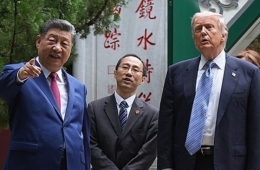
According to the People's Daily on the 17th, President Xi said in a phone call with Italian Prime Minister Giuseppe Conte the previous day, "After hard efforts, the epidemic prevention situation in China has turned positive and has achieved important phased results," adding, "Economic and social development is also recovering rapidly." President Xi appeared confident that the COVID-19 situation is ending, showing boldness by inviting foreign dignitaries into China. Pakistani President Arif Alvi is visiting China for two days from the 16th to 17th upon Xi's invitation.
According to the National Health Commission of China (NHC) on the same day, 21 new confirmed COVID-19 cases were reported nationwide on the 16th. Among these 21 new cases, only one was from Wuhan, Hubei Province, known as the origin of the virus. This is the first time that only one new case has been reported in Wuhan, where patients were most concentrated.
The remaining 20 cases were all reported as imported cases from overseas. Beijing reported 9, Shanghai 3, Guangdong Province 3, Zhejiang Province 1, Shandong Province 1, Guangxi Province 1, Yunnan Province 1, and Shanxi Province 1, totaling 20 new imported cases in one day. Including these, the cumulative number of imported cases has reached 143.
The total number of confirmed COVID-19 cases in China is 80,881. Among them, 68,679 patients have recovered and been discharged, and 3,226 have died. Currently, 8,976 confirmed patients are receiving hospital treatment, 128 are suspected cases, and 9,351 close contacts are under medical observation. Outside mainland China, in Chinese territories, Hong Kong has reported 157 cases (88 discharged, 4 deaths), Macau 11 cases (10 discharged), and Taiwan 67 cases (22 discharged, 1 death), totaling 235 confirmed cases.
◆ Relaxed Internal Controls vs. Strengthened Imported Case Prevention = As the spread of COVID-19 subsides, China is attempting to normalize regional economies. Jingzhou City in Hubei Province, which suffered the most damage within China, is normalizing city-center transportation card facilities and transportation services starting today. Businesses, agricultural and fishery markets, ports and terminals, and construction sites will also sequentially resume operations according to return regulations.
There is growing expectation that the "Wuhan lockdown" will soon be lifted following President Xi's visit to Wuhan, Hubei Province. Rumors are spreading that Wuhan Tianhe International Airport is also preparing to reopen soon.
Outside Hubei Province, regions such as the Xinjiang Uygur Autonomous Region in western China have declared full normalization of their economies and daily life. Shanghai has reopened zoos, botanical gardens, museums, and many exhibition facilities that had been closed due to the COVID-19 outbreak. Shanghai Disneyland has also reopened hotels and shopping facilities as the first step toward full reopening. The capital Beijing is also gradually lifting internal prevention measures. The city lifted restrictions on delivery workers entering residential areas, which had been banned since the COVID-19 outbreak, as of the previous day.
On the other hand, considering the continuous increase in imported confirmed cases, China is strengthening entry management controls. Beijing and the Inner Mongolia Autonomous Region have implemented mandatory 14-day quarantine in designated hotels for all overseas arrivals starting the previous day. Separately, China has classified international flights into three risk levels and applies different prevention measures accordingly to block imported COVID-19 cases.
Hot Picks Today
 Cerebras Soars 70% on IPO Debut: Is Nvidia's Reign Ending as a New AI Semiconductor Power Emerges?
- [Breaking] Samsung Electronics Executives: "We Will Participate Unconditionally... We Urge the Union to Join the Talks"
- "Gave in to the Momentary Temptation": Japanese Police Official Dismissed After Stealing 100 Million Won Next to Body
- "Mom, Isn't It Comfortable Living With Me?"... 'Unexpected Result' Shows Increased Drinking Out of Frustration
- "After Vowing to Become No. 1 Globally, Sudden Policy Brake Puts Companies’ Massive Investments at Risk"
Geng Shuang, spokesperson for the Chinese Ministry of Foreign Affairs, said at a briefing the previous day, "Imported cases have already become a major risk in several regions of China," adding, "Local governments are taking necessary measures according to the law and the local epidemic situation. Quarantine and prevention measures for overseas arrivals are necessary for epidemic control and are also effective in preventing the global spread of infectious diseases."
© The Asia Business Daily(www.asiae.co.kr). All rights reserved.