The Democratic Party concludes 'Proportional Alliance Party' decision through all-member vote... "Concede top proportional seats to small parties"

Lee Hae-chan, leader of the Democratic Party of Korea, is attending the Supreme Council meeting held at the National Assembly on the 11th and delivering opening remarks. Photo by Yoon Dong-joo doso7@
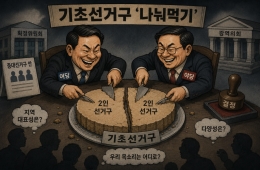
View original image[Asia Economy Reporters Kang Nahum and Jeon Jinyoung] The Democratic Party of Korea has made a final decision to determine whether to participate in the 'Proportional Representation Coalition Party' through a vote by all party members. While this is interpreted as effectively entering the participation process, the Justice Party's refusal remains a difficult issue.
On the 11th, the Democratic Party held an executive meeting and resolved to decide on participation in the Proportional Representation Coalition Party based on the results of a vote by all party members. They also presented a specific plan to concede proportional representation candidate slots to minor parties if they join the coalition.
Party leader Lee Hae-chan explained the background of this decision, saying, "The recently passed election law is a reform law created by the Democratic Party, willing to take losses, to minimize the unfair advantages that large parties gain in elections and to promote the entry of minor parties into the National Assembly. The United Future Party is committing a foul by creating paper satellite parties to steal seats that should go to minor parties."
Lee added, "We will let minor parties take the top slots in proportional representation and do everything we can from the lower slots. By sacrificing and conceding the top candidate numbers to minor party candidates, we want to help reformist and progressive minor parties enter the National Assembly."
Earlier, the Democratic Party had reached a consensus to participate in the Proportional Representation Coalition Party at a party members' meeting the previous day. Although some members such as Seol Hoon, Park Yong-jin, and Cho Eung-cheon expressed opposition, most members reportedly expressed support.
Lee Nak-yeon, chairman of the Democratic Party's COVID-19 National Crisis Overcoming Committee, also expressed support on the same day regarding participation in the coalition, saying, "It is strange to talk about anything else at this point. The starting point of the discussion is what the party should do to preserve the original purpose of the mixed-member proportional representation system, which is now under threat."
This stance by the Democratic Party was largely influenced by a strong sense of crisis over potential defeat in the general election. The party analyzed that if it does not participate in the coalition, it could secure up to 137 seats. In contrast, the United Future Party, combined with the Future Korea Party, is expected to gain 145 to 147 seats. There are concerns that not only could they lose the election, but also lose the majority of seats to the conservative opposition.
![[Image source=Yonhap News]](http://www.asiae.co.kr/news/img_view.htm?img=2020031111075415793_1583892475.jpg)
As negotiations on the distribution of proportional representation seats between the Democratic Party and minor parties are expected soon, the Justice Party, which holds a significant share of the progressive camp, still refuses to participate in the Proportional Representation Coalition Party.
The Justice Party officially launched its election committee on the same day and shifted into full election mode. Naming the committee the 'COVID-19 and Livelihood Crisis Overcoming Election Committee,' it emphasized overcoming COVID-19, but political attention was focused on leader Sim Sang-jung's message regarding participation in the coalition.
Hot Picks Today
 No Bacteria Detected in Arisu After 24 Hours of Repeated Drinking from a Tumbler
- "My Wife Is Missing"... Woman in Her 50s Still Unaccounted for Nearly a Month After Climbing Bukhansan Mountain
- "Available Only in Korea": Pokémon Card Prices Surge 2,532% Due to Rarity, Becoming Investment Assets
- High-Net-Worth Investors Increase Stock Holdings: "Samsung and SK hynix Are Basic, Now Searching for the Next Opportunity" [Investment Strategies of the Wealthy] ⑧
- Police Officer Cycling on Day Off Rescues Woman Attempting to Jump from Hangju Bridge
Leader Sim, who heads the election committee, reaffirmed opposition, stating, "The mixed-member proportional system, created to overcome the two-party system, is being undermined by large parties' proportional satellite parties aimed at reviving the two-party system. Victory in the general election is not achieved by calculation but by hope for good politics."
© The Asia Business Daily(www.asiae.co.kr). All rights reserved.