'Super-Strong Contingency Plan' Hyundai Motor's March China Production at 30,000 Units... Samsung and LG Strategy Reassessment Inevitable
![[Image source=Yonhap News]](http://www.asiae.co.kr/news/img_view.htm?img=2020022919264486590_1582972003.jpg)
[Asia Economy Reporter Kim Hyewon] Hyundai Motor Group, which first experienced production disruptions due to the outbreak of the novel coronavirus infection (COVID-19), has initiated a top-level contingency plan and begun reorganizing its management, including its business operations in China. Samsung and LG Groups, which faced a delayed chain shutdown (temporary work stoppage) as COVID-19 cases surged, are also in a situation where their year-end and New Year management plans have effectively become useless, making it inevitable to reestablish them.
According to the business community on the 2nd, Hyundai Motor has set the production volume at its factories in China to around 30,000 units this month. Automakers typically double their production volume starting in March, after the seasonal low-demand period (January to February), unless there are variables. In March last year, Hyundai's Chinese factories produced 84,032 units, and in 2013, they recorded 64,280 units.
A source said, "Local employees, except those from Hubei Province, have returned to work after the quarantine period ended, so operations have not completely stopped, but the strategy has shifted to minimizing production by significantly lowering the operating rate, and this will be maintained at least throughout the first half of the year." The source added, "In the first week of March, production is virtually halted, and about 30,000 units are planned to be produced during the remaining three weeks."
Hyundai's decision to reduce the production plan at its Chinese factories, which barely resumed operations, is due to demand falling far short of supply. The COVID-19 outbreak has led to a contraction in consumption within China, and demand for car purchases, which require face-to-face contact, has sharply declined. A source said, "Cars produced for the Chinese domestic market are piling up as inventory because there are no buyers locally," adding, "The bleak atmosphere reflects the realization of the worst sales slump."
As a result, a red light has been turned on for Hyundai's strategy to sell 730,000 units in the Chinese market this year. There are concerns locally that if the COVID-19 situation prolongs and production and sales do not return to normal in the second half of the year, even maintaining 600,000 units could be difficult. Hyundai produced and sold 806,214 units in 2018 and 663,491 units last year at its Chinese factories.

Even if supply partially recovers or is maintained in the future, the trend of demand decline due to consumption stagnation is expected to appear domestically as well. Jinwoo Kim, a researcher at Korea Investment & Securities, said, "The impact on automakers from COVID-19 has entered a new phase," adding, "The sales slump caused by effects on both supply and demand is expected to continue at least until early Q2." He estimated that the operating profit losses for Hyundai and Kia Motors in Q1 would be approximately 240 billion KRW and 120 billion KRW, respectively.
Hot Picks Today
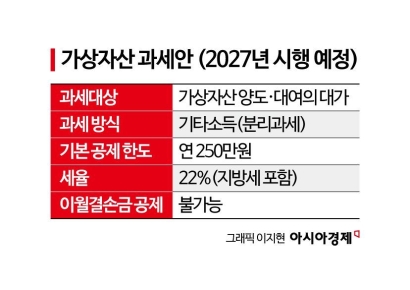 "Stocks Are Not Taxed, but Annual Crypto Gains Over 2.5 Million Won to Be Taxed Next Year... Investors Push Back"
- "Not Jealous of Winning the Lottery"... Entire Village Stunned as 200 Million Won Jackpot of Wild Ginseng Cluster Discovered at Jirisan
- "Even With a 90 Million Won Salary and Bonuses, It Doesn’t Feel Like Much"... A Latecomer Rookie Who Beat 70 to 1 Odds [Scientists Are Disappearing] ③
- General Strike D-1: Final Negotiations Between Samsung Electronics Labor and Management Over One Key Issue
- "How Did an Employee Who Loved Samsung End Up Like This?"... Past Video of Samsung Electronics Union Chairman Resurfaces
Beyond the automotive industry, which was the first to suffer from COVID-19 damage, the impact is rapidly spreading to other sectors such as home appliances, IT, and displays. With additional confirmed cases over the weekend, normal operations have become impossible due to factory closures, self-quarantine, or remote work. LG Innotek's Gumi plant in Gyeongbuk has halted its camera module production line, and LG Display has also closed part of its small- and medium-sized panel module factories. As the number of countries banning entry to Koreans increases, overseas business has come to a complete stop. Samsung Electronics canceled the groundbreaking ceremony for its R&D center in Hanoi, Vietnam, scheduled for the 29th of last month, and the schedule for new and expanded construction at LG Display's Chinese factories is also likely to be postponed.
© The Asia Business Daily(www.asiae.co.kr). All rights reserved.