Can China Import an Additional $200 Billion of US Products? Doubts Persist Over US-China Agreement
[Asia Economy Reporter Naju-seok] Although the United States and China have agreed on the Phase 1 trade deal in their trade war, doubts are growing about whether the actual terms of the agreement will be upheld. There is skepticism about whether China can import $200 billion (231 trillion won) worth of U.S. products and services as agreed.
![[Image source=Yonhap News]](http://www.asiae.co.kr/news/img_view.htm?img=2019103109192355826_1572481163.jpg)
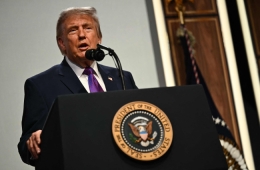
On the 14th (local time), foreign media cited experts pointing out that the contents of the U.S.-China Phase 1 trade agreement include "unrealistic targets." Both sides are scheduled to hold a signing ceremony for the Phase 1 trade deal at the White House on the 15th.
Summarizing the reports so far, the Phase 1 agreement entails that the U.S. will refrain from additional tariff retaliations against China and reduce tariffs on some products, in exchange for China purchasing a large volume of U.S.-made products over the next two years. This includes $80 billion worth of manufactured goods, $50 billion worth of energy-related products, $35 billion worth of service purchases, and an additional $32 billion worth of agricultural imports.
The controversy lies in the scale. Based on 2017 figures, the volume of goods and services China imported from the U.S. was $186 billion (goods $130 billion, services $56 billion). Considering this trade volume, the promised purchase amount by China is excessively large.
For example, in the case of agricultural products alone, China imported $24 billion (2017 basis) worth from the U.S. Simply adding up, the import volume would need to exceed $40 billion.
Regarding energy, China is supposed to purchase $50 billion worth of products from crude oil to natural gas from the U.S., raising questions about whether such a level of purchase is feasible.
The lack of detailed figures also adds to the skepticism. Experts question whether China can absorb this volume of products and whether it can bear the risks related to price and supply if it relies so heavily on U.S.-made products.
Additionally, experts raise doubts about whether U.S.-made products can expand in the Chinese market if China’s notorious non-tariff barriers are not resolved.
Moreover, this Phase 1 agreement is provisional in nature. According to U.S. government officials, there will be no further tariff reductions on Chinese products related to the Phase 1 trade deal. U.S. Treasury Secretary Steven Mnuchin said, "There is no additional agreement," adding, "The only way for China to get the U.S. government to lower tariffs is through a Phase 2 trade agreement." However, there is no schedule yet for when the Phase 2 trade negotiations will begin.
Hot Picks Today
!["Rather Than Endure a 1.5 Million KRW Stipend, I'd Rather Earn 500 Million in the U.S." Top Talent from SNU and KAIST Are Leaving [Scientists Are Disappearing] ①](https://cwcontent.asiae.co.kr/asiaresize/93/2026051414165763158_1778735817.jpg) "Rather Than Endure a 1.5 Million KRW Stipend, I'd Rather Earn 500 Million in the U.S." Top Talent from SNU and KAIST Are Leaving [Scientists Are Disappearing] ①
"Rather Than Endure a 1.5 Million KRW Stipend, I'd Rather Earn 500 Million in the U.S." Top Talent from SNU and KAIST Are Leaving [Scientists Are Disappearing] ①
- [Breaking] Chung Yongjin Apologizes for Starbucks 'Tank Day' Controversy: "I Take Full Responsibility"
- "If That's the Case, Why Not Just Buy Stocks?" ETFs in Name Only, Now 'Semiconductor-Heavy' and a Playground for Short-Term Traders
- "Most Americans Didn't Want This"... Americans Lose 60 Trillion Won to Soaring Fuel Costs
- "No Cure Available, Spread Accelerates... Already 105 Dead, American Infected"
The actual endpoint of the U.S.-China trade war remains unknown. According to Bloomberg News, the U.S. administration has drawn a line, stating there will be no additional tariff reductions before the U.S. presidential election in November this year.
© The Asia Business Daily(www.asiae.co.kr). All rights reserved.