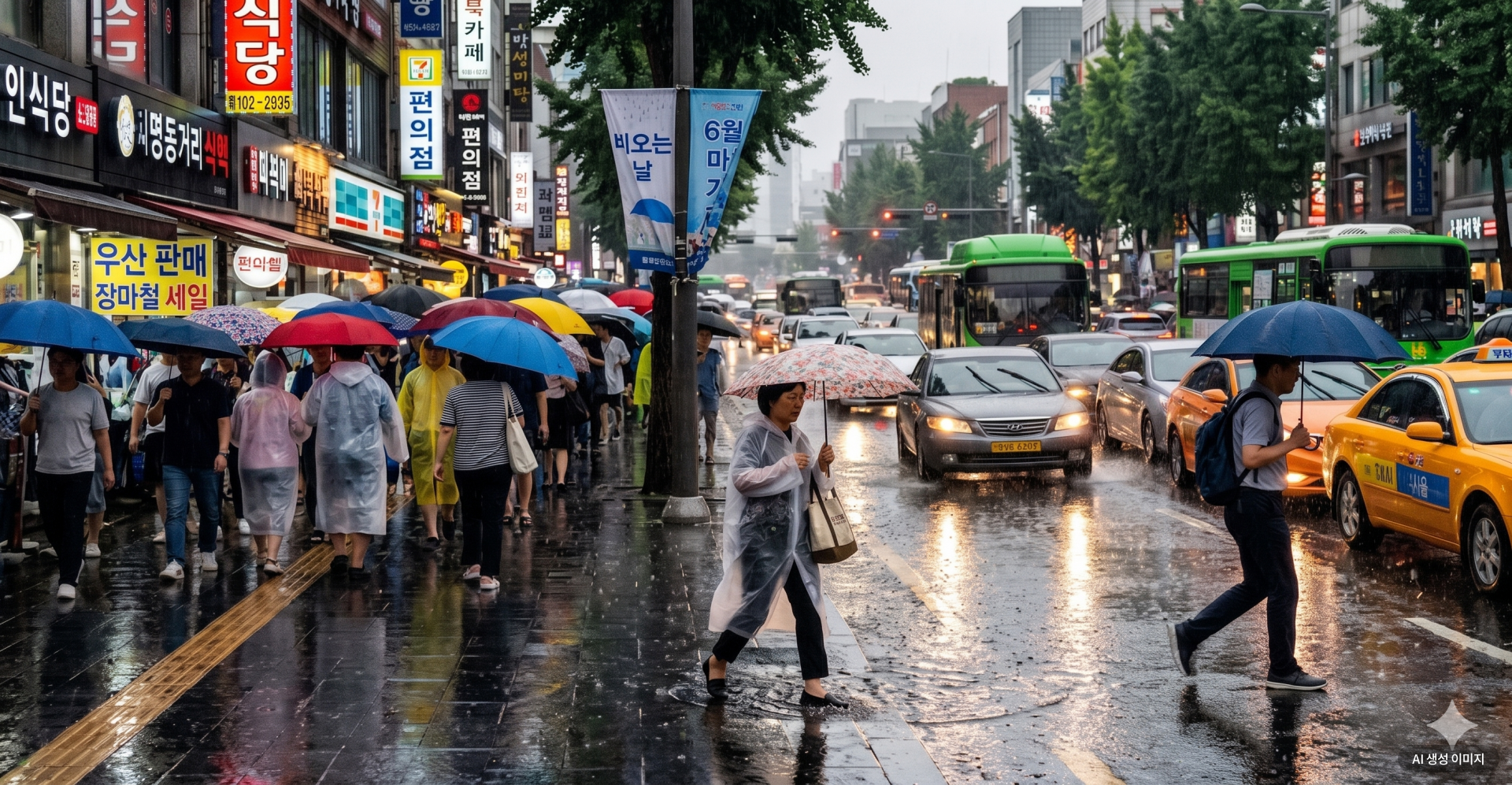
"2026 rainy season period revealed" Photo by Getty Images Bank
"Record-breaking rainy season forecast"
"Rain throughout the month"
Korea Meteorological Administration: "Record-breaking rainy season forecast is fake news"
Past 30-year average data mistaken for a definitive forecast
Currently, only post-analysis is released for the start and end dates of the monsoon season
Climate change makes it difficult to predict the monsoon period
Monsoon forecasts have been suspended since 2009
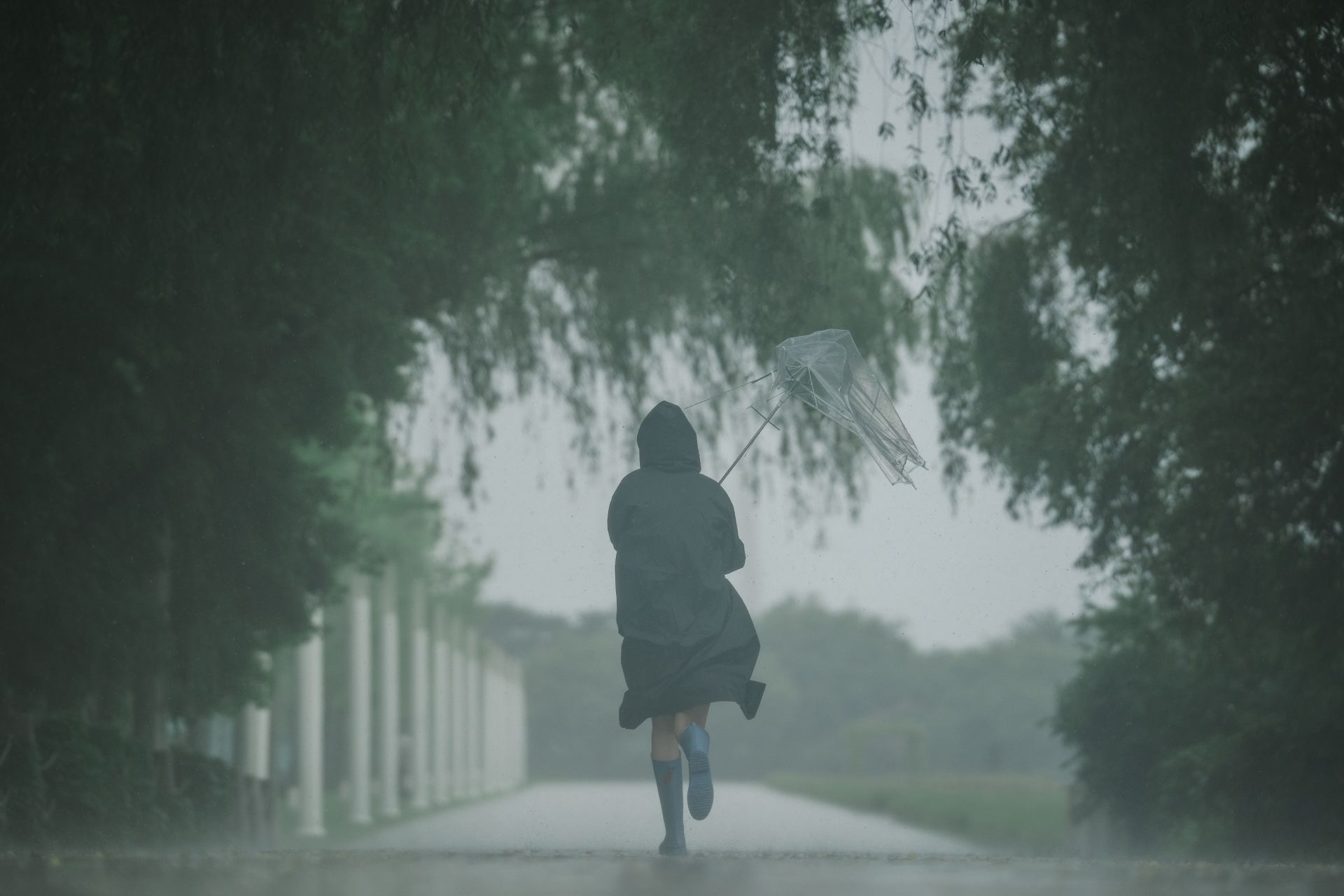
Recently, sensational forecasts such as "record-breaking monsoon in June 2026" and "rain for the entire month" have been rapidly spreading on social media (SNS), causing public anxiety. However, the Korea Meteorological Administration has made it clear that this information is "not an official announcement but false information", urging caution against the indiscriminate spread of such claims.
On April 14, the Korea Meteorological Administration announced through its official SNS channels, "There has been no official announcement regarding the rainy season forecasts circulating on social media," and expressed hope that there would be no confusion.


The controversial posts use phrases such as "2026 rainy season period revealed," "record-breaking rainy season forecast," and "rain throughout the month," distributing them as if they were actual forecasts. However, this is a case where data simply summarizing the average monsoon period over the past 30 years (1991-2020) is being mistaken as a forecast for this year. According to the Korea Meteorological Administration, on average, the monsoon season typically lasts from June 19 to July 20 in Jeju, June 23 to July 24 in the southern regions, and June 25 to July 26 in the central regions. However, these are only statistical averages and do not serve as predictive information that applies the same way every year. In reality, the onset, rainfall, and duration of the monsoon vary greatly each year.
In particular, the monsoon is heavily influenced by the expansion and contraction of the North Pacific high-pressure system, as well as by the interaction with cold and dry air from the north, which determines the location and intensity of the stationary front. If this front remains near the Korean Peninsula for an extended period, torrential rains can continue; in contrast, if it moves quickly or weakens, the monsoon period may be shorter and the number of rainy days may decrease.
Recently, due to the effects of climate change, the characteristics of the monsoon have also changed significantly. Rather than the traditional "long-lasting rains," there has been an increase in short-duration, intense local downpours and extreme heavy rain, making it difficult to explain current conditions using past averages. For this reason, since 2009, the Korea Meteorological Administration has not announced the start and end dates of the monsoon season in advance.
Neighboring countries such as Japan and China also do not specify the timing of the monsoon season in advance. Currently, the Korea Meteorological Administration provides related information only when there is a possibility of several consecutive rainy days due to the influence of the North Pacific high-pressure system, focusing on short- and medium-term forecasts. The official start and end dates of the monsoon season are also released only after the summer, based on observational data and post-analysis. A Korea Meteorological Administration official emphasized, "It is difficult to accurately predict the number of rainy days or monsoon duration with the current level of scientific knowledge," and urged the public to refer to official forecasts rather than unverified information on social media.
-

Reporter Bang Jeil zeilism@asiae.co.kr
-
Edit Hong Jayeon hongzaa@asiae.co.kr
© The Asia Business Daily(www.asiae.co.kr). All rights reserved.



![[Report] "A Culinary Destination with a View of Gyeongbokgung"... Kim Dong-sun's High-End Dining Takes Over Gwanghwamun](https://cwcontent.asiae.co.kr/asiaresize/304/2026042114562634571_1776750985.jpg)
![[Gallery Stroll] Red Robe, Black Lines... Danjong Returns with the Face of Wounds](https://cwcontent.asiae.co.kr/asiaresize/304/2026042014183532691_1776662315.jpg)