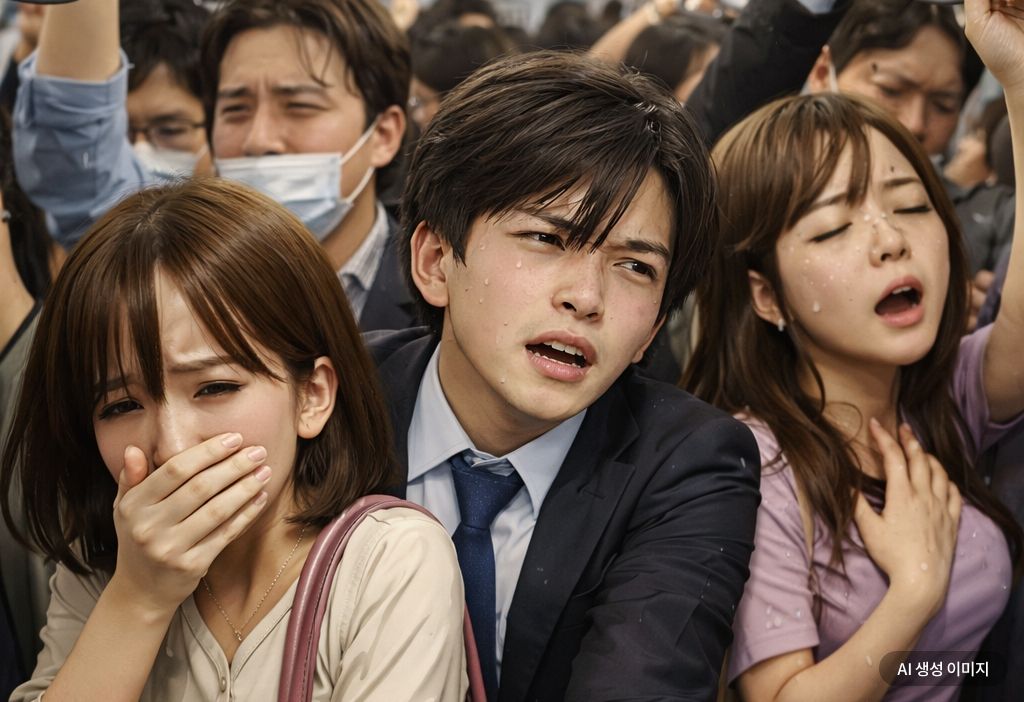
The controversy began on the 23rd when a netizen posted a message on social media (SNS). The writer stated, "Please do not bring children on the Line 9 express train during rush hour," emphasizing, "Even adults find it difficult to endure, and for children, it can lead to serious accidents." They particularly stressed that "using the express train instead of the regular train is even more dangerous."
'Accompanied by Children' Debate Erupts Online
A debate is unfolding online over whether children should be allowed on the Seoul Subway Line 9 express train, notorious as a "hell train" during rush hour. While some users are urging restraint due to safety concerns, others counter that such demands are excessive, leading to an ongoing heated discussion.
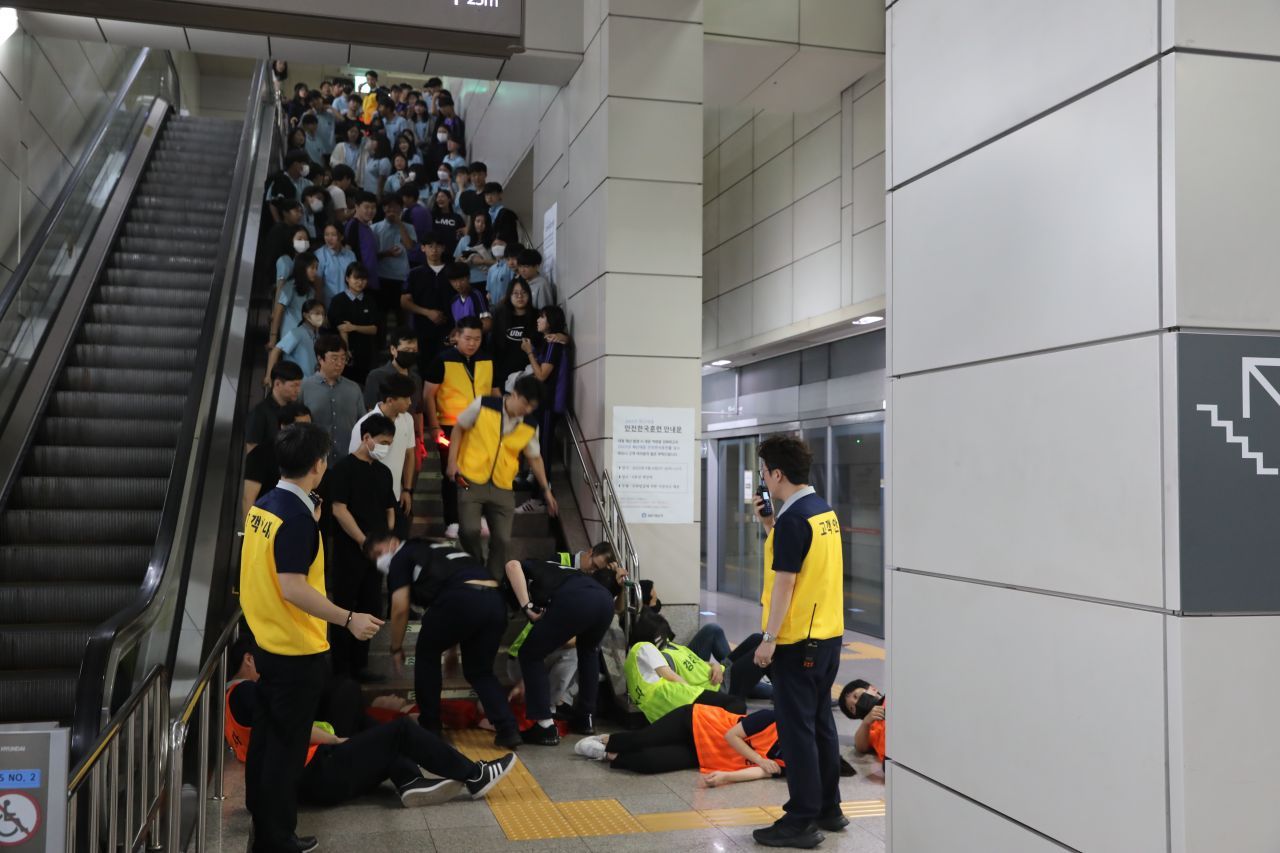
This post quickly spread, garnering hundreds of comments. Users who agreed highlighted the severe congestion on the Line 9 express. One netizen said, "You have to squeeze your way in, and it's suffocating for shorter people," while another shared, "The chest pressure was so intense that I got off in the middle and even vomited." Other comments included, "You can't even move inside the train," "If you can't hold onto a strap, you'll just be pushed around," and "It's virtually impossible to protect a child in a situation where even adults struggle to keep their balance."

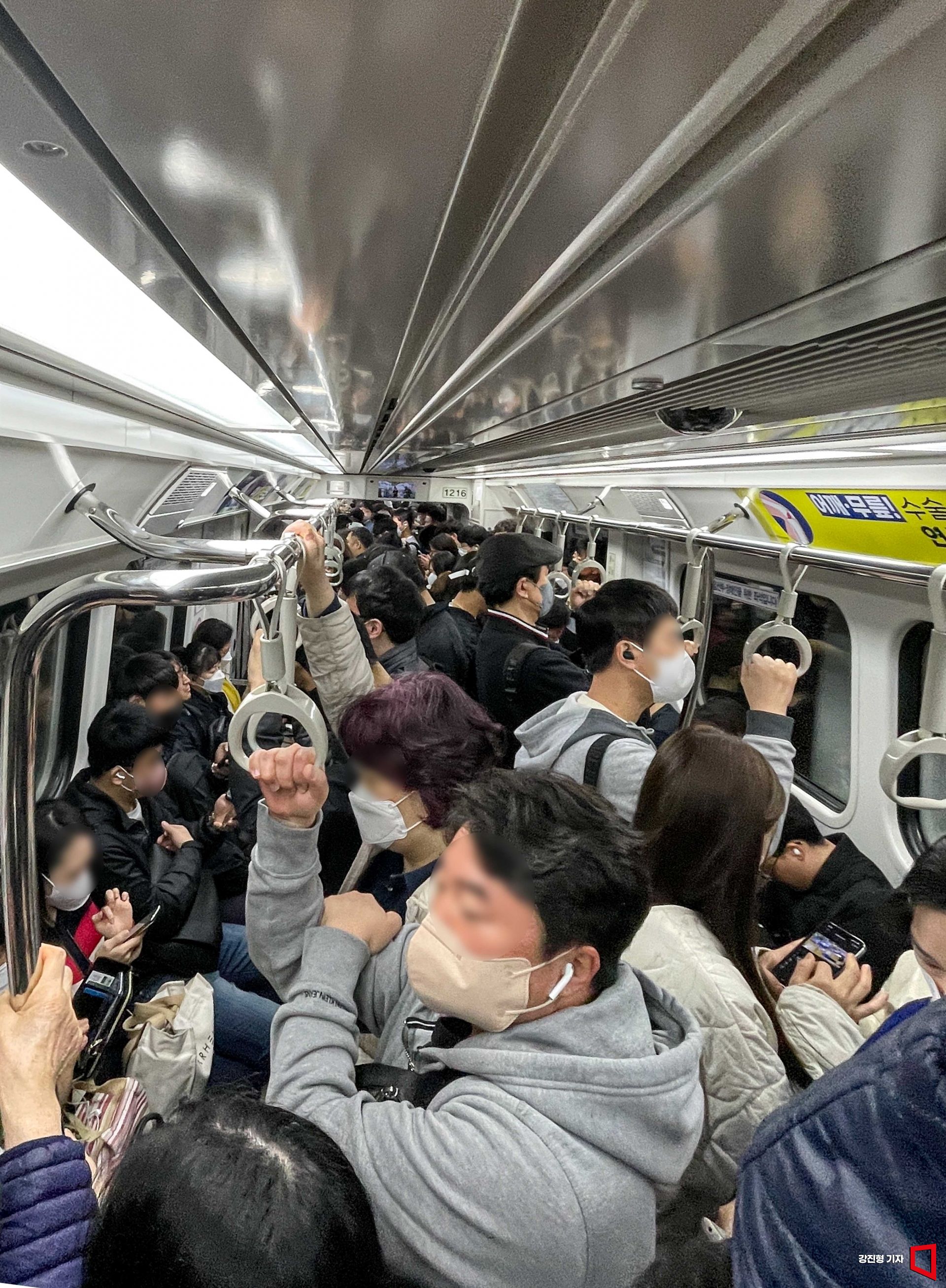
On the other hand, some opinions criticized this as an excessive demand. Some users pointed out that "saying not to bring children ignores reality" and "parents also make choices in unavoidable situations." Additionally, there was a view that "rather than focusing on children riding itself as an issue, a culture of consideration and concession should come first."
As the debate intensified, more people pointed out that the real problem lies not with "individual choices," but with "structural congestion." The Line 9 express is so crowded during rush hour that it has earned the nickname "hell train," yet there has been little improvement in the commuting environment. Some netizens remarked, "The very fact that you can't even yield to a newborn is the problem," and argued, "At this point, it's not just a safety issue, but a system failure." Furthermore, there are growing calls for fundamental solutions such as increasing the number of trains or improving train intervals.
"200% Congestion" Line 9 Exceeds Its Transport Capacity
According to data from Seoul Metro and Seoul City, the congestion level of the Line 9 express train during the morning rush hour reportedly reaches around 180 to 200%. A congestion level of 100% means all seats are occupied and passengers are standing, while exceeding 150% is considered a stage where physical contact is inevitable and movement becomes difficult. When congestion approaches 200%, passengers are essentially packed in, and the risk of safety accidents increases considerably. In particular, since both express and regular trains operate on Line 9, there is a pronounced tendency for passengers to flock to the express trains, exacerbating the congestion on specific trains.

According to data from Seoul Metro and the Seoul Metropolitan Government, the congestion level of the Line 9 express train during the morning rush hour is known to reach around 180 to 200%. A congestion level of 100% means all seats are occupied and passengers are standing, while levels above 150% are considered stages where physical contact is inevitable and movement becomes difficult. Photo by Jin-Hyung Kang aymsdream@
원본보기 아이콘Other major lines also experience severe congestion during rush hour, but Line 9's congestion level is relatively higher. Line 2 records congestion of 150 to 170% around Gangnam and Jamsil, Line 4 reaches 140 to 160% around Sadang and Hyehwa, and Line 7 is reported at 130 to 150% around the Gasan Digital Complex. However, these lines have more frequent service and the effect of passenger distribution, so the phenomenon of demand concentrating on specific trains, as seen on the Line 9 express, is relatively less pronounced.
"Concession Is Impossible" Ongoing Conflict Over Safety and the Right to Mobility
Users’ experiences back up these statistics. One passenger noted, "Line 2 is crowded too, but the Line 9 express is on another level. Once you actually ride it, you understand why it's called the 'hell train'." The main issue is that such extreme overcrowding goes beyond mere inconvenience and raises serious safety concerns. Some users pointed out, "It's abnormal when you can't even yield to someone with a newborn," and stressed, "This is not a matter of individual choice, but a systemic problem."

This debate has been evaluated as an opportunity to bring the long-standing congestion problem on Line 9 back to the surface, going beyond the issue of 'whether to bring children on board.' Photo by Jin-Hyung Kang aymsdream@
원본보기 아이콘Ultimately, this debate has served as an opportunity to bring the long-standing congestion issue on Line 9 back to the surface, going beyond the question of whether to bring children on board.
Among netizens, demands are growing for fundamental measures such as increasing the number of trains, improving train intervals, and overhauling the express-focused structure, rather than blaming the issue on children boarding. Above all, as conflicts over safety and the right to mobility persist amid the daily "hell train" situation during commute hours, there is a growing call for more effective congestion mitigation measures.
-
Reporter Bang Jeil zeilism@asiae.co.kr
-
Edit Kim Hyunhee faith100@asiae.co.kr
© The Asia Business Daily(www.asiae.co.kr). All rights reserved.
!["Please Help Us": How Much Do Those Bowing 90 Degrees These Days Actually Earn? [Data Pick]](https://cwcontent.asiae.co.kr/asiaresize/323/2026052010120870131_1779239528.png)