The Era of 300,000 International Students... The Aroma of Malatang Overtakes Stir-fried Pork on Every Street
"Stir-fried pork is too hot and scary for me. We're just going to the pho place in front of the school!"
On the afternoon of the 11th, Nguyen (21), a Vietnamese international student, was spotted near Hoegi Station in front of Kyung Hee University in Seoul. After glancing over the student cafeteria menu, she turned away as if it was a familiar routine. Tired of Korea’s signature spicy flavors, she set out in search of something that reminded her of home. The alleys where college students once clinked soju glasses over stir-fried pork and army stew now hum with the pungent aroma of mala and the deep scent of fish sauce, giving the area a distinctly new vibe.

On the afternoon of the 11th, a pho restaurant boasting authentic Vietnamese flavors was operating near Hanyang University in Seongdong-gu, Seoul. With an increase in Southeast Asian international students, the dining landscape around universities is rapidly being reshaped. Photo by Hosoo Park
원본보기 아이콘With domestic universities entering the "era of 300,000 international students," the commercial landscape around campuses is changing.
According to the education sector on March 13, the number of international students in Korea last year reached 253,400. This figure surged by 21.3% in just one year, up from 209,000 in 2024. As the government accelerates the "Study Korea 300K Project" to attract 300,000 international students by 2027, campus communities are evolving into "mini global villages"—economic zones where Korean students and international students coexist.

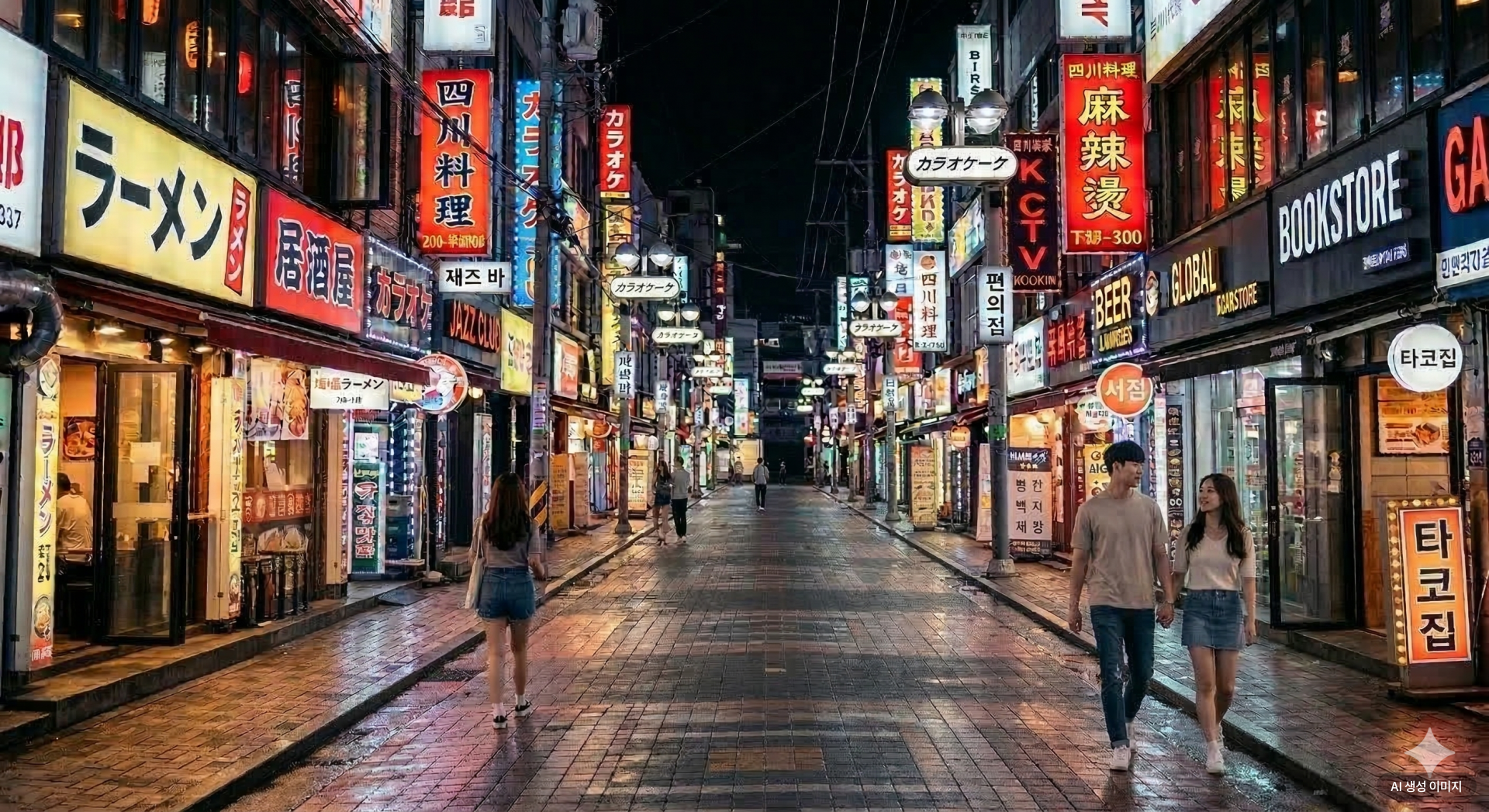
Near Hongdae Entrance Station in Mapo-gu, Seoul, there is a concentration of Chinese restaurants displaying signs with Chinese characters in the 'Mara Alley'. Photo by O Ji-eun
원본보기 아이콘Southeast Asian Languages Dominate Campus Signs... International Students Find Comfort in the Taste of Home
The vibe in these commercial districts is even more dynamic than the numbers suggest. Signs in Chinese characters and various Southeast Asian languages are now a vibrant feature of every alley. Inside Chinese grocery stores, international students crowd the aisles, picking out familiar spices and instant noodles from home. Wang (23), an international student from China, said, "With so many malatang shops near campus, it feels as cozy as being back home. I do enjoy Korean food sometimes, but the biggest source of energy in my student life is chatting with friends while enjoying the flavors of home," she added with a smile.
The core keyword for campus commercial districts these days is "long-term reign of personal preference." While the malatang and pho craze is waning in mainstream entertainment districts, it’s a different story near universities. In areas like Sageun-dong and Majang-dong near Hanyang University, restaurants catering to foreign students are steadily increasing, breathing new life into the local economy. For Korean students, these places are "exotic treats," but for international students, they are "daily comfort food."
A restaurant owner near Hanyang University shared, "Korean students change their menu preferences according to the latest trends, but international students are regulars rain or shine. Thanks to them, the district always stays vibrant and never loses its energy."

Exotic restaurants such as taco and Vietnamese eateries line the alleys near Hongik University in Mapo-gu, Seoul. Photo by O Ji-eun
원본보기 아이콘International Students Bring Vitality to Local Businesses, Creating Famous Food Streets via SNS... Halal Labels Now on Cafeteria Menus
This "global romance" is now expanding to major commercial hotspots in Seoul, such as Sinchon and Hongdae Entrance Station. On one block near Hongdae, more than five malatang restaurants have clustered together, forming a new "malatang alley." Nearby, a chicken ribs restaurant topped with plenty of cheese has become a social media hotspot among international students. At these establishments, where half the customers are foreigners, menus are now displayed in Korean, English, Chinese, and Japanese, welcoming global guests.
Universities are also putting effort into opening the "wallets" of international students. Seoul National University, Hanyang University, Sejong University, and Kyung Hee University have already started labeling cafeteria menus with "halal" (food permitted under Islamic law). This is part of an effort to create a campus dining experience that everyone can enjoy, regardless of religious or culinary boundaries.
Lee Eunhee, Professor Emeritus of Consumer Studies at Inha University, analyzed, "With the declining school-age population, attracting international students has become a survival strategy for universities and a powerful engine of vitality for local businesses. University districts are now evolving beyond the stereotypical Korean landscape into the trendiest global consumption hubs, where lifestyles from all over the world coexist and interact."
-

Reporter Park Hosu lake@asiae.co.kr
-

Reporter Oh Jieun joy@asiae.co.kr
-
Edit Yang Hyejin adoretj@asiae.co.kr
© The Asia Business Daily(www.asiae.co.kr). All rights reserved.
!['WHO Declares International Public Health Emergency' Why the Untreatable 'Variant Ebola' Is More Deadly Than COVID-19 [Reading Science]](https://cwcontent.asiae.co.kr/asiaresize/323/2026052110164072055_1779326201.png)
!["Please Help Us": How Much Do Those Bowing 90 Degrees These Days Actually Earn? [Data Pick]](https://cwcontent.asiae.co.kr/asiaresize/323/2026052010120870131_1779239528.png)