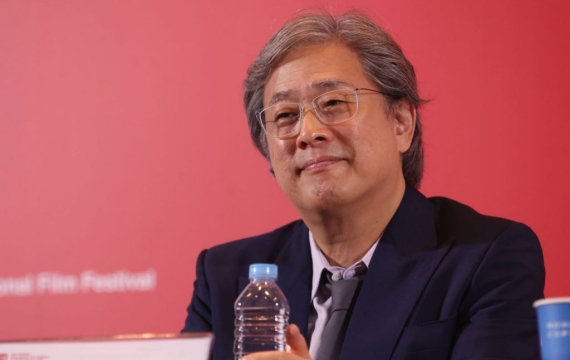
Current school uniform cost structure
The photo shows 'Nanum Gyobok Maejang' in Songpa-gu, Seoul. Photo by Yonhap News
by Oh Yukyo
by Hong Jayeon
Published 26 Feb.2026 15:04(KST)
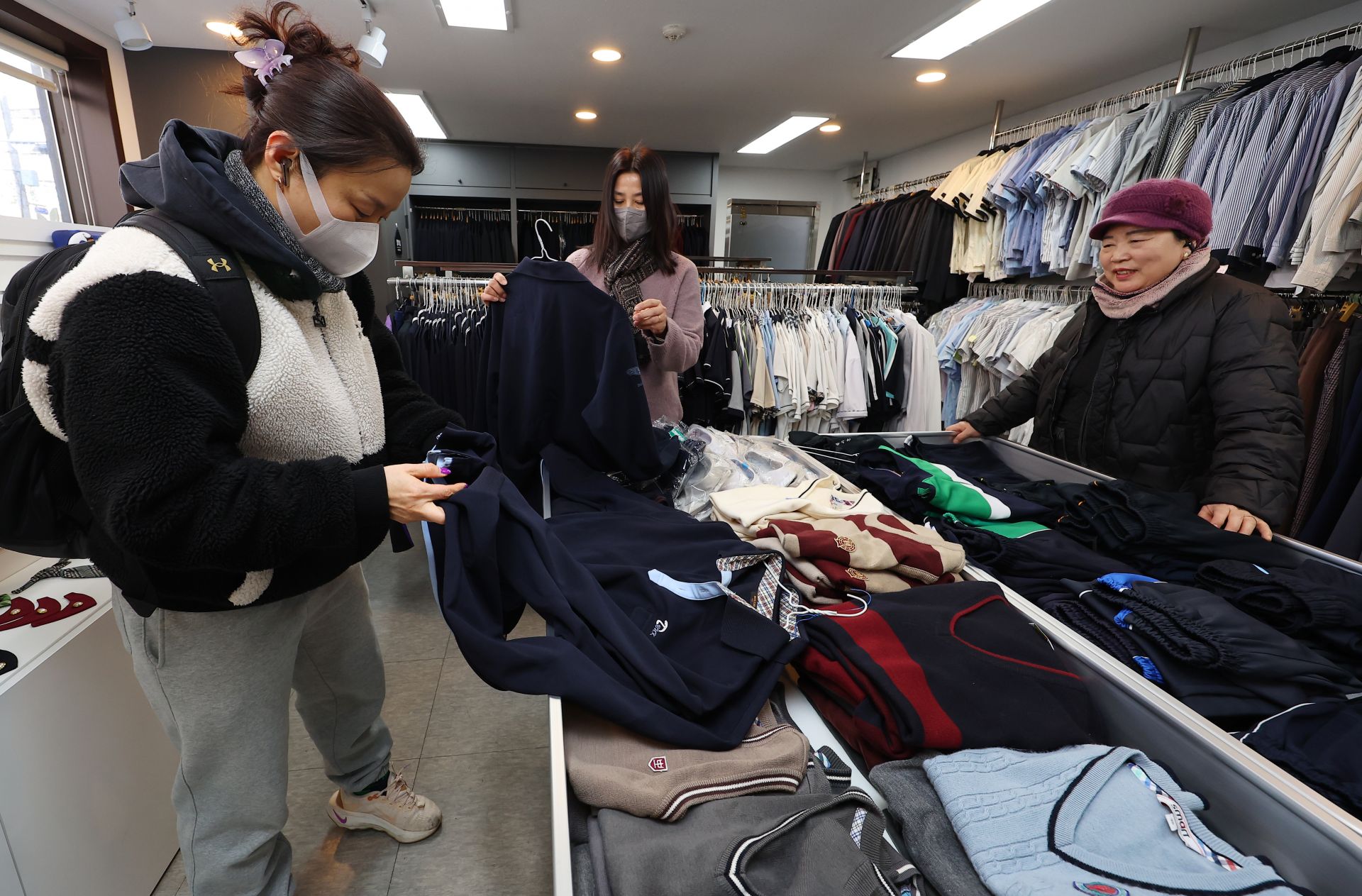
Current school uniform cost structure
The photo shows 'Nanum Gyobok Maejang' in Songpa-gu, Seoul. Photo by Yonhap News
The government has decided to overhaul the current system in which, even after receiving subsidies, parents still have to pay additional school uniform costs, by phasing out low‑usage suit‑style uniforms and encouraging a shift to everyday‑style uniforms. It will also launch a full survey of schools nationwide to reexamine the appropriateness of school uniform prices from scratch, and raise the ceiling on fines for private institutes to 10 million won to prevent covert tuition hikes. This represents a comprehensive push to stabilize prices following President Lee Jaemyung’s recent instruction to draw up measures in response to high school uniform prices.
The Ministry of Education and other relevant ministries announced these measures, titled “Plans to Improve and Strengthen Management of School Uniform Prices and Private Institute Tuition,” at the “Task Force of Relevant Ministers for Special Management of Living Costs” held on the 26th. An official from the Ministry of Education explained that the aim is “to induce the abolition of suit‑style uniforms, which have been reduced to outfits for ceremonies such as entrance and graduation, and to shift to ‘comfortable uniforms’ such as everyday uniforms and PE uniforms, so that everything can be covered within the current scale of uniform subsidies and no additional expenses are incurred, by redesigning the structure.”
According to the Ministry of Education, since 2015 it has operated a price ceiling through the “school‑led purchasing system,” under which schools select suppliers via bidding. As of this year, the ceiling price is 344,530 won, frozen at last year’s level. Provincial and metropolitan offices of education and local governments provide support for school uniform costs in kind or through vouchers in an amount of around 300,000 won.
However, complaints about school uniform prices have continued in the field. In practice, when taking into account everyday uniforms, which are worn more frequently (about 160,000 won per set), PE uniforms (about 110,000 won per set), and extra shirts (around 50,000 won), parents effectively have to shoulder an additional burden of around 300,000 won. In this sense, the “600,000 won for uniforms” figure mentioned by the president is essentially accurate when suit‑style uniforms, everyday uniforms, and PE uniforms are all considered.
That said, the Ministry of Education cannot unilaterally impose a specific type of uniform. Decisions on uniforms fall under “school discretion,” as they must be reflected in school regulations after collecting opinions from school steering committees, parents, and students. The government plans to work with provincial and metropolitan offices of education to recommend that schools shift toward everyday uniforms, and to gradually expand a system in which uniform subsidies are not tied to a specific item such as suit‑style uniforms but can be used flexibly through vouchers and similar means.
The government will not stop at merely changing the type of uniforms, but will intervene across the entire price‑formation process. Through a full survey of approximately 5,700 middle and high schools nationwide, it plans to determine whether school uniform prices are appropriate and to set item‑specific ceiling prices, including for everyday uniforms.
At the same time, it will improve the “school‑led purchasing system.” To change a market environment dominated by major brands, it will grant extra points in bidding to small business owners and producer cooperatives and provide joint brand consulting. It will also respond strongly, in cooperation with the Fair Trade Commission, to unfair trade practices such as bid rigging, which are cited as one of the causes of price bubbles, and will apply a zero‑tolerance principle, including referring cases for criminal investigation when violations are uncovered.
Management of private institute tuition, another burden on parents alongside uniform costs, will also be significantly strengthened. The government will conduct special inspections to prevent covert tuition hikes through excessive collection of so‑called “other fees” such as mock exam fees and material costs in addition to regular tuition. To ensure effective sanctions, it will sharply raise the maximum administrative fine from the current 3 million won to 10 million won and will also push to introduce a surcharge system to claw back unjust gains.
Oh Yukyo 5625@asiae.co.kr
Hong Jayeon hongzaa@asiae.co.kr
© The Asia Business Daily(www.asiae.co.kr). All rights reserved.

![[Reportage]"It Only Leads to Arguments"... Chungnam's True Sentiments Hide Deeper After Martial Law](https://cwcontent.asiae.co.kr/asiaresize/304/2026051223490460082_1778597344.jpg)