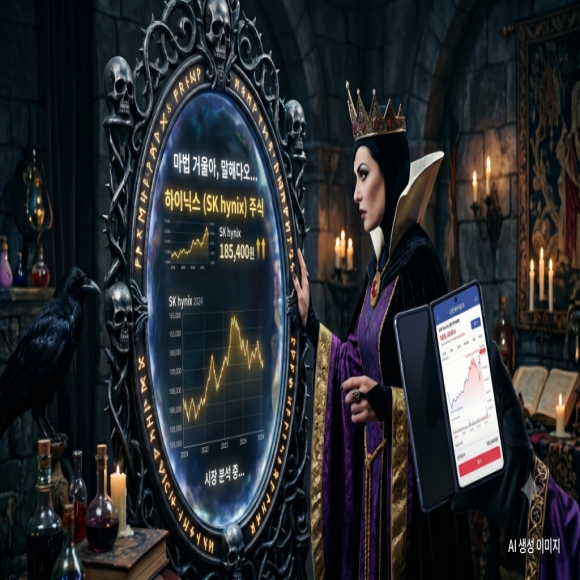
Sitrini Research report causes sharp declines in the Dow and Nasdaq
■ Unemployment rate projected in the double digits on June 30, 2028 AI investment expansion -> layoffs of high-income professionals -> labor cost savings reinvested into AI -> reduced consumption -> worsening corporate profits -> vicious cycle of further layoffs
■S&P500 down 38% from the October peak this year warning
■"Concerns accurately captured" VS "Fiction that overlooks a historic productivity revolution"
On the 22nd (local time), major foreign media outlets such as Bloomberg collectively pointed to a single research report as the main reason behind the sharp plunge in the New York stock market.
The report released the previous day by Sitrini Researchrecorded 7.5 million views on the social media service (SNS) X (formerly Twitter), creating a major stir on Wall Street.
The core of the report is that artificial intelligence (AI) will be so excessively successful that it will shock the economy.It forecasts that on June 30, 2028, the U.S. unemployment rate will surge to 10.2% and that the S&P 500 Index could fall by about 38% over two years after hitting its peak in October this year.
After the report came out, the stock market wobbled. All three major New York stock indexes closed down more than 1%. The Dow Jones Industrial Average fell 1.66%, the S&P 500 Index 1.04%, and the Nasdaq Composite 1.13%.
In particular, fears that AI will encroach on the software sector intensified the sell-off, and IBM shares plunged 13.15%, marking their worst single-day drop in 25 years. DoorDash was cited in the Sitrini Research report as a prime example of a company whose earnings will deteriorate, and its stock fell 6.6% that day.
By 2028, AI effect sends GDP soaring... unemployment at 10%, S&P down 38%
The title of the report is"The 2028 Global Intelligence Crisis". It presents as its key concept the idea of 'ghost gross domestic product (GDP)' generated by AI. AI boosts productivity, causing GDP to log high growth in the mid-to-high single digits. However, that growth does not translate into higher consumption, leading to a distorted economic structure.
In the initial phase of AI adoption, namely this year, AI automatically handles work such as coding, analysis, legal tasks, and finance, triggering a surge in layoffs among office workers. As labor costs decline, corporate profits increase and share prices rise. The profits thus generated are funneled straight back into AI computing as reinvestment.
However, because machines do not consume, the output created by AI does not lead to real-world consumption. As a result, the better AI becomes, the more employees companies lay off. The spending power of laid-off workers declines. This in turn leads to a deterioration in corporate earnings. Companies then once again seek to protect revenue through cutting labor costs and investing further in AI, creating a vicious cycle.
High-income professionals displaced by AI move into jobs such as delivery or ride-hailing drivers. But as competition intensifies even in these roles, wages fall. The report pointed out that "the businesses and jobs being eroded by AI are not something separate from 'the U.S. economy' but are precisely 'the U.S. economy' itself".
This year, the market has largely viewed AI's negative impact as an issue confined to specific sectors such as software. Share prices in those names are sliding. But Sitrini Research argues this is only the beginning. It expects AI to automate existing consumer transactions and erode traditional intermediary-based revenue models.
From delivery applications (apps) such as DoorDash to credit cards like Mastercard, the introduction of AI is expected to eliminate platform dependence. Fee margins will be driven close to zero. The crisis sparked by AI will thus spread from the real economy into the financial sector. As the consumer economy collapses, stock prices will plunge, and risks will spread across the entire credit market, including private credit and mortgage loans.
However, government responses will be inadequate, further aggravating the situation, and Sitrini Research forecasts that these structural changes will escalate not just into a simple sector-specific risk but into a "systemic risk."
Praised for "accurately capturing Wall Street's fears"... criticized as "a plunge triggered by a fictional story"
That said, this is a scenario based on worst-case assumptions. The report stated, "We are confident that some of these scenarios will not materialize," adding, "As investors, we still have time to assess which parts of our portfolios rest on assumptions that will not hold over the next decade."
The Wall Street Journal (WSJ) said of the report that it "accurately captured Wall Street's concerns" and evaluated that "much of the market action on the 23rd broadly matched the conditions described in the report."
There is also a view that the report is exaggerated and that it overstates the risks of AI. U.S. business outlet Fortune pointed out that the "ghost GDP" argument assumes that human jobs replaced by AI will disappear forever, whereas historically, productivity gains have played a role in redistributing value. For example, the advent of frozen convenience foods caused the share of agricultural employment to plummet, but the economy redistributed value elsewhere. It also noted that because people seek not only efficiency but also trust, aesthetics, and interaction, humans will continue to play a crucial role in fields that require designing experiences, crafting stories, and building identity.
Michael O'Rourke, chief market strategist at JonesTrading, called the reaction "astonishing" and said, "I have witnessed this market demonstrate remarkable resilience even when confronted with real bad news. Yet now a single fictional story is sending the market sharply lower."

!["Please Help Us": How Much Do Those Bowing 90 Degrees These Days Actually Earn? [Data Pick]](https://cwcontent.asiae.co.kr/asiaresize/323/2026052010120870131_1779239528.png)