The Wall Street Journal (WSJ) reported on the 8th (local time) that Chinese "Dama" investors, often compared to affluent middle-aged housewives, are behind the recent surge in gold and silver prices.
According to the World Gold Council, Chinese investors purchased about 432 tons of gold bars and gold coins last year. This represents a 28% increase from the previous year and accounts for about one-third of global gold purchases in 2025. Inflows into Chinese gold ETFs hit an all-time high last year, and gold futures trading volume on the Shanghai Futures Exchange also reached an annual record. Some investors are buying up physical gold ranging from bullion to 1-gram gold beans.
With no suitable investments, Chinese bought 432 tons of gold bars and coins last year
At the beginning of this year, as the metals rally gained momentum, global investors flocked to gold and other precious metals. Chinese individual investors are buying gold because they see no suitable investment destinations. The real estate slump has become prolonged, Chinese stock markets are highly volatile, and bank interest rates are low. As a result, not only "Dama" but even Generation Z (those born from the late 1990s to the early 2010s) are turning their attention to gold as a safe asset.

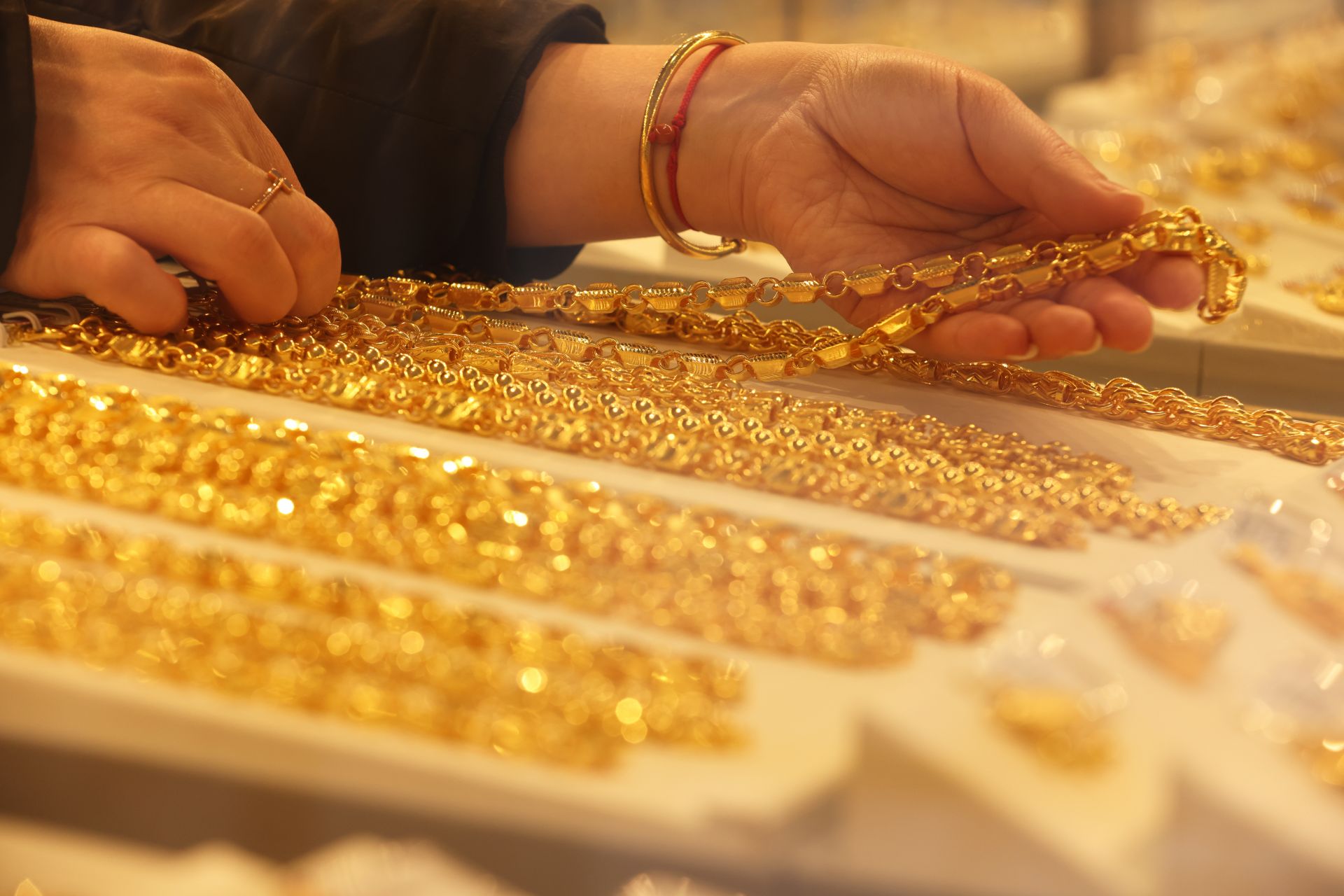
At the end of last month, a woman at a smart gold store machine installed in a Shanghai shopping mall was showing gold jewelry before selling it. Photo by AFP and Yonhap News Agency
원본보기 아이콘Rose Tian, a 43-year-old high school teacher, has purchased gold worth several thousand dollars over the past few years. She said that despite the recent increase in volatility, she still believes gold is the best way to protect her wealth, adding, "I am optimistic about the rise in gold prices because I believe gold is an excellent safe asset." Jia Fei, a woman in her 30s from Henan Province, bought 50 grams of gold and sold it last summer when the price had doubled. Now she believes gold prices are too high and is investing in silver instead.
WSJ: Chinese-style "Dama" behind the surge... Generation Z joins in
The WSJ explained that in China, gold and silver are trading at a premium to international benchmark prices, which is a sign of rising demand. Hamad Husain, a climate and commodities economist at Capital Economics, said, "It is now getting close to a speculative frenzy."
Some Chinese banks are tightening lending to cool the investment fever. Gold prices have also recently plunged. On January 30, when U.S. President Donald Trump nominated former Federal Reserve (Fed) Governor Kevin Warsh as the next Fed Chair, the dollar strengthened and metal prices recorded their steepest one-day drop in decades. However, Hong Miao, who works at the Tianya jewelry market in Beijing, China, told the WSJ, "The recent price correction has brought more customers to the market."
-

Reporter Oh Suyon syoh@asiae.co.kr
-
Edit Lee Kijae happylee17@asiae.co.kr
© The Asia Business Daily(www.asiae.co.kr). All rights reserved.