Guaranteeing Civil Servants' Right to Rest: Lunch Break Suspension of Civil Service Expands Rapidly Among Local Governments
The so-called "lunch break suspension system," in which civil servants suspend civil service work during lunch hours, is rapidly spreading among local governments nationwide. The intention is to guarantee civil servants' right to rest institutionally, thereby improving work efficiency and service quality. However, dissatisfaction is growing among citizens who have been using their lunch breaks to handle civil service matters.

A district office passport service center in Seoul is bustling with applicants hoping to obtain passports. This photo is provided to aid understanding of the article and is not directly related to the content. Photo by Kang Jin-hyung
원본보기 아이콘Initiated 8 Years Ago, Over 100 Locations Nationwide Implement 'Lunch Hour Shutdown'...Online and Self-Service Kiosks Replace Services
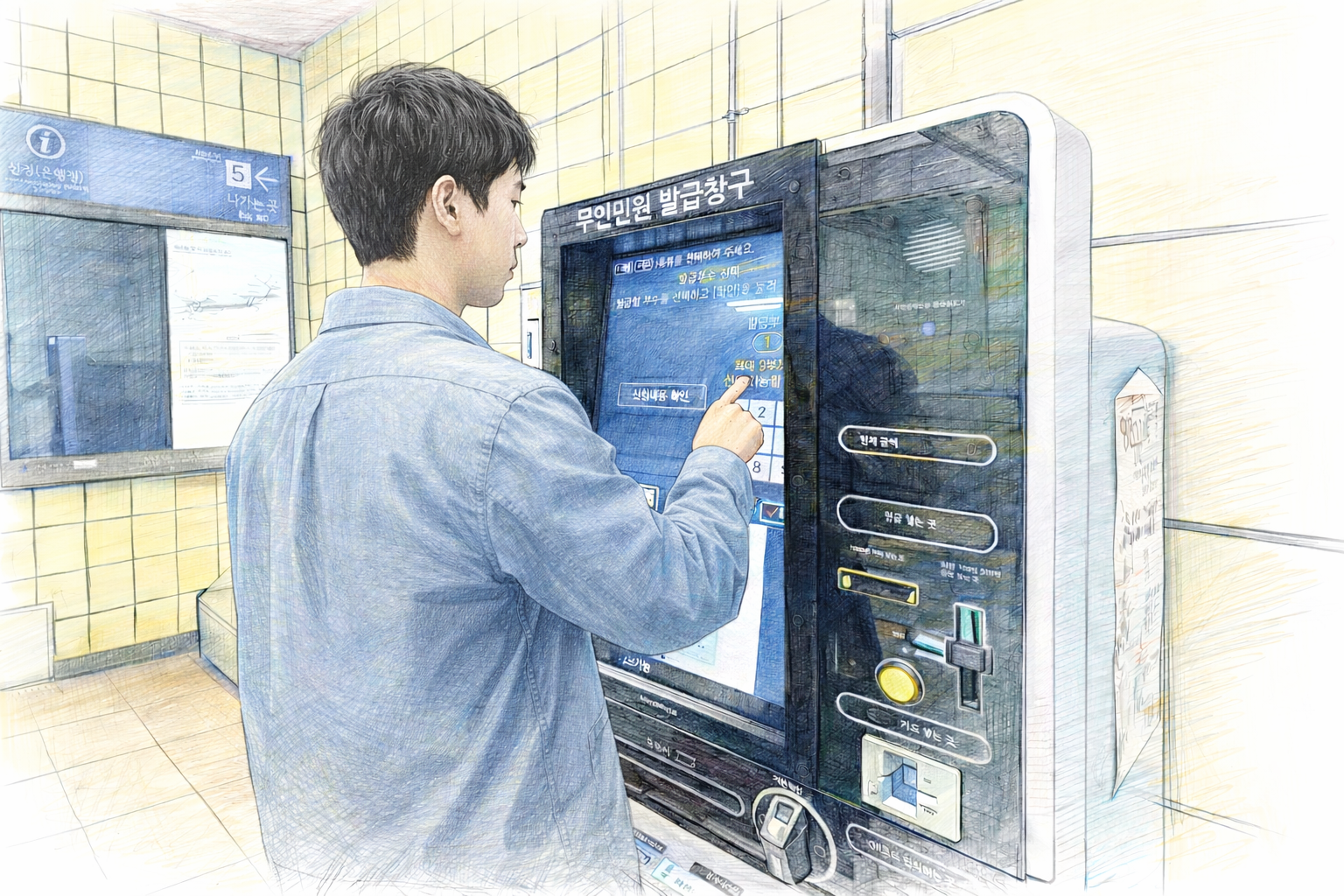
The lunch break suspension system has spread with the aim of guaranteeing civil servants' right to rest. Since Goseong County in South Gyeongsang Province first introduced the system in 2017, more than 100 local governments across the country are now implementing it. The expansion of online civil service platforms and the distribution of unmanned civil service kiosks are also cited as reasons for the system's growth.
Daegu also introduced the system this year. According to Daegu City and others on January 14, local districts in Daegu have implemented the lunch break suspension system at community administration and welfare centers since January 2, suspending civil service work from 12:00 to 1:00 p.m. However, the operation methods varied by district. Districts such as Suseong, Dong, Nam, Seo, Buk, and Gunwi continued to operate civil service offices in government buildings as usual, applying the lunch break suspension only to community administration and welfare centers. In contrast, Jung District, Dalseo District, and Dalseong County suspended civil service work during lunch hours at both the main government buildings and the community administration and welfare centers.
A Long-Awaited Goal of Civil Servants' Union: "Skipping Meals and Rotating Shifts...Guaranteeing the Right to Rest Improves Administrative Service Quality"

Citizens having lunch with kimbap in front of a community center in Gangnam-gu, Seoul. This photo is for illustrative purposes and is not directly related to the article. Photo by Yonhap News Agency
원본보기 아이콘The lunch break suspension system has been a long-standing demand of the civil servants' union. Due to the nature of civil service work, there is often a surge in requests even during lunch hours, leading to a fixed practice of skipping meals or taking very short, rotating breaks.
The civil servants' union stated, "It is structurally impossible to expect friendly and stable service from civil servants in an environment where even lunch breaks are not guaranteed," emphasizing that "improving the basic working conditions of civil servants ultimately leads to higher quality administrative services." In fact, many civil servants on the ground say the system helps reduce the burden of emotional labor and increases their ability to focus on their work.
Some Services Like Passport Issuance and Seal Certificates Still Require In-Person Visits...Addressing Inconvenience for Citizens in Welfare Blind Spots Remains a Challenge
However, there are also significant concerns about inconvenience for citizens. Some services, such as passport issuance and seal certificates, still require in-person visits to the service desk. In particular, the inconvenience is concentrated among office workers and dual-income households who have been using their lunch breaks to handle civil service matters. Although nearly eight years have passed since the system was introduced, public awareness remains low, and there are repeated reports of citizens visiting civil service offices during lunch only to find them closed and having to leave empty-handed.
Local governments plan to minimize inconvenience by expanding unmanned civil service kiosks, promoting online services such as Government24, and strengthening advance notifications. However, concerns remain that elderly citizens with limited digital access may still be left in the blind spot. Experts point out that to achieve both administrative efficiency and protection of labor rights, more sophisticated measures are needed, such as diversifying operating hours and expanding reservation-based services.
-

Reporter Seo Jiyeong zo2zo2zo2@asiae.co.kr
-
Edit Yang Hyejin adoretj@asiae.co.kr
© The Asia Business Daily(www.asiae.co.kr). All rights reserved.





![[Culture Interview] "Unifying the Fragmented Music Market... Super Fans Are the Next Competitive Edge"](https://cwcontent.asiae.co.kr/asiaresize/304/2026042817051344090_1777363513.jpg)