[Preview of CES 2026]
The Dawn of the 'Physical AI Era'
At CES 2026, the world’s largest consumer electronics and information technology exhibition opening on January 6 in Las Vegas, USA (local time), 'Physical AI'-artificial intelligence that autonomously makes decisions, moves, and performs tasks-will take center stage. Physical AI refers to technology that enables robots and devices to perceive and act in real-world environments through physical apparatus, marking a transition from AI that simply responds verbally to AI that operates in the physical world. Unlike previous years, this shift-where AI technologies are moving beyond screens to become mobile and interactive-is being recognized as a significant change at CES.
![[Preview of CES 2026]The Dawn of the 'Physical AI Era'](https://cphoto.asiae.co.kr/listimglink/9/2025122614472170608_1766728041.jpg)
Robots and home appliances autonomously decide and act
Transitioning from speaking AI to acting AI
According to the CES 2026 preview report released by Samjong KPMG Economic Research Institute, this year’s exhibition marks the full-scale implementation of agentic AI, which sets and executes its own goals, as well as physical AI, moving beyond generative AI. Lee Hyojeong, Executive Director at Samjong KPMG Economic Research Institute, analyzed, “AI is no longer confined to the digital realm, but is beginning to function as an agent in the physical world,” adding, “The focus of technology is shifting from explanatory capabilities to execution capabilities.”
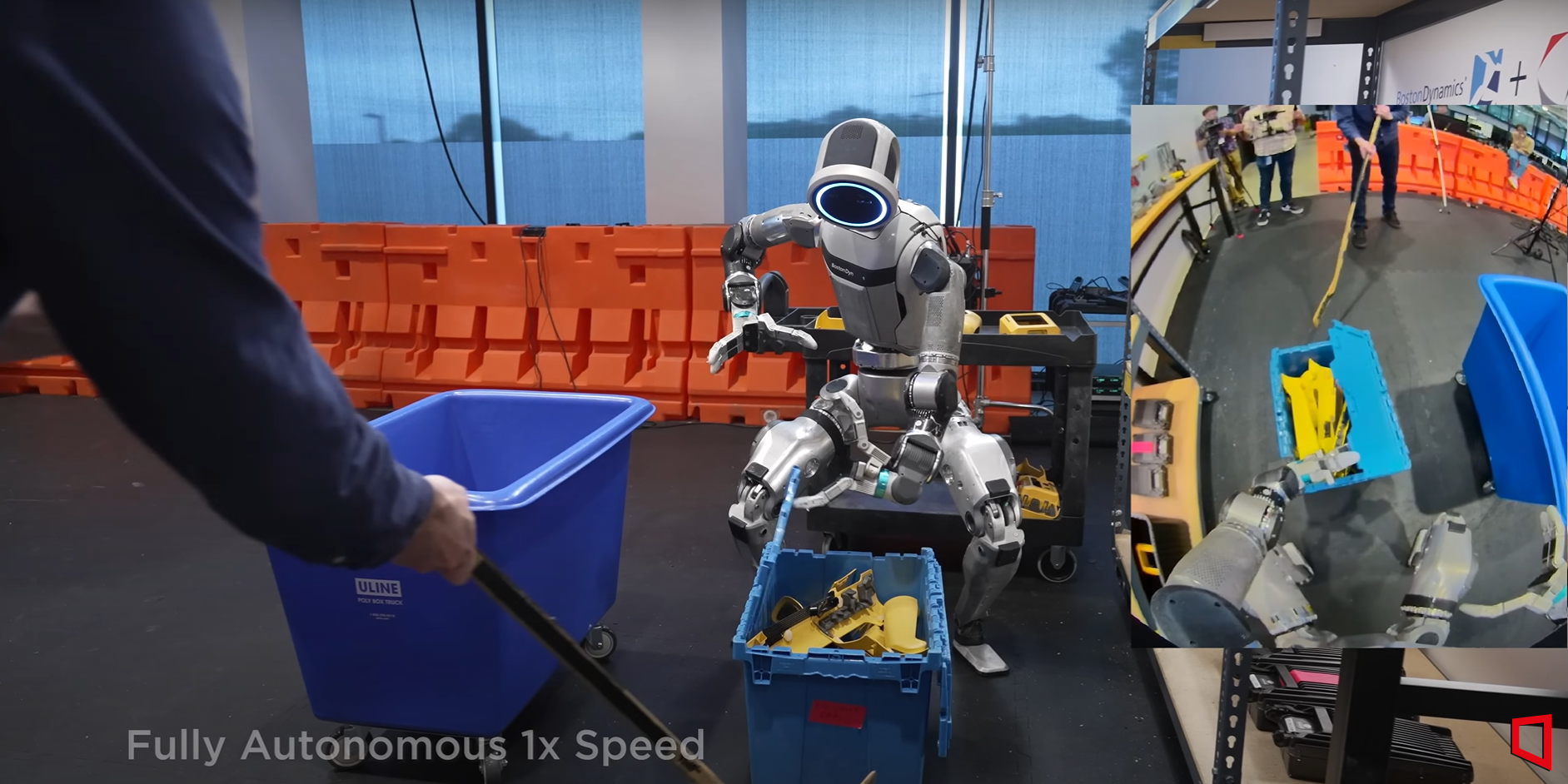
While CES has traditionally been a stage to showcase the potential of AI, 2026 is being regarded as the first year in which AI has advanced to directly operating robots, devices, and systems. At this year’s event, the evolution of physical AI will be concretely demonstrated through live showcases. Hyundai Motor Group will present a live demonstration of the next-generation electric humanoid robot 'Atlas' via Boston Dynamics. The company also plans to introduce a robotics ecosystem strategy that extends beyond laboratories to real industrial environments such as manufacturing and logistics sites. Global robotics companies will also join the competition by unveiling mass-produced humanoids and affordable models. Agility Robotics will exhibit its mass-production humanoid 'Digit', while China’s Unitree Robotics will showcase its low-cost humanoid 'G1', along with humanoid models integrated with conversational AI.
Artificial Intelligence Evolution Beyond Generation to Execution
AI Expands to Manufacturing, Construction Sites, and Homes
Competition in Demonstrating Humanoids and Home Robots
Enhancing Robot Autonomy with On-Device AI
Semiconductors and computing technologies, which underpin the spread of physical AI, will also be prominently featured at the exhibition. On-device AI technology, which enables robots and autonomous systems to make decisions independently without relying on external cloud connections, is a key focus. South Korean company MaumAI will unveil 'MAIED', an on-device physical AI brain for robots, while major semiconductor firms such as NVIDIA, AMD, and Intel will present next-generation AI accelerators and robotic simulation platforms optimized for physical AI computation. There is a growing consensus that the competition to advance robotic intelligence is expanding from software to hardware infrastructure.
At this year’s CES, Samsung Electronics will operate its largest-ever independent exhibition hall, spanning approximately 4,628 square meters, at the Wynn Hotel-a luxury venue outside its traditional main location at the Las Vegas Convention Center (LVCC). Tae Moon Roh, President and Head of DX Division and MX Business at Samsung Electronics, reportedly instructed internally, “If the main exhibition hall is a regular store, the Samsung booth should be designed like a luxury boutique.” The aim is to showcase the entirety of Samsung’s AI-powered home, focusing on experiential demonstrations of physical AI where appliances and devices move and operate together in real spaces, rather than simply listing AI features by function. LG Electronics plans to present specific usage scenarios in which AI-powered smart home hubs and household assistant robots support daily tasks such as cooking, cleaning, and caregiving. This highlights the transition of AI from providing voice responses or information to actively moving and performing roles in real environments. Baek Seungtae, Vice President and Head of HS Business Division at LG Electronics, stated, “At CES 2026, we will showcase LG’s efforts toward the ‘Zero Labor Home’ vision, including the home robot LG CLOi.”
Hyundai Motor's Robot 'Atlas' Live Demonstration
Samsung Operates Largest Exhibition Hall with Luxury Store Concept
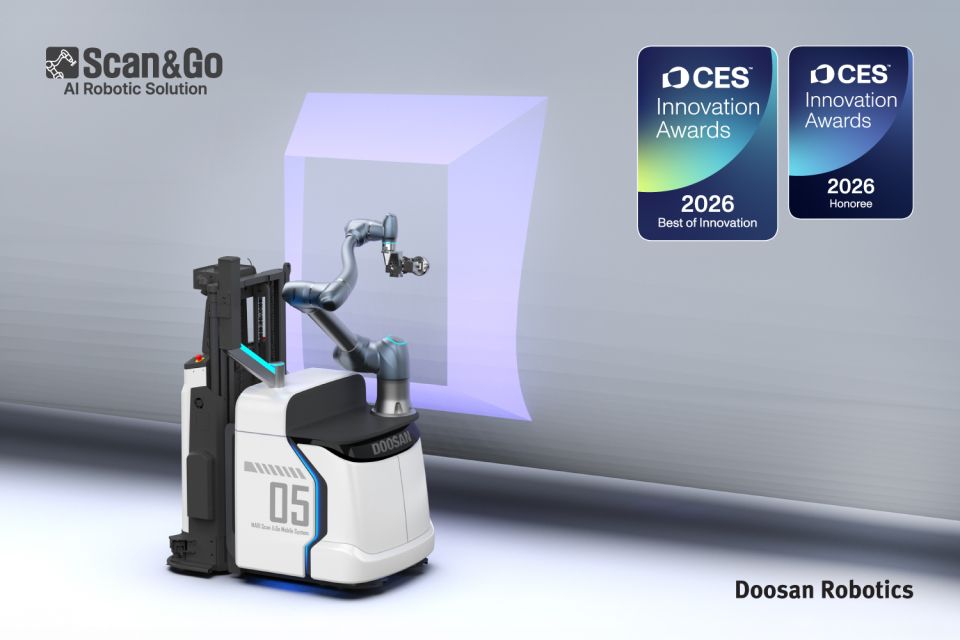
Practical applications of physical AI in industrial and everyday settings will also be a major highlight at this year’s CES. Doosan Robotics will exhibit the 'Scan & Go' robot, which automates inspection and processing of large structures, demonstrating its potential for use in manufacturing and construction sites. This product combines AI with 3D vision technology to autonomously recognize objects and perform tasks, distinguishing it from traditional industrial robots that focus on repetitive motions.
LG Presents Smart Home Scenarios for Housework, Cooking, and Cleaning
Doosan Unveils Use Cases in Manufacturing and Construction Sites
Chinese Companies Launch Offensive with Low-Cost Humanoids
From a technology trend perspective, agentic AI-robots that can autonomously assess situations and perform tasks without user commands-is being introduced in earnest, while spatial computing, which combines extended reality and sophisticated sensor technology, has also emerged as a core element of physical AI. These foundational technologies are drawing attention for their ability to refine user experiences across various domains such as mobility and smart homes.
Chinese companies are also launching an offensive with physical AI. A wide range of AI-based robots capable of moving and responding in disaster situations, as well as humanoid robots that mimic human movements, will be on display, emphasizing that robots have moved beyond 'showcase technology' to actual deployment. Products designed for physical environments, such as robot vacuum cleaners that can cross thresholds and comprehend spaces, will also be introduced at a commercial-ready level.
Industry experts view CES 2026 as a turning point in the competition for AI technology. There is a consensus that AI capable of physically moving and operating-rather than merely responding verbally-has become the focal point of competition. With physical AI at the forefront, this year’s CES is expected to serve as a benchmark for the future direction of AI technology and its industrial applications.