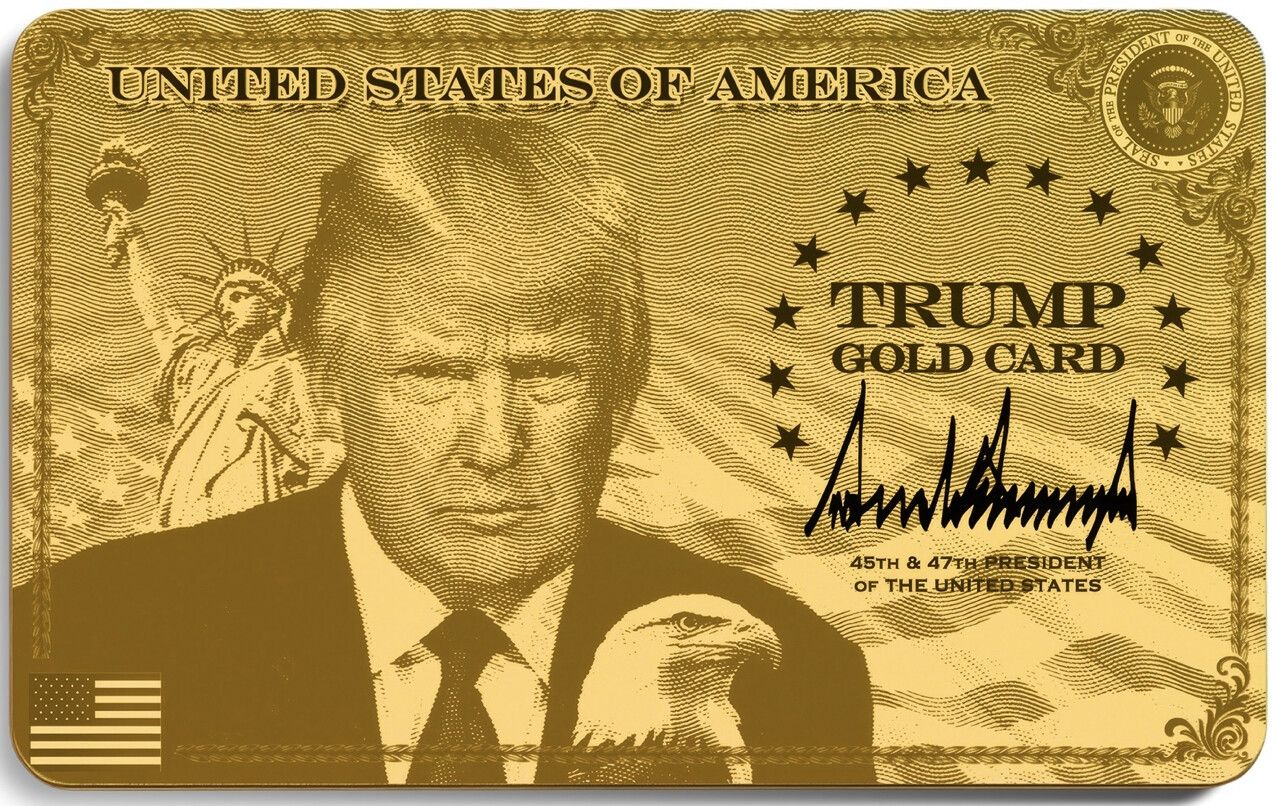
Donald Trump, President of the United States, announced on his social media platform Truth Social that "the US government's 'Trump Gold Card' was launched today." He added, "Now, great American companies can protect irreplaceable talents," and mentioned that the official channel will open within 30 minutes.
The "Gold Card Permanent Residency" program, which allows individuals to obtain permanent residency by donating 1 million dollars (approximately 1.47 billion won) to the U.S. government, was implemented on December 10 (local time). On the same day, the U.S. government announced strengthened screening measures requiring Electronic System for Travel Authorization (ESTA) applicants to provide their social networking service (SNS) account information for five years.
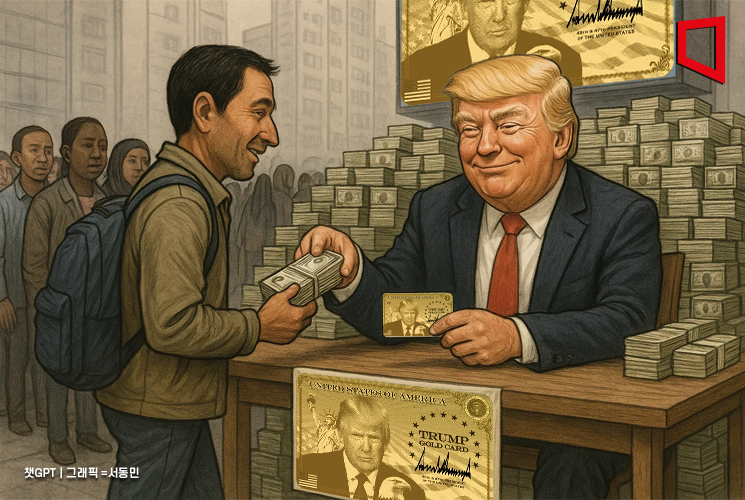
Upon visiting the Trump Gold Card application website, applicants can choose from options such as the Personal Gold Card, Personal Platinum Card, or Corporate Gold Card. However, the higher-tier Platinum Card is labeled as "coming soon" and is not yet available for application. Applicants for the Platinum Card can receive it by donating 5 million dollars, which is five times the amount required for the Gold Card.

As outlined in the previously released draft, permanent residency applicants must also pay a separate 15,000-dollar fee to the Department of Homeland Security (DHS). Once the applicant submits the application and pays the required fees, the United States Citizenship and Immigration Services (USCIS) will begin the review process. USCIS has previously estimated that there will be a demand for approximately 1,000 applicants per year.
Additionally, the Trump administration officially announced on the same day its plan to strengthen the screening of ESTA applicants. ESTA is a system that allows citizens of visa waiver countries to visit the United States for up to 90 days without a visa, and 42 countries, including South Korea, are eligible.
The U.S. Customs and Border Protection (CBP) published a regulation in the Federal Register requiring ESTA applicants to submit their SNS account information from the past five years. This measure is in accordance with President Trump's executive order to strengthen screening for foreign entrants.
CBP may also require applicants to provide phone numbers from the past five years and email addresses from the past ten years. Family information, such as the names and contact details of parents, spouses, siblings, and children, may also be required. Submission of biometric data, such as fingerprints, DNA, and iris scans, is also permitted.

Going forward, ESTA applications will be accepted only through a mobile application (app), not via the website, and applicants will be required to submit a selfie photo in addition to a passport photo. The regulation will be finalized after a 60-day public comment period.
Previously, the Trump administration had expanded SNS verification in existing visa screenings. For H-1B, a so-called "specialty occupation visa," authorities check for any involvement in online censorship work, while for student visas, they review whether applicants have posted content hostile to the United States. The New York Times (NYT) reported that due to the expansion of information collection, the ESTA approval process may take longer and is more likely to involve in-depth screening.






![[Culture Interview] "Unifying the Fragmented Music Market... Super Fans Are the Next Competitive Edge"](https://cwcontent.asiae.co.kr/asiaresize/304/2026042817051344090_1777363513.jpg)