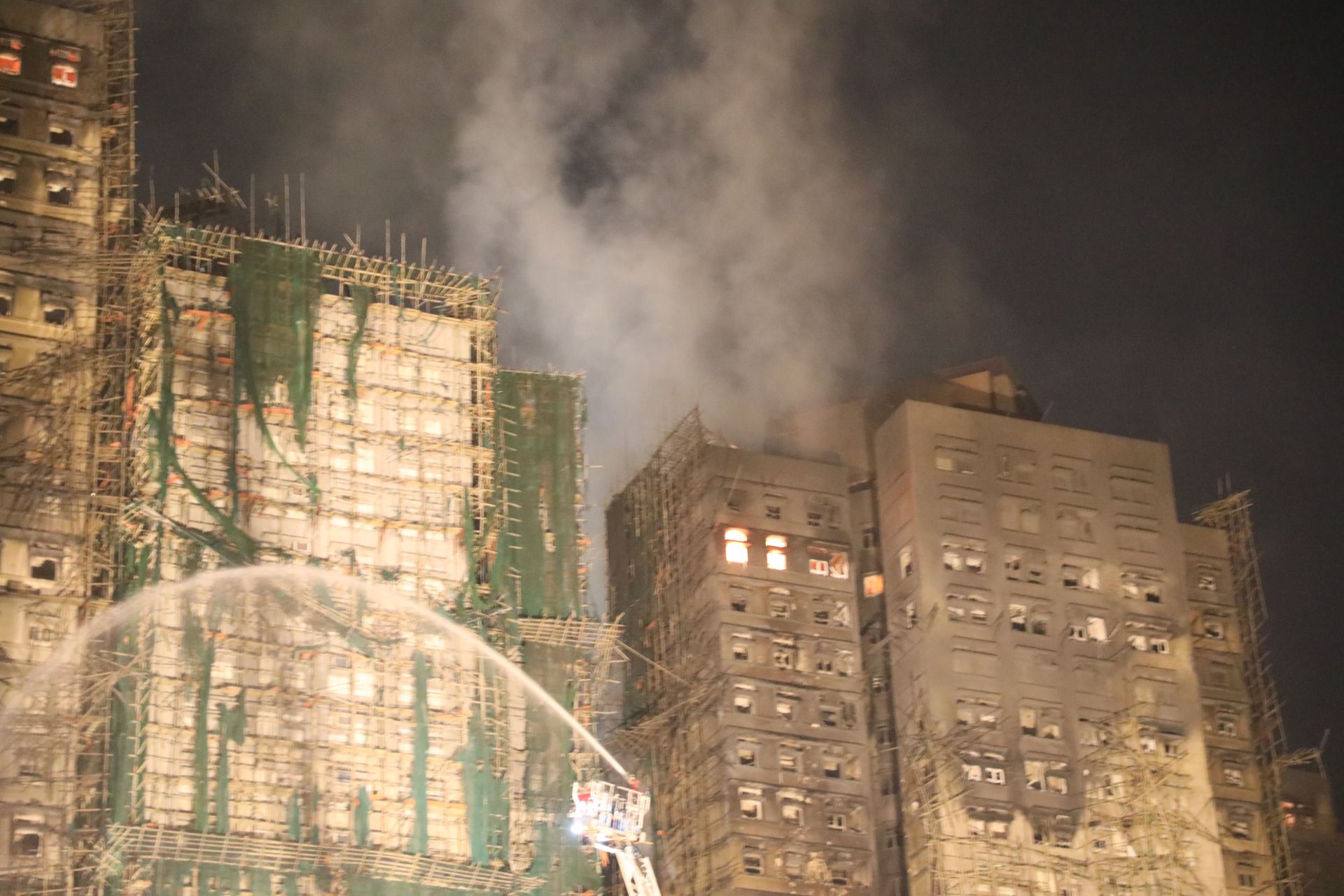


Concerns about the risks associated with quasi-super high-rise buildings, which are subject to relatively less regulation than super high-rise buildings, are steadily being raised. Professor Changyoung Song of the Department of Disaster Safety at Gwangju University stated, "Currently, buildings with 50 floors or more are classified as super high-rise buildings and safety is ensured through nine preliminary disaster reviews under the law related to super high-rise and underground-connected buildings, but the problem lies with quasi-super high-rise buildings with 49 floors or fewer."
As casualties from apartment fires in Hong Kong have increased, concerns about fires in high-rise buildings in Korea are also growing. In Korea, there have been several large-scale fires in high-rise buildings where combustible exterior materials fueled the flames. Each time, regulations were strengthened, but risks still remain. While the damage in the Hong Kong apartment fire was exacerbated by the use of "bamboo scaffolding," and Korea’s use of "steel scaffolding" may seem comparatively safer, experts point out that once a fire breaks out, it is impossible to guarantee safety in terms of follow-up response.
Both Apartment Fires and Casualties Are Increasing
According to the National Fire Information System of the National Fire Agency, there were a total of 17,259 apartment fires in Korea over the past five years (from January 2020 to November 2025). The number of apartment fires has been on the rise every year. There were 2,808 apartment fires in 2020, which slightly decreased to 2,666 in 2021, then increased to 2,759 in 2022, 3,001 in 2023, and 3,193 in 2024. This year, as of November 27, there have already been 2,832 apartment fires.
The number of casualties has also been significant. Over the past five years, apartment fires have resulted in a total of 2,259 casualties, with 225 deaths and 2,044 injuries. By year, there were 364 casualties (36 deaths) in 2020, 375 (34 deaths) in 2021, 336 (41 deaths) in 2022, 407 (35 deaths) in 2023, and 363 (28 deaths) in 2024. This year, the damage has been even greater, with 414 people (41 deaths) injured or killed so far.
Notably, a significant portion of casualties occurred during evacuation. An analysis of the causes of casualties from fires between January 2020 and December 2024 showed that out of 11,958 total fire-related casualties, 4,974 cases involved inhalation of smoke or toxic gas, and 180 cases involved injuries from jumping while evacuating. These accounted for 43.1% of all fire-related casualties.
Since most casualties in apartment fires occur during evacuation or firefighting, it is important to assess the situation before evacuating, rather than evacuating unconditionally. The National Fire Agency has distributed the "Improvement Plan for Apartment Fire Evacuation Safety Measures" to strengthen evacuation safety for apartment residents. According to the agency, since most casualties occur during the evacuation process, it is crucial to respond based on an accurate assessment of the building structure and fire situation, rather than simply attempting to escape.
A National Fire Agency official stated, "By law, domestic apartments are required to have special evacuation staircases, allowing residents to safely evacuate to the ground or rooftop in the event of a fire. These stairwells are equipped with smoke control systems designed to prevent smoke from entering or spreading inside." He added, "In high-rise residential buildings, evacuation safety zones are provided on certain floors, allowing residents to wait there until firefighters arrive and then evacuate together. Unlike regular elevators, there are dedicated evacuation elevators designed to operate even during a fire, so it is helpful to be familiar with their locations and proper usage in advance."
Safety Measures Strengthened, but Blind Spots Remain
According to the "Regulations on Standards for Fire Evacuation and Fire Protection Structures of Buildings" announced in 2018, evacuation elevators are mandatory in public housing buildings with 30 floors or more. While systems such as mandatory evacuation elevators have been established, there are concerns about limitations during actual evacuation and rescue operations.
According to the National Elevator Information Center of the Ministry of the Interior and Safety, there are currently 882,788 elevators nationwide. Of these, 296,941 are for passengers, 263,112 are for people with disabilities, and 204,236 are for firefighting and rescue. However, there are only 1,647 evacuation elevators. Professor Kim Seungho of Korea Lift College explained, "Under the revised standards, evacuation elevators are required in buildings with 30 floors or more, but many existing buildings were constructed before the revision, so evacuation capabilities vary by building."
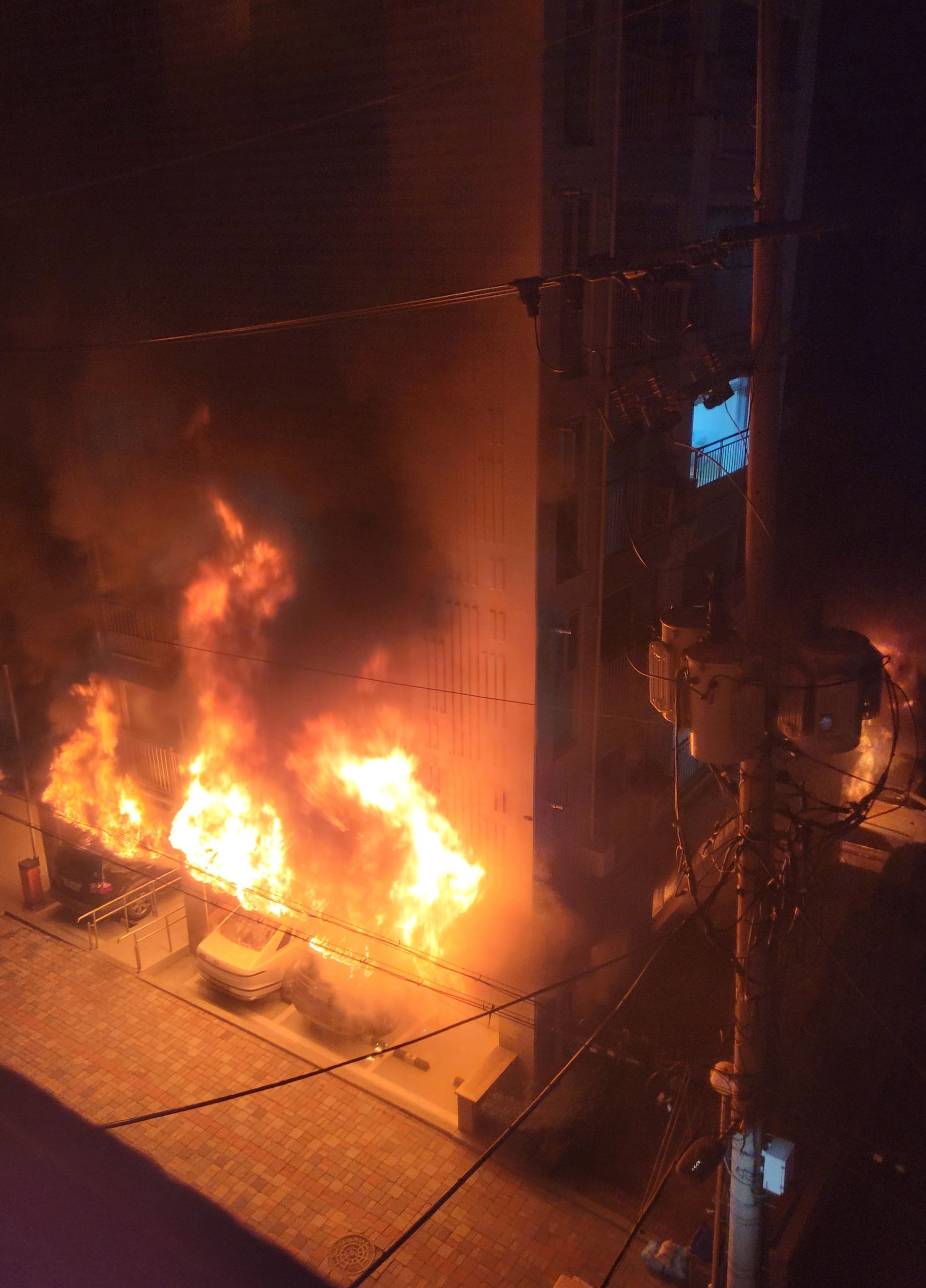
The safety gap in aging high-rise buildings is also a problem. Since the legal system for super high-rise and underground-connected buildings was established relatively recently, buildings constructed before this time still lack adequate evacuation facilities, have different design standards, and face the risk of fire spreading through underground connections. Professor Song stated, "Buildings constructed before the law was enacted do not meet current evacuation and disaster prevention standards, leaving them virtually unprotected. There is a need to strengthen practical training and safety inspections for aging high-rise buildings through institutional measures."
Experts unanimously agree that the biggest problem is a lack of preparedness. Although Korea’s evacuation facilities and technical standards are relatively advanced compared to Hong Kong, actual resident evacuation drills, education, and emergency power supply are not institutionalized, making the country vulnerable in the event of a fire.
Lee Jaeun, Director of the National Crisis Management Research Institute at Chungbuk National University, stated, "Korea is also fully at risk of experiencing a major fire disaster like Hong Kong. Prevention and preparedness are key, but in reality, there is almost no training or evacuation education for residents of super high-rise buildings." He added, "Securing backup power to ensure elevator operation during power outages is essential, but this area is still lacking. Considering that evacuation by stairs is virtually impossible for the elderly or disabled, institutional improvements are urgently needed."
-

Reporter Oh Jooyean moon170@asiae.co.kr
-
Edit Kim Hyunhee faith100@asiae.co.kr
© The Asia Business Daily(www.asiae.co.kr). All rights reserved.