Living Costs with High Consumer Sensitivity Rise 2.9% in November, Highest in 1 Year and 4 Months
Sharp Increase in Food and Petroleum Prices
Overall Consumer Prices Up 2.4%
The living cost index, which is composed of items with high consumer sensitivity, rose by 2.9% last month, marking the highest level in one year and four months. Overall consumer prices increased by 2.4% for the second consecutive month, and core inflation also remained in the low-to-mid 2% range at 2.3%, but the living cost index nearly reached 3%. The rise in food and petroleum prices was attributed to frequent autumn rainfall and a higher exchange rate.

Lee Doowon, Director of Economic Trend Statistics Review at the National Data Agency, is explaining the consumer price trends for November 2025 at the Government Sejong Complex on the 2nd. Photo by Yonhap News
원본보기 아이콘Perceived Cost of Living Up 2.9% Due to Food and Other Price Hikes
According to the "November 2025 Consumer Price Trends" released by the National Data Office on the 2nd, the consumer price index last month rose by 2.4% year-on-year, the same as the previous month. The 2.4% increase in the previous month was the largest since July last year (2.6%), a span of 15 months. Except for May (1.9%) and August (1.7%) this year, the inflation rate has remained in the low 2% range.
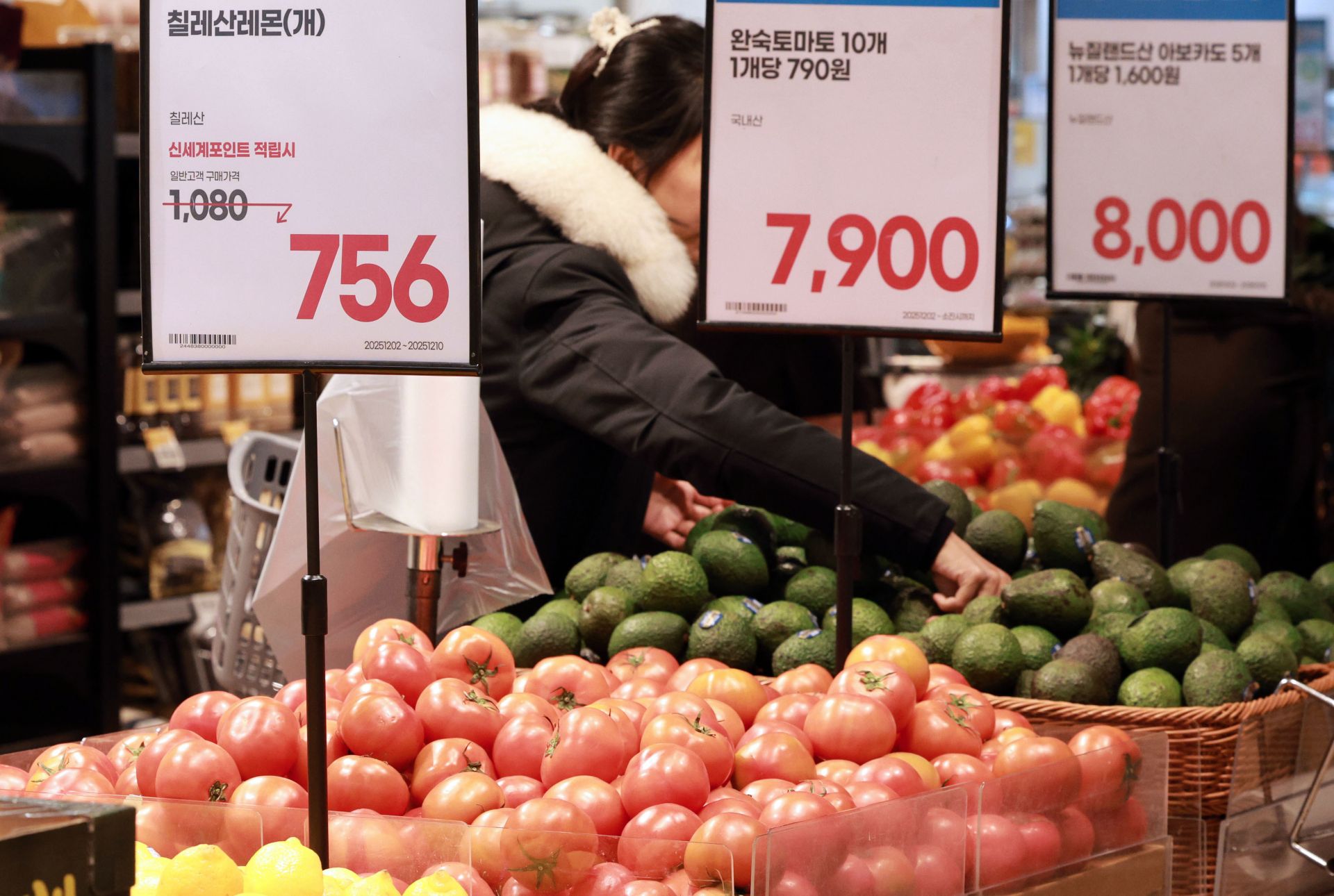
However, when looking solely at the perceived cost of living, the increase was close to 3%, showing a more pronounced rise. The living cost index, which is composed of items with high purchase frequency and expenditure share, rose by 2.9%. This is the highest increase in one year and four months since July last year (3.0%), and 0.4 percentage points higher than the previous month (2.5%). The increase in food prices (3.7%) outpaced that of non-food items (2.3%). The living cost index is calculated based on 144 items out of a total of 458, selected for their high purchase frequency and high expenditure share, making price changes more noticeable to consumers.
This is why the government is emphasizing the stabilization of perceived living costs. Deputy Prime Minister and Minister of Economy and Finance Koo Yooncheol stated at the Economic Ministers' Meeting and Price-Related Ministers' Meeting held at the Government Seoul Complex on this day, "We will manage food prices with heightened vigilance, as price management is both the beginning and end of stabilizing people's livelihoods." He also said the government plans to closely monitor item-specific situations, especially for food and petroleum products that are closely linked to daily life, and to respond to factors causing price fluctuations.
Core inflation, which excludes highly volatile items and better reflects underlying price trends, recorded a relatively moderate increase in the low 2% range. The OECD standard index, which excludes food and energy, rose by 2.0%, down 0.2 percentage points from the previous month (2.2%). The domestic standard index, which excludes agricultural products and petroleum, also rose by 2.3%, 0.2 percentage points lower than the previous month (2.5%).

Consumer prices showed an increase in the mid-2% range for two consecutive months. Petroleum products rose by 5.9%, marking the highest increase in nine months since February this year (6.3%), pushing the overall inflation rate up by 0.23 percentage points. In particular, diesel (10.4%) and gasoline (5.3%) saw significant price hikes. On the 2nd, a fuel price board was displayed at a gas station in Seoul. Photo by Yonhap News.
원본보기 아이콘Agricultural, Livestock, and Fishery Products Up 5.6%, Petroleum Products Up 5.9%
By item, agricultural, livestock, and fishery products rose by 5.6%, the largest increase in one year and five months since June last year (6.5%). Although vegetable prices fell by 4.7%, the overall increase in agricultural products (5.4%), as well as significant rises in livestock (5.3%) and fishery products (6.8%), contributed to the overall increase. Notably, rice (18.6%), tangerines (26.5%), apples (21.0%), mackerel (13.2%), and eggs (7.3%) saw particularly sharp price hikes.
For apples and tangerines, frequent autumn rainfall delayed shipment periods, which affected prices. In the case of apples, a high rate of increase two years ago led to a base effect last year, and the lower numbers from then continued to influence this year's base, amplifying the price increase. For tangerines, higher quality this year also contributed to higher prices. Additionally, exchange rate effects were observed for some imported items.
Lee Dowon, Director of Economic Trend Statistics Review at the National Data Office, explained, "For agricultural, livestock, and fishery products, not only imported beef and pork but also imported fruits such as mangoes and kiwis saw some price increases due to the exchange rate. The harvest situation in exporting countries or a decrease in the number of animals slaughtered can also have an impact." He added, "For fishery products, such as hairtail, mackerel, and croaker, which are heavily imported, there is a combined effect of harvest conditions and exchange rates."

Industrial products recorded a 2.3% increase, the same as the previous month and the highest rate so far this year. Processed foods (3.3%) have continued a rise in the 3% range after a sharp increase since December last year. However, the price increases for bread (6.5%) and coffee (15.4%) were relatively large. Director Lee analyzed, "Not only the exchange rate but also rising labor costs and raw material prices likely had an impact."
Petroleum products rose by 5.9%, the highest in nine months since February (6.3%) this year. Despite a decline in Dubai crude oil prices by 11.1% and a general downward trend in international oil prices, the recent rise in the exchange rate and a reduction in the government's fuel tax cut combined to drive up prices.
Service prices rose by 2.3%. Rents (0.9%) and public services (1.4%) saw relatively low increases, while personal services (3.0%) continued to rise in the 3% range for the second consecutive month (3.3% in the previous month). Among these, personal services excluding dining out rose by 3.1%. Director Lee noted, "Due to the Chuseok holiday, prices for travel-related products rose sharply in the previous month (3.6%), but the increase slowed last month, resulting in a 0.5 percentage point drop."
-

Reporter Kim Pyeonghwa peace@asiae.co.kr
-

Reporter Lee Dongwoo dwlee@asiae.co.kr
-
Edit Choo Myeonghoon chox2mh@asiae.co.kr
© The Asia Business Daily(www.asiae.co.kr). All rights reserved.