Foreign investors sold more than 9 trillion won this month
Shift to selling trend after 3 months
Shift to selling trend after 3 months
by Song Hwajung
by Choi Yujeong
Published 17 Nov.2025 14:54(KST)
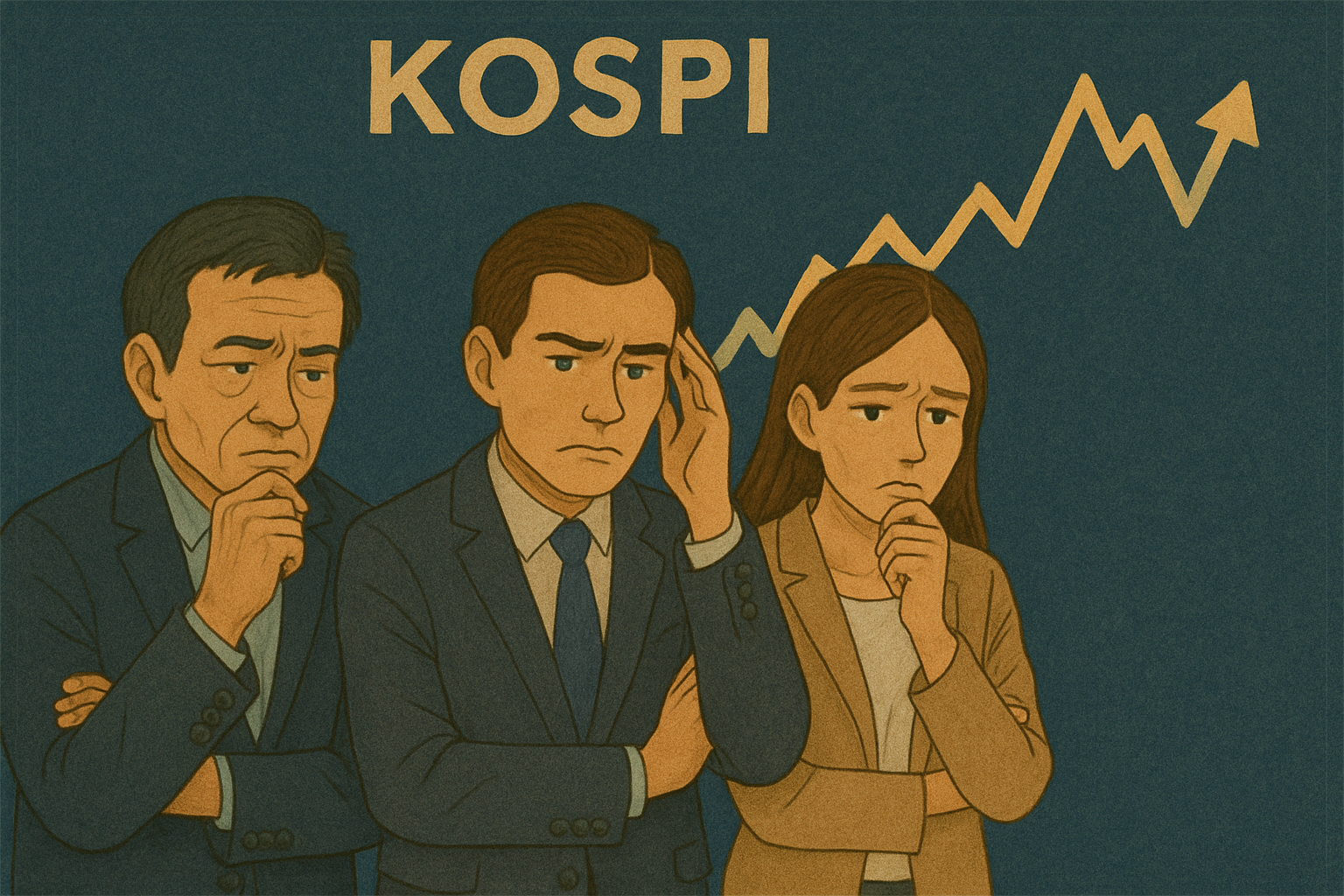
The KOSPI has recorded negative returns for the first time in three months, with corrections continuing. The factors that previously supported the rise of the KOSPI have changed, leading to increased volatility. Foreign investors, who had been driving the KOSPI’s gains, have switched to net selling, offloading more than 9 trillion won this month. Expectations for a U.S. interest rate cut have diminished, and profit-taking in semiconductors has surged amid concerns about an overvalued artificial intelligence (AI) sector. Experts believe that while short-term volatility is inevitable, the upward trend is likely to continue considering improvements in corporate earnings and policy momentum.
As of 9:30 a.m. on November 17, the KOSPI was trading at 4,067.95, up 56.38 points (1.41%) from the previous session. The market is rebounding just one day after a sharp decline in the previous session. On November 14, the KOSPI dropped 3.81%, falling below the 4,100 mark.
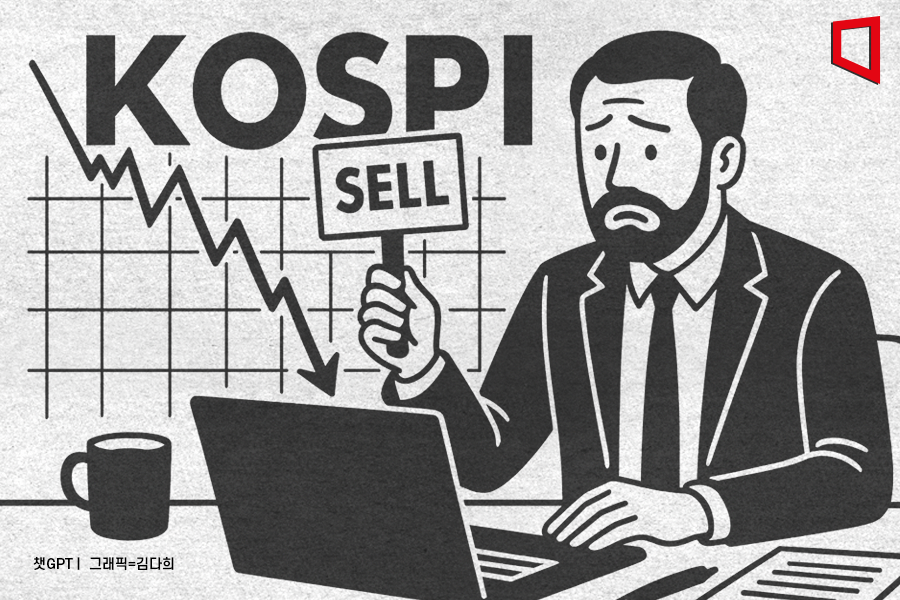
The index trend is largely being determined by foreign investors. On this day, foreign investors are net buyers in the Korea Exchange, which appears to be pushing the index higher. On November 14, foreign investors sold 2.3574 trillion won, marking the largest net selling of the year, which caused the index to plunge by 3.81%.
Foreign investors have turned to net selling for the first time in three months, with a cumulative net sale of 9.128 trillion won so far this month. Kim Daejun, a researcher at Korea Investment & Securities, said, "KOSPI volatility has increased since November, and the rapid increase in foreign net selling right after the all-time high closing of 4,221.87 points on November 3 has been a major factor." He added, "Foreign investors have generally maintained a selling bias from November 4 to 14, and on the 4th, 5th, and 14th, net selling exceeded 2 trillion won each day, putting pressure on the market."
Na Jeonghwan, a researcher at NH Investment & Securities, noted, "The sector most affected by foreign net selling has been semiconductors, influenced by profit-taking and concerns about the high valuation of AI." He also pointed out, "The rising won-dollar exchange rate is another factor weakening foreign investor inflows."
Although large-scale selling by foreign investors could trigger anxiety, some expect that this will not halt the upward trend of the KOSPI. Han Jiyoung, a researcher at Kiwoom Securities, said, "Even though only two weeks have passed, the cumulative net selling by foreign investors in the KOSPI this month has already reached around 9.1 trillion won, the third-largest monthly net selling since 2000." She continued, "While this aggressive net selling is enough to unsettle the market, it is more a result of profit-taking in semiconductor stocks amid the AI bubble debate, rather than a signal of the end of the KOSPI bull market." She added, "With macroeconomic events such as Nvidia’s earnings, comments from U.S. Federal Reserve officials, and September employment data coming up this week, it is difficult to expect a swift reversal to net buying by foreign investors. However, given the solid earnings momentum of the KOSPI and the stabilization of the exchange rate surge, it is more appropriate to expect their net selling to subside rather than intensify."
Nvidia’s earnings are expected to be a key turning point. Nvidia will announce its third-quarter earnings on November 19 (local time). Cho Joongi, a researcher at SK Securities, said, "Nvidia’s earnings announcement will likely provide a short-term conclusion on the AI bubble concerns. The top two stocks sold by foreign investors last week were SK Hynix and Samsung Electronics, and their net selling exceeded the total net selling of KOSPI spot stocks by foreigners last week. A signal from Nvidia’s earnings announcement is needed to halt the selling pressure."
While a short-term correction is possible, the upward trend is expected to continue. Na Jeonghwan, a researcher at NH Investment & Securities, stated, "The KOSPI may undergo a short-term correction, but considering expectations for improved domestic corporate earnings and policy momentum, the upward trend should persist." He explained, "Although there are external uncertainties in the short term, domestic policy momentum remains valid, and stock market activation policies such as the mandatory retirement of treasury shares and the National Growth Fund are also becoming more visible."


!['WHO Declares International Public Health Emergency' Why the Untreatable 'Variant Ebola' Is More Deadly Than COVID-19 [Reading Science]](https://cwcontent.asiae.co.kr/asiaresize/323/2026052110164072055_1779326201.png)
!["Please Help Us": How Much Do Those Bowing 90 Degrees These Days Actually Earn? [Data Pick]](https://cwcontent.asiae.co.kr/asiaresize/323/2026052010120870131_1779239528.png)