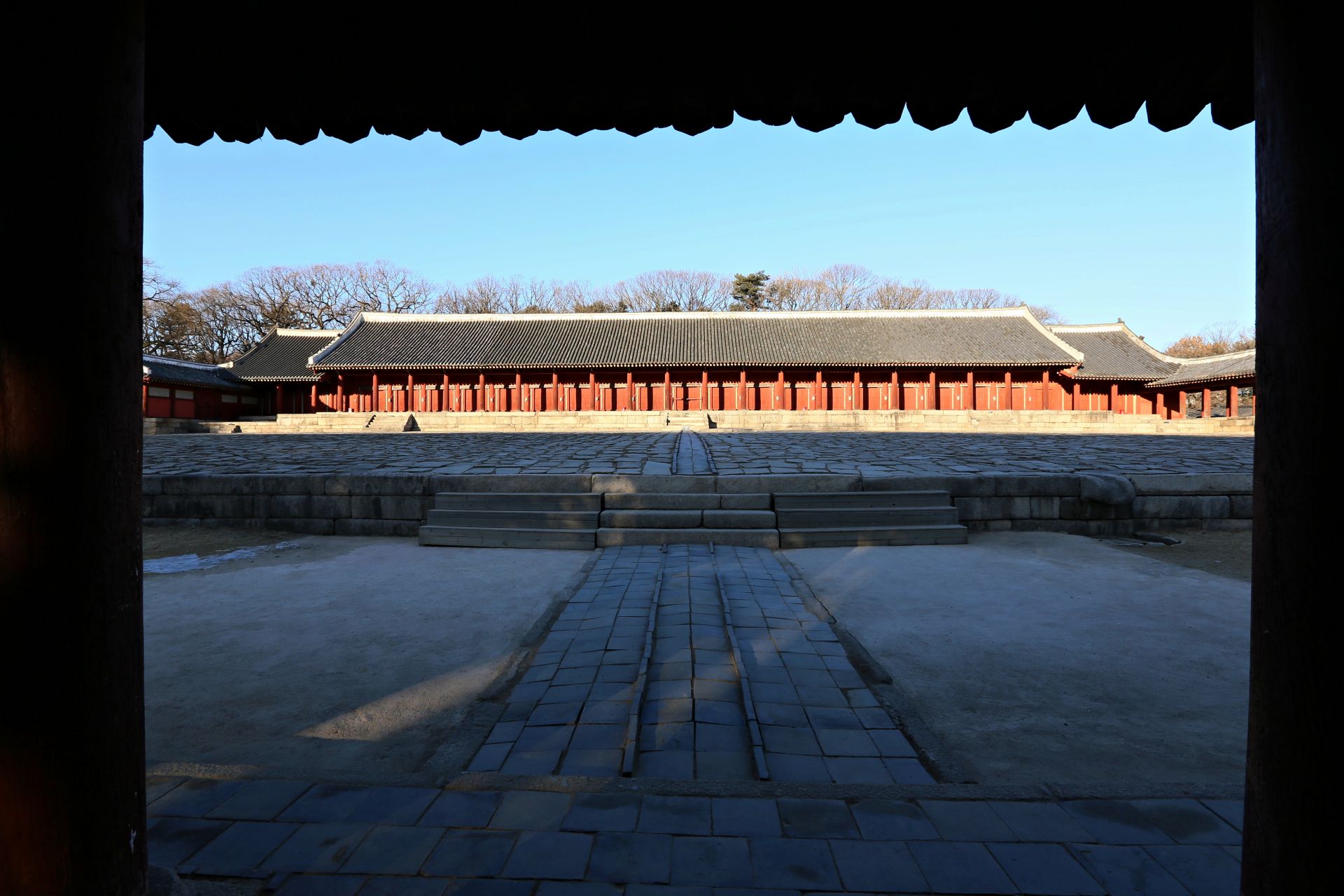
As the Seoul Metropolitan Government plans to permit the construction of high-rise buildings near Jongmyo, a UNESCO World Heritage Site, concerns have been raised in some quarters that redevelopment could damage the view of Jongmyo. In fact, some European cities have had their World Heritage status revoked due to indiscriminate redevelopment projects. However, it cannot be definitively stated that the heritage status of Jongmyo is threatened solely by the construction of high-rise buildings. This is because UNESCO's heritage evaluation criteria focus not on simple scenery, but on the preservation of unique value.
Heritage Sites Delisted Due to Excessive Redevelopment
Previously, on October 30, the Seoul Metropolitan Government announced the 'Decision on the Sewoon Redevelopment Promotion District and District 4 Redevelopment Promotion Plan.' The core of this plan is to change the maximum building height in Sewoon District 4 of Jongno, Seoul, from 55 meters along Jongno and 71.9 meters along Cheonggyecheon to 101 meters along Jongno and 145 meters along Cheonggyecheon. As a result, there is now a possibility that a high-rise building up to 145 meters tall could be constructed near Jongmyo.

Landowners in the area have opposed the National Heritage Administration's objections to the redevelopment project of Sewoon District 4 near Jongmyo, a UNESCO World Heritage Site, stating, "If the National Heritage Administration makes redevelopment impossible, we will hold them accountable for unfair administrative actions and seek civil and criminal liabilities such as damages and abuse of authority." The photo shows Jongmyo and Sewoon District 4 in Seoul. Photo by Yonhap News Agency
원본보기 아이콘However, some have expressed concerns that the redevelopment project could damage the view of Jongmyo. On November 7, Minister of Culture, Sports and Tourism Hwee Young Choi stated, "Jongmyo is a sacred heritage site enshrining the spirit tablets of the Joseon royal family and holds symbolic value as Korea's first UNESCO World Heritage Site," adding, "The current situation, which could damage this value, is deeply concerning." He also mentioned, "We will revise relevant laws such as the Act on the Preservation and Utilization of Cultural Heritage and special laws."

Minister of Culture, Sports and Tourism Hwee Young Choi and Heo Min, Director of the National Heritage Administration, visited Jongmyo Shrine in Seoul on the 7th to inspect the situation regarding the Supreme Court ruling on the ordinance easing development regulations outside the historical and cultural environment preservation area. Photo by Yonhap News Agency
원본보기 아이콘In practice, UNESCO sometimes revokes existing registrations after review if the value of a heritage site is determined to have been damaged. The most recent site to lose its heritage status was the Liverpool Maritime Mercantile City in the United Kingdom. This area was recognized as a heritage site for preserving docks and ports from the 18th and 19th centuries during the British Empire, but its status was revoked in 2021. The UNESCO World Heritage Committee (WHC) explained that the reason for delisting was that "the attributes conveying its outstanding universal value have been irreversibly lost" due to the construction of high-rise buildings and football stadiums in Liverpool since the early 2010s.

The former appearance (above) near Liverpool Port, designated as a World Cultural Heritage site, and the current state undergoing redevelopment. Screenshot from the UNESCO website
원본보기 아이콘The Arabian Oryx Sanctuary in Oman, home to the critically endangered Arabian oryx, was also granted World Heritage status in 1994 but was delisted in 2007. This was because the Omani government reduced the sanctuary's area by 90 percent for the development of oil and other natural resources, leading to the loss of its value. In 2009, the Dresden Elbe Valley in Germany was removed from the heritage list due to the construction of a bridge.
'Protective Measures' Are Key to Preserving Heritage Value
However, not all redevelopment projects lead to the delisting of heritage sites. Westminster Abbey in London, the capital of the United Kingdom, has maintained its heritage status since 1987. Despite being the economic and political center of Britain and having dense clusters of 200- to 300-meter-tall high-rise buildings just 1-2 kilometers away, its value continues to be recognized.
The reason for UNESCO's differing judgments lies in the criteria for evaluating heritage sites. UNESCO assesses heritage through indicators such as outstanding universal value, authenticity and integrity, and future protection and management plans. Before constructing high-rise buildings near Westminster Abbey, the London city authorities consulted with UNESCO and added relevant guidelines to London’s construction regulations, such as "ensuring that the landscape and outstanding value of the heritage site are not negatively affected by development."

Although high-rise buildings hundreds of meters tall have been constructed near Westminster Abbey, it has been recognized that the value was maintained by pursuing a landscape that harmonizes with the cultural heritage. Official website of Westminster Abbey
원본보기 아이콘In contrast, Liverpool, which lost its heritage status in 2021, was found to have lacked sufficient cooperation with UNESCO during the redevelopment process. In its report on the "Liverpool Maritime Mercantile City Decision," UNESCO stated, "We have repeatedly requested measures to protect the heritage value in relation to Liverpool's urban development," and explained that "due to indiscriminate management and supervision of development around the heritage site, as well as regulations, the site's universal value was severely damaged and irreversibly lost," which led to its delisting.
Protecting the Value of Jongmyo Is Crucial ... Seoul Mayor Oh Se-hoon: "Excessive Concerns... Its Value Will Be Enhanced"
Ultimately, whether Jongmyo retains its heritage status depends on how well its value is protected during the redevelopment process. In this regard, Seoul Mayor Oh Se-hoon stated at a briefing on November 7, "The claim that redevelopment could damage Jongmyo's value is excessively overstated," adding, "On the contrary, we will make Jongmyo's value stand out even more. By creating a green corridor from Namsan to Jongno, we will enhance ecological accessibility to Jongmyo and thereby increase its historical and cultural value."

Seoul Mayor Oh Se-hoon is looking at the surrounding view during an on-site briefing related to the redevelopment of Sewoon District 4 held on the rooftop of Sewoon Shopping Center in Jongno-gu, Seoul, on the 7th. Photo by Yonhap News
원본보기 아이콘Mayor Oh emphasized, "As long as discussions continue through dialogue, it is entirely possible to achieve both urban spatial innovation and respect for cultural heritage," adding, "Jongmyo is at the heart of Seoul, but it has long been neglected. Now is the time to seek new changes where history and the future coexist."
-

Reporter Lim Juhyeong skepped@asiae.co.kr
-
Edit Kim Yumi ymkim91@asiae.co.kr
© The Asia Business Daily(www.asiae.co.kr). All rights reserved.
!["Please Help Us": How Much Do Those Bowing Deeply for Your Vote Really Earn? [Data Pick]](https://cwcontent.asiae.co.kr/asiaresize/323/2026052010120870131_1779239528.png)