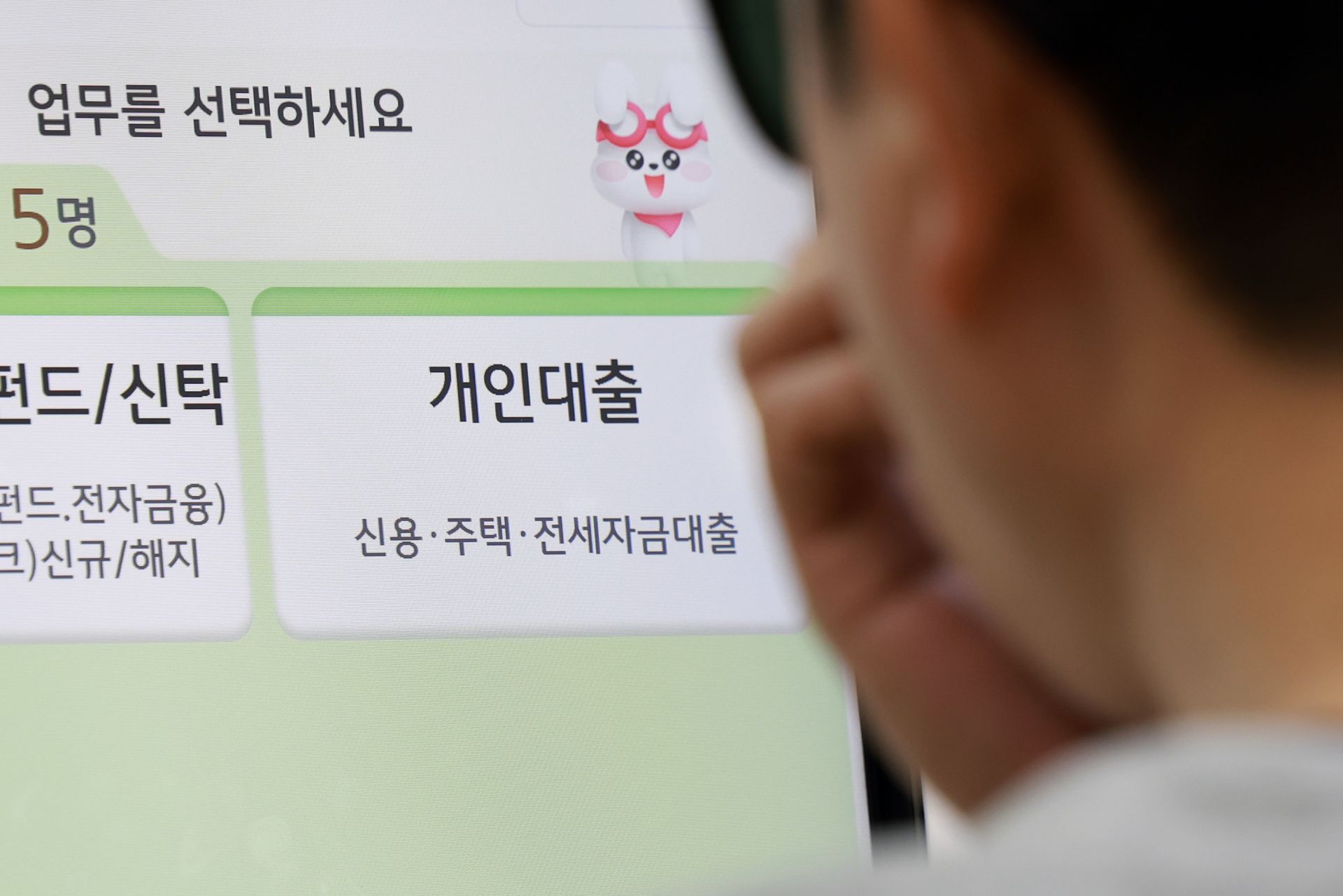
It is expected that obtaining household loans from banks will remain difficult in the fourth quarter of this year.
According to the results of the "Financial Institution Lending Attitude Survey" conducted by the Bank of Korea on loan officers at financial institutions, the comprehensive lending attitude index for banks in the fourth quarter was -14, marking a negative figure for the third consecutive quarter. A negative index indicates that more financial institutions responded that they would tighten lending standards rather than ease them.
Survey of Financial Institution Loan Officers... Fourth Quarter Lending Attitude Index at -14
By borrower type, the lending attitude index for corporate loans shifted to a majority of responses indicating easing, both for large corporations and small and medium-sized enterprises (SMEs). The index for large corporations improved from 0 in the third quarter to 6, and for SMEs from -6 to 3. This means that more banks responded that they would ease lending conditions compared to the previous quarter.
In contrast, for household loans, more respondents indicated that they would apply stricter standards. The index for household mortgage loans was -28, and for general household loans, it was -19. Although the degree of tightening was less than the previous quarter's -53 and -36, respectively, more respondents still indicated tightening rather than easing.
A Bank of Korea official stated, "Due to the impact of the June 27 and subsequent measures, lending attitudes for household loans, including both mortgage loans and unsecured credit loans, are expected to tighten." The government, through the June 27 and October 15 measures, reduced the total household loan targets for banks in the second half of this year, imposed limits on mortgage loan amounts, and raised the stress interest rate.
Household Mortgage Loans at -28... Easing of Lending Conditions for Large Corporations and SMEs
Loan demand in the fourth quarter is also expected to decrease, mainly for housing-related loans. The comprehensive loan demand index for domestic banks was -5, maintaining the downward outlook from the previous quarter (-6). This is attributed to an expected contraction in household mortgage loan demand, which was recorded at -31. Banks expect demand to decline as the government's household debt management policy continues. On the other hand, demand for general household loans, such as unsecured credit loans (-6 to 0), is expected to increase slightly.

Corporate loan demand is expected to increase for both large corporations and SMEs, driven by needs for operating funds and liquidity. The loan demand index was 11 for large corporations and 19 for SMEs. In particular, the index for SMEs showed a significant increase from the previous quarter's 8.
The credit risk for corporations and households in the fourth quarter, as anticipated by domestic banks, is expected to decrease compared to the previous quarter but remain at a high level. The comprehensive credit risk index was 25, down from 28 in the previous quarter. The credit risk index for SMEs was 28, lower than the previous quarter's 33, but concerns about credit risk remained higher for SMEs than for large corporations or households. The index for large corporations was 11 and for households 22, both maintaining the previous quarter's levels.
A Bank of Korea official stated, "Credit risk for corporations, especially SMEs, is expected to remain high due to ongoing uncertainties in domestic and global economic conditions and concerns over declining profitability caused by sluggish business performance. For households, concerns over deteriorating soundness may persist, particularly among vulnerable borrowers."
Non-Bank Financial Institutions Expected to Maintain Tightening Stance on Lending
For non-bank financial institutions, all sectors except life insurance companies are expected to maintain a tightening stance on lending. Credit risk is also expected to remain high, especially among savings banks and mutual finance institutions. Loan demand is expected to weaken slightly, mainly for corporate facility funds and housing funds.
A Bank of Korea official stated, "Amid ongoing uncertainties in domestic and global economic conditions, the trend of tightening lending attitudes will continue due to strengthened household debt management and high delinquency rates. Credit risk is also expected to remain high due to concerns about borrowers' declining debt repayment capacity."
Meanwhile, this survey was conducted from the 1st to the 15th of last month, targeting a total of 203 financial institutions, and examined the trends of the past three months and the outlook for the next three months. Domestic banks conducted an additional survey following the October 15 real estate measures.





![[Report] "A Culinary Destination with a View of Gyeongbokgung"... Kim Dong-sun's High-End Dining Takes Over Gwanghwamun](https://cwcontent.asiae.co.kr/asiaresize/304/2026042114562634571_1776750985.jpg)
![[Gallery Stroll] Red Robe, Black Lines... Danjong Returns with the Face of Wounds](https://cwcontent.asiae.co.kr/asiaresize/304/2026042014183532691_1776662315.jpg)