Ruling Party Struggles to Contain Fallout from Real Estate Measures

Democratic Party Alarmed by Public Backlash... Seeks to Ease Tensions by Relaxing Excess Profit Recapture System
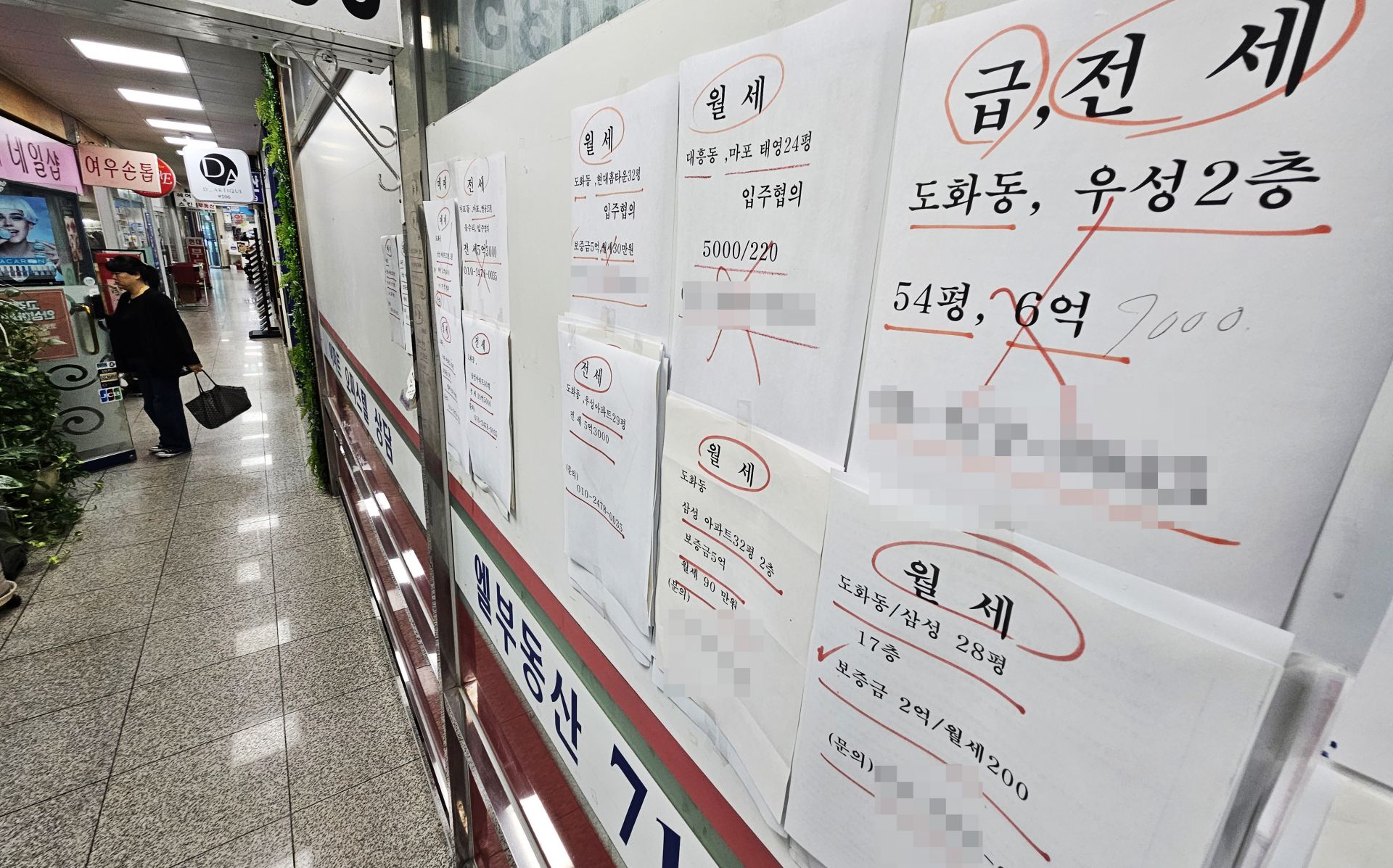
The Democratic Party of Korea, after launching the Housing Market Stabilization Task Force in response to the October 15 real estate measures, is now considering not only relaxing but also abolishing the reconstruction excess profit recapture system-a policy originally pushed by conservative administrations. This move is part of broader efforts to address the situation. The sharp rise in housing prices in Seoul and the metropolitan area since the October 15 measures, growing demands for increased supply, and controversies such as the remarks "Save money and buy a house when prices fall" and "1.5 billion won is a working-class apartment" have all contributed to worsening public sentiment toward the government and the Democratic Party.
According to the National Assembly on October 24, Democratic Party lawmakers on the Land, Infrastructure and Transport Committee are discussing ways to relax or abolish the excess profit recapture system, emphasizing the importance of housing supply. Bok Giwang, a Democratic Party member serving as the ruling party's secretary on the committee, told The Asia Business Daily in a phone interview, "We are not definitively saying that we will relax or abolish the excess profit recapture system. The intention is that if such a move, along with discussions on property taxes, could positively impact housing market stability and supply-not just benefit construction companies or specific individuals-then it should be considered. Discussions are ongoing among ruling party members of the committee."
The excess profit recapture system, introduced during the Roh Moo-hyun administration, requires that when the profit from reconstruction exceeds 80 million won per cooperative member, 10 to 50 percent of the excess amount is collected, depending on the total. The system was abolished and later revived under the Moon Jae-in administration. While it has not yet been enforced in practice, it is cited as a major obstacle to active reconstruction projects.

Jang Donghyuk, leader of the People Power Party, and Oh Sehun, mayor of Seoul, are inspecting the redevelopment promotion zone at Sanggye 5, Nowon-gu, Seoul, on the morning of October 24, 2025. Photo by Kang Jinhyung
원본보기 아이콘Lee Sungkyung Apologizes for "Buy a House When Prices Fall" Comment, But Atmosphere Remains Cold
Amid growing public anxiety and a series of controversial remarks within the ruling bloc, the party has been trying to reverse the mood by proposing new policy ideas. However, following the announcement of the measures, apartment prices in Seoul have continued to rise. According to the Korea Real Estate Board, apartment sale prices in Seoul rose by 0.5 percent in the third week of October compared to the previous week, with key Han River belt areas such as Seongdong, Gwangjin, and Gangdong districts jumping more than 1 percent-marking the highest increase since 2013.
In addition, following the implementation of strict lending regulations, First Vice Minister of Land, Infrastructure and Transport Lee Sungkyung has faced controversy over his remarks about "gap investment" and "buy a house when prices fall," while Representative Bok has come under fire for saying "an apartment costing around 1.5 billion won is a working-class apartment." Both have been forced to issue repeated apologies and clarifications. In the case of Vice Minister Lee, there have been calls for his resignation or dismissal not only from the People Power Party but also from within the Democratic Party.
However, at the Democratic Party's Supreme Council meeting that day, the issue of Vice Minister Lee's position was not discussed. Park Suhyeon, the party's chief spokesperson, told reporters, "There was no position on (calls for resignation) during the preliminary (private) Supreme Council meeting. The current criticism from the public, if you look closely, arose as the party tried to defend itself against excessive political attacks." Representative Bok also stated on SBS Radio, "I have already officially apologized for my careless choice of words, and I would like to take this opportunity to apologize once again."

Song Unseok, Floor Leader of the People Power Party, is attending the National Assembly inspection countermeasure meeting held at the National Assembly on October 24, 2025. Photo by Kim Hyunmin
원본보기 아이콘People Power Party Also Welcomes Move... Kim Doeup Calls for Swift Action
The People Power Party has also expressed support for the move. At the National Assembly inspection countermeasure meeting, Kim Doeup, Policy Committee Chair of the People Power Party, said, "After facing public criticism and backlash following the October 15 measures, the Democratic Party is now finally considering abolishing the excess profit recapture system, something the People Power Party has consistently advocated. Representative Kim Eunhye of our party has already sponsored a bill for the complete abolition of the system. Let's swiftly pass the abolition bill through bipartisan agreement during this regular session of the National Assembly."
However, since the relaxation or abolition of the excess profit recapture system has not yet been officially reviewed by the Democratic Party leadership or the party's Housing Market Stabilization Task Force, immediate bipartisan discussions are unlikely. Park Suhyeon, chief spokesperson of the Democratic Party, said, "The party's real estate task force has not even held its first meeting yet, so it is difficult for the leadership to respond to individual lawmakers' opinions or ideas from the Land, Infrastructure and Transport Committee at this stage. Representative Jeong Cheongrae has repeatedly emphasized that, for sensitive policies like real estate, the party's principle is to quietly and firmly support the government. The task force will take the lead, and discussions will proceed calmly."
!['WHO Declares International Public Health Emergency' Why the Untreatable 'Variant Ebola' Is More Deadly Than COVID-19 [Reading Science]](https://cwcontent.asiae.co.kr/asiaresize/323/2026052110164072055_1779326201.png)
!["Please Help Us": How Much Do Those Bowing 90 Degrees These Days Actually Earn? [Data Pick]](https://cwcontent.asiae.co.kr/asiaresize/323/2026052010120870131_1779239528.png)