Only the Parents Were Questioned... Hope Quickly Turned to Despair
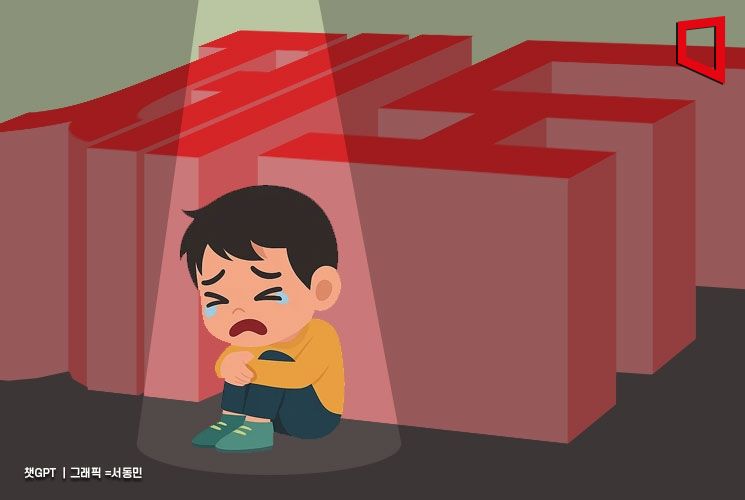
Child abuse victim Kwon Mo (37) still cannot forget the moment when, as a first-year middle school student, the police came to his house after a neighbor's report. At that time, he felt a glimmer of hope, thinking, "Maybe someone can finally protect me." However, the police only asked a few questions to his parents and left after hearing "nothing happened." There was no procedure to directly confirm the abuse with Kwon himself. The brief hope quickly turned into despair, and from that moment on, a wall was built that made it impossible for him to trust anyone.
Meeting Kwon near his home in Seo-gu, Incheon, he said, "The police didn't listen to my story. They just ended the case with a few formal questions and made no effort to check on the child's safety," adding, "In the end, the victim had to stay in the same house, and the abuse continued." Because the protection system only intervened once, the child's situation became even more vulnerable.


After the First Intervention Failed, the Parents Became More Secretive and Cunning with Their Violence
After outside intervention, the parents made their violence even more secretive and cunning. Kwon recalls, "I realized that if someone heard my screams and reported it, things would only get worse, so I couldn't make any sound." Even now, when he touches something hot, he instinctively flinches but cannot cry out-a habit that remains.
Despite several reports, nothing changed. The parents acted affectionate outside, but inside the house, even the smallest mistake created tension. Kwon said, "Even if I laughed outside, the moment I entered the house, my heart would pound as if it would burst."

Child abuse victim Kwon Mo (37) is being interviewed by Asia Economy near his home in Seo-gu, Incheon on the 22nd.
원본보기 아이콘For him, abuse felt like an "unbreakable addiction." Kwon confessed, "It seemed to stop for a moment, but it only got worse. When a report came in, the abuse would pause for that moment, but then it would start again." The intensity of the abuse increased day by day. Emotional violence escalated into physical violence, and sometimes threatening objects were used. The abuse that continued every night until dawn eventually drove Kwon out of the house.
Winter nights were especially brutal. Forced out of the house in thin clothing, Kwon had to curl up inside a playground slide covered with newspapers or warm his hands and feet with hot water in public restrooms to survive the cold. He recalled, "My ears and fingers hurt with a stinging pain. Only after my parents fell asleep in the early morning could I sneak back home." The traces of abuse were thoroughly hidden from the outside world, and the child had to endure those long winters alone.
"Handle It Yourself": Family's Indifference Deepened the Isolation
There was no one to rely on in his family either. Even after walking a long distance to his grandparents' house, the only response was, "You handle it yourself." Kwon said, "Even within the family, I felt like a criminal. There was nowhere to run, and I just felt like I didn't belong anywhere."

Faced with the reality that there was no help, he began to justify the abuse to himself. Kwon admitted that he created reasons to endure the pain, telling himself, "My parents act this way because we're poor. This happened because I did something wrong." As hope and despair intertwined, the child fell into even deeper isolation.
Lingering Aftereffects, Life Goes On
Scars remain on both Kwon's body and mind. The wounds caused by his parents' abuse have left permanent marks, and the memories from that time still affect him today. He said, "Even now, when I touch something hot, I can't scream. I just flinch. The reactions ingrained in my body during childhood still haven't disappeared."
Kwon still struggles with panic disorder and social anxiety, but he is trying to overcome them. He said, "I couldn't even ride one subway stop, but after practicing one stop at a time every day, now I can go anywhere with my eyes closed."
Even now, the hardest question for him is "What would you like to say to children in similar situations?" After a long pause, Kwon shook his head carefully. He said, "Abuse happens in the home where the child is supposed to live, and there is nowhere for the child to go." He added, "Telling them to endure or hang on is irresponsible and cruel. That's why I can't offer any words of comfort."

According to the Ministry of Health and Welfare's "2024 Key Child Abuse Statistics," there were 3,896 cases of repeated abuse and 2,962 victims. This accounts for 15.9% of the total 24,492 child abuse cases. Among the victims, 1,737 children (8.7%) experienced abuse again within one year.
※ The Civil Act has been amended so that even parents have no right to physically punish a child, and those who inflict physical, emotional, or sexual abuse on a child can face up to 10 years in prison. If you suspect child abuse, report it to 112, and if you have difficulties with child care or support, consult 129 (the Health and Welfare Counseling Center).
IndexChildren's Hospitals Becoming Rare
- Police Left After Hearing "Nothing Happened" From Parents... I Couldn't Trust Anyone
-

Reporter Park SeungUk ty1615@asiae.co.kr
-
Edit Kim Yumi ymkim91@asiae.co.kr
© The Asia Business Daily(www.asiae.co.kr). All rights reserved.