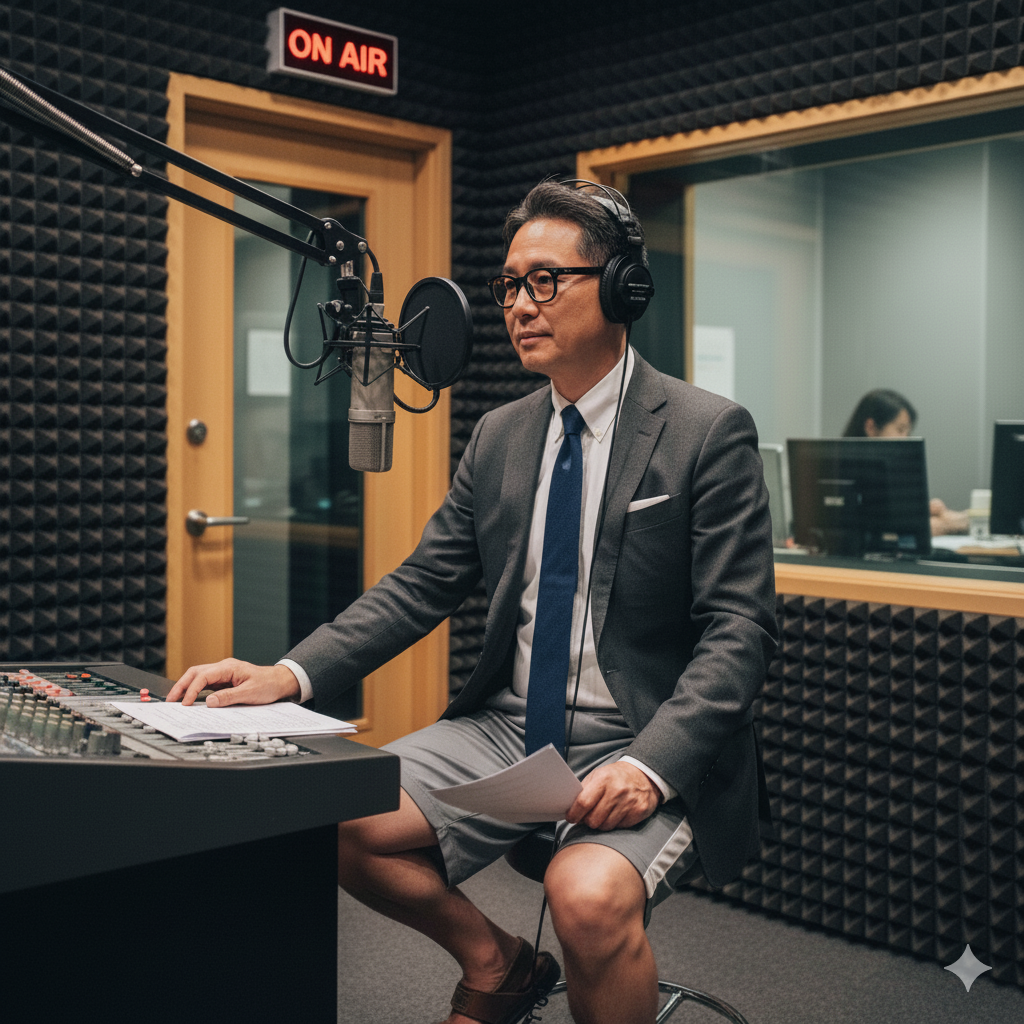
Recently, there has been a rise in deceptive and unfair advertisements featuring 'fake doctors' created by artificial intelligence (AI), who appear in videos and recommend certain pharmaceuticals and health supplements. As a result, consumers are being urged to exercise caution.

According to data obtained from the Ministry of Food and Drug Safety by Namhee Kim, a member of the National Assembly's Health and Welfare Committee from the Democratic Party of Korea, the number of online deceptive and unfair advertisements detected last year reached approximately 96,000 cases, including 15,027 cases related to food and 16,051 cases related to pharmaceuticals. This represents a 1.6-fold increase compared to 2021.
In the past, it was common for illegal advertisements to use ordinary people or stand-in actors to falsely, exaggeratedly, or deceptively promote products. However, recently, the method has evolved to use AI technology to create virtual medical professionals who deliver false information to consumers.

The obligation to disclose the use of AI in advertisements will take effect starting next year. The "AI Basic Act," which was passed by the National Assembly in December last year, is scheduled to be implemented in January next year. Until then, there is a lack of clear legal grounds to strongly regulate false advertisements produced by AI.
The Ministry of Food and Drug Safety has only recently identified the problem of false advertisements exploiting AI and has begun to respond. Under current laws such as the "Food Labeling and Advertising Act" and the "Cosmetics Act," advertisements in which doctors or pharmacists recommend products, or advertisements that may deceive or mislead consumers, are prohibited. The Ministry is also imposing sanctions on fake advertisements generated by AI based on these provisions.

However, although the number of deceptive or misleading advertisements detected among all false and unfair advertisements surged into the triple digits from 2023, false advertisements using AI are not classified separately and are instead included in the category of deceptive or misleading advertisements. While current laws allow for sanctions, the reliance on broad provisions means there are no specific clauses directly regulating AI-generated false advertisements, resulting in ambiguity in both enforcement and statistical management. As a result, there may be a regulatory blind spot for the spread of false advertisements until the AI Basic Act is implemented next year.
Assemblywoman Kim stated, "Although the AI Basic Act will be implemented next year, because the risks associated with food and other products are significant, it is necessary to establish penalty provisions in individual laws to clarify the grounds for enforcement." She added, "To improve the current system, I plan to propose an amendment to the Food Labeling and Advertising Act. Furthermore, I will raise this issue during the National Assembly audit to urge the Ministry of Food and Drug Safety to strengthen its management and supervision in order to protect the health and safety of the public."



![[Culture Interview] "Unifying the Fragmented Music Market... Super Fans Are the Next Competitive Edge"](https://cwcontent.asiae.co.kr/asiaresize/304/2026042817051344090_1777363513.jpg)