
24.8% of all deaths were due to cancer, and the cancer mortality rate increased by 4.5% compared to the previous year, reaching 174.3 per 100,000 people. Among these, lung cancer, liver cancer, and colorectal cancer ranked highest.
Last Year’s Suicide Rate and Number of Deaths in Korea
Highest Since 2011
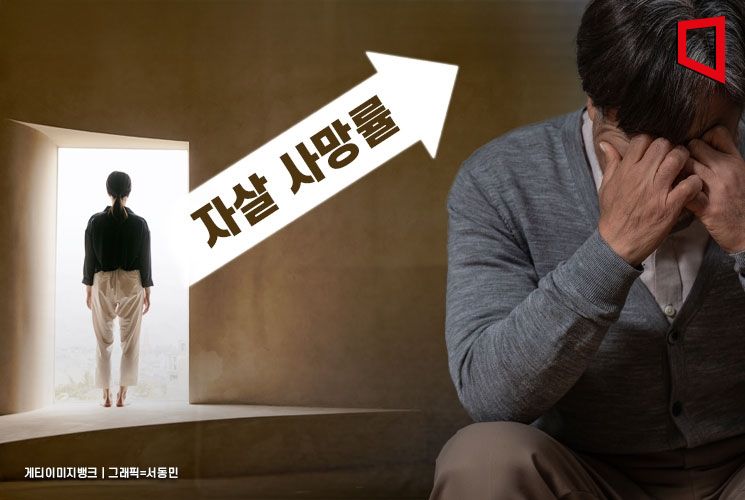
Last year, both the suicide mortality rate (the number of suicide deaths per 100,000 people) and the total number of suicides in Korea reached their highest levels since 2011. The suicide rate and the number of suicide deaths were the fourth highest on record. Notably, for the first time, suicide surpassed cancer as the leading cause of death among people in their 40s.
According to the “2024 Cause of Death Statistics” released by Statistics Korea on September 25, the suicide mortality rate last year was 29.1 per 100,000 people, a 6.6% increase from the previous year. The number of suicide deaths (14,872 people) also rose by 894 (6.4%) compared to the previous year, marking the highest level since 2011.
During a briefing, Statistics Korea explained, “Both the suicide rate and the number of suicides are the highest since 2011 and the fourth highest on record.” The agency added, “Although it is difficult for Statistics Korea to analyze the specific causes, according to the Suicide Prevention White Paper published in 2024, the main contributing factors were mental and physical health issues, followed by economic difficulties and problems related to physical health and disease.”
Looking at causes of death by age group
Suicide ranked first among those in their teens to forties,
while cancer was the leading cause of death for those aged 50 and older.
Specifically, among people in their 40s, cancer (25.9%) had been the leading cause of death until last year, but this year, suicide overtook cancer to become the most common cause of death. This is the first time suicide has ranked first among people in their 40s since statistics have been compiled. Last year, the suicide rate for people in their 40s was 36.2 per 100,000, a significant increase from 31.6 the previous year. Suicide rates also rose sharply for those in their 30s and 50s. For people in their 30s, the rate increased from 26.4 to 30.4, and for those in their 50s, from 31.6 to 36.2.
In 2024, the total number of deaths was 358,569, an increase of 6,058 (1.7%) from the previous year. Due to the aging population, people aged 80 and older accounted for 54.1% of all deaths, up 15.3 percentage points from ten years ago. Compared to the previous year, the number of deaths decreased among those aged 1-9 (-1.3%), teens (-3.9%), and twenties (-4.6%), but increased for those in their thirties and older.
By cause of death, cancer, heart disease, and pneumonia continued to be the top three causes, accounting for 42.6% of all deaths.

Among the elderly, deaths due to dementia and Alzheimer’s disease increased sharply. The number of deaths from dementia was 14,978, a 5.1% increase from the previous year. The dementia mortality rate was 29.3 per 100,000 people, up by 1.5 from the previous year; by gender, it was 39.5 for women, 2.1 times higher than for men. Last year, the Alzheimer’s disease mortality rate increased by 10.3% compared to the previous year. Statistics Korea stated, “With the rapid progression of population aging, deaths from Alzheimer’s disease are also expected to continue rising.”
-
Reporter Lee Eunjoo golden@asiae.co.kr
-
Edit Kim Hyunhee faith100@asiae.co.kr
© The Asia Business Daily(www.asiae.co.kr). All rights reserved.