Divergent Assessments on the New 'Korean Peninsula Peace Process'
Opposition: "Aligns with North Korea's demands... Effectively pursuing an end-of-war declaration"

Jeong Cheongrae, leader of the Democratic Party of Korea, is speaking at the Supreme Council meeting held at the National Assembly on September 24, 2025. Photo by Kim Hyunmin
원본보기 아이콘Ruling Party Praises: "The Strength of Korean Democracy Made Known to the World"
The ruling and opposition parties have offered contrasting evaluations of President Lee Jaemyung's proposal for a new framework for the Korean Peninsula peace process, the 'END (Exchange·Normalization·Denuclearization) Initiative.'
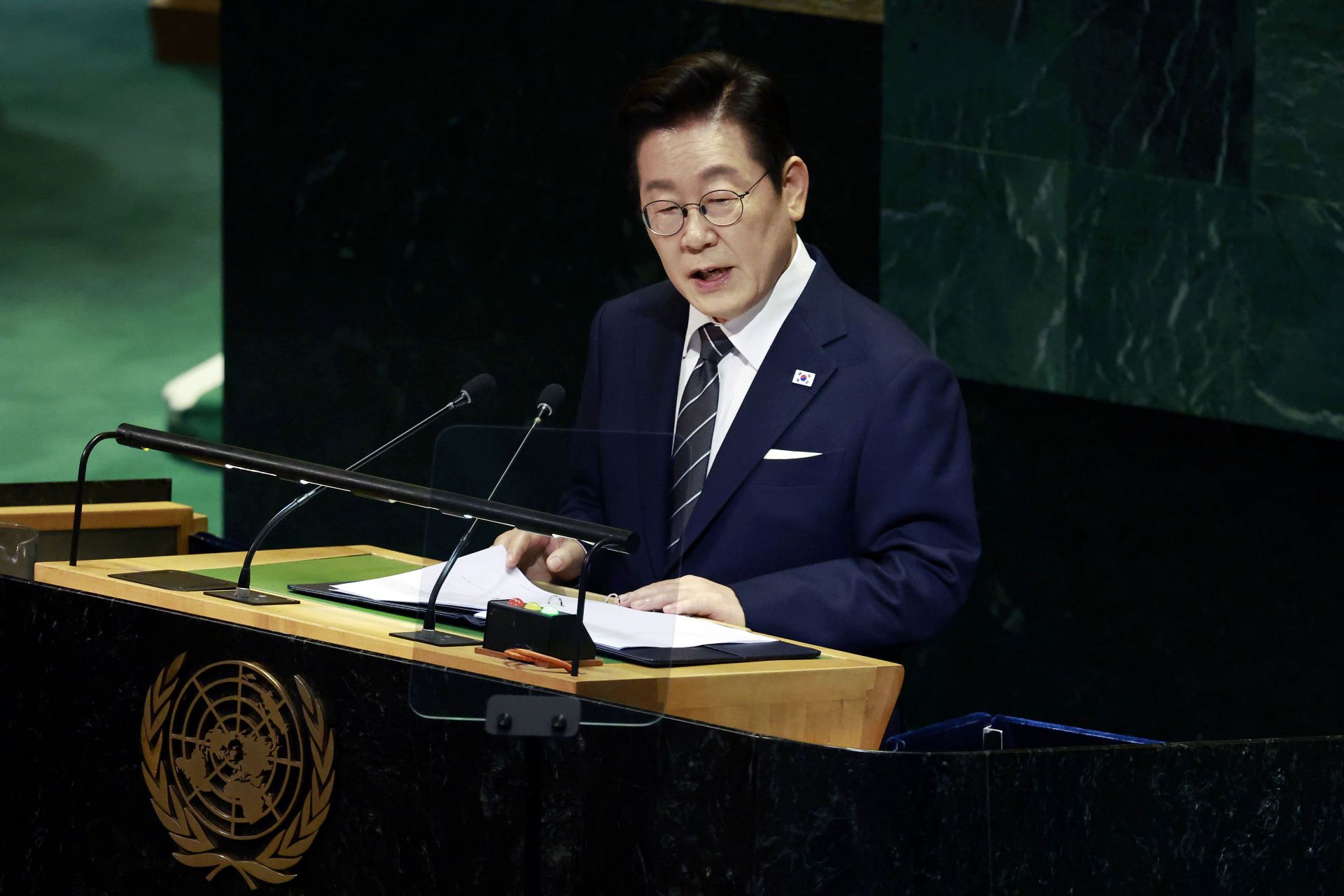
On September 24, Jeong Cheongrae, leader of the Democratic Party of Korea, commented on President Lee's keynote speech at the United Nations, stating, "He demonstrated to the world the resilience of Korean democracy, which overcame the 12·3 Martial Law," and added, "The END Initiative shows Korea's commitment and responsibility to end the Cold War on the Korean Peninsula and contribute to world peace."
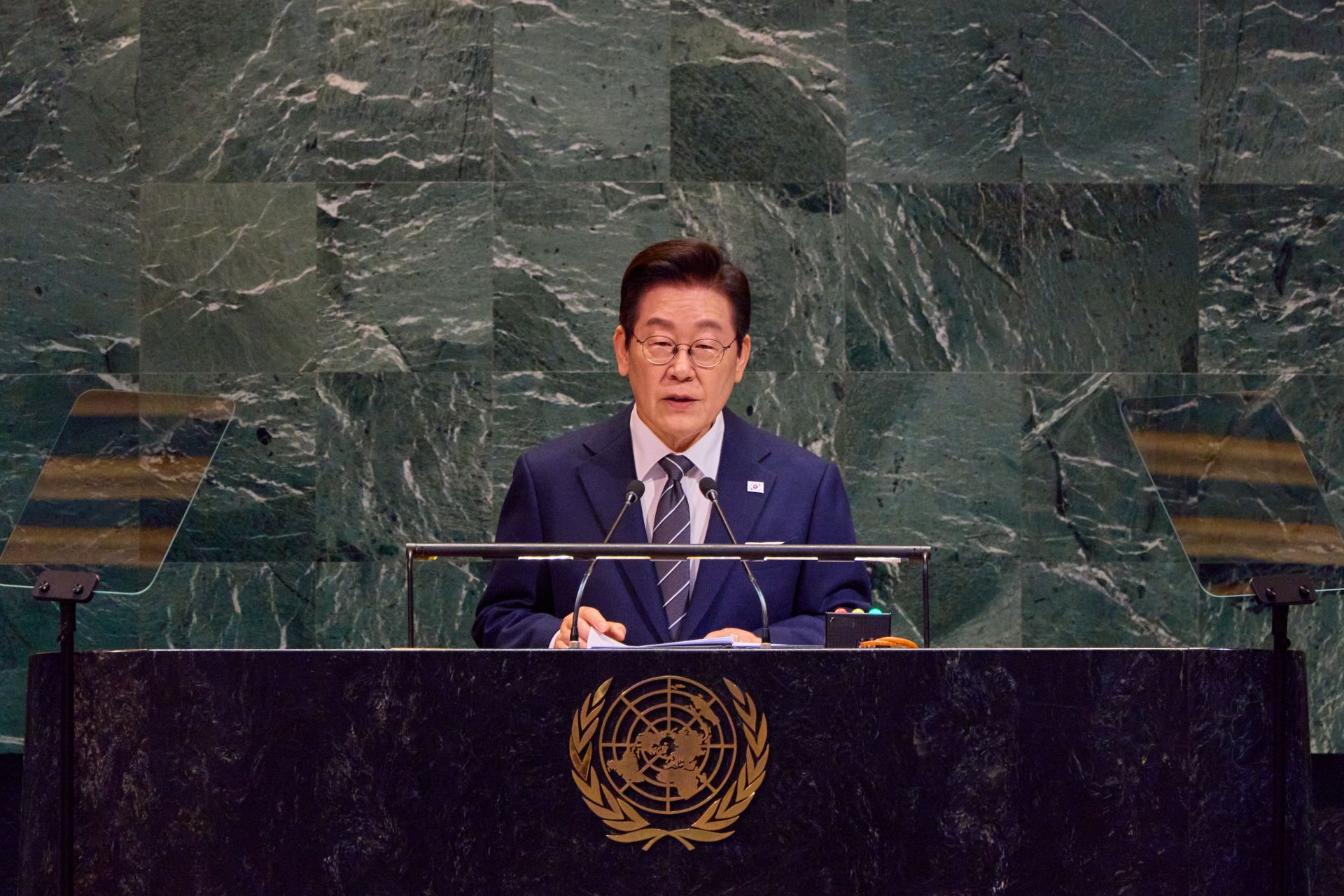
On September 23 (local time), at the 80th United Nations General Assembly, President Lee said, "Through comprehensive dialogue centered on Exchange, Normalization, and Denuclearization-'END'-we must end the era of hostility and confrontation on the Korean Peninsula and open a new era of peaceful coexistence and joint growth."
"A Realistic and Bold Proposal"... Positive Outlook on North Korea Dialogue
Some analysts have noted that the proposal is both realistic and bold, especially given the difficulty of achieving North Korea's denuclearization. Hong Ki-won, a member of the National Assembly's Foreign Affairs and Unification Committee from the Democratic Party of Korea, said on MBC Radio that, "In the past, normalization of relations was discussed on the premise of North Korea's denuclearization, but now the perception has shifted to proposing dialogue as long as North Korea does not further advance its nuclear or missile programs."
He also expressed a positive outlook on the possibility of North Korea engaging in dialogue. Hong stated, "By mentioning that a meeting with President Trump would be possible if the obsession with denuclearization is set aside, it suggests that North Korea is leaving room for dialogue with the United States," emphasizing, "It is important to secure a common understanding through extensive prior discussions and mutual recognition."

On the 24th, at the full meeting of the Steering Committee held at the National Assembly, Kim Byunggi, the floor leader of the Democratic Party and chair of the Steering Committee, and Song Eonseok, the floor leader of the People Power Party, are seated. 2025.9.24 Yonhap News
Photo by Yonhap News
Opposition Criticism: "No Signs of Coordination with the US" and "Effectively Pursuing an End-of-War Declaration"
Kim Gun, secretary of the People Power Party on the Foreign Affairs and Unification Committee, said on MBC Radio, "It was reaffirmed that there is no change in our position on North Korea's nuclear issue," but pointed out the lack of visible coordination with the United States as a shortcoming. Kim stated, "When the previous 'Bold Initiative' roadmap for North Korea was prepared, it was done in consultation with the US, and the US expressed support after the announcement," urging, "We must approach this issue with a shared understanding with the United States."
He also raised the need to prepare for possible provocations from North Korea. Kim argued, "The path to dialogue with North Korea has always passed through cycles of provocation," and insisted, "We must preemptively consult not only with the US but also with the international community on how to respond, keeping this possibility in mind."
There was also direct criticism of the END Initiative as effectively "pursuing an end-of-war declaration." Ahn Cheolsoo, a member of the People Power Party, wrote on social media that, "By placing denuclearization at the end, it effectively means pushing for an end-of-war declaration before denuclearization," and pointed out, "If exchange and normalization are pursued first while accepting North Korea's possession of nuclear weapons as a given, it will ultimately lead to the entrenchment of division and make unification impossible."
Ahn further argued, "The bigger problem is that this proposal exactly matches the demands of North Korea's Kim Jong Un," and warned, "The 'END' President Lee spoke of could be the end of unification, not the beginning of peace."
-

Reporter Choi Yuri yrchoi@asiae.co.kr
-
Reporter Lee Kimin victor.lee@asiae.co.kr
-
Edit Sung Kiho kihoyeyo@asiae.co.kr
© The Asia Business Daily(www.asiae.co.kr). All rights reserved.