Editor's NoteSince the adjustment of investigative authority between the prosecution and the police, criminal cases have been drifting for years amid a game of 'case ping-pong.' Victims become exhausted and are forced to withdraw complaints or settle, while suspects are left in a state of uncertainty. Nevertheless, the government and the ruling party are pushing forward with the so-called 'Four Prosecutorial Reform Bills,' including the establishment of the Public Prosecution Office and the Central Investigation Office, and are even seeking to strip away the supplementary investigation authority. The dark side of prosecutorial reform is evident everywhere, with delayed case processing, gaps in responsible investigations, and weakened human rights protections. What kind of system design can uphold the fundamental principle of separating investigation and prosecution while also guaranteeing victims’ rights and protecting the public from crime? Asia Economy examines the current state and limitations of prosecutorial reform and explores the future direction of the criminal justice system for the public.
"I even filed a request to avoid a particular investigator through the National Petition System." (Attorney A)
"After filing an objection to the case, it kept bouncing between the prosecution and the police, and my client eventually became so exhausted that they agreed to settle with the suspect." (Attorney B)
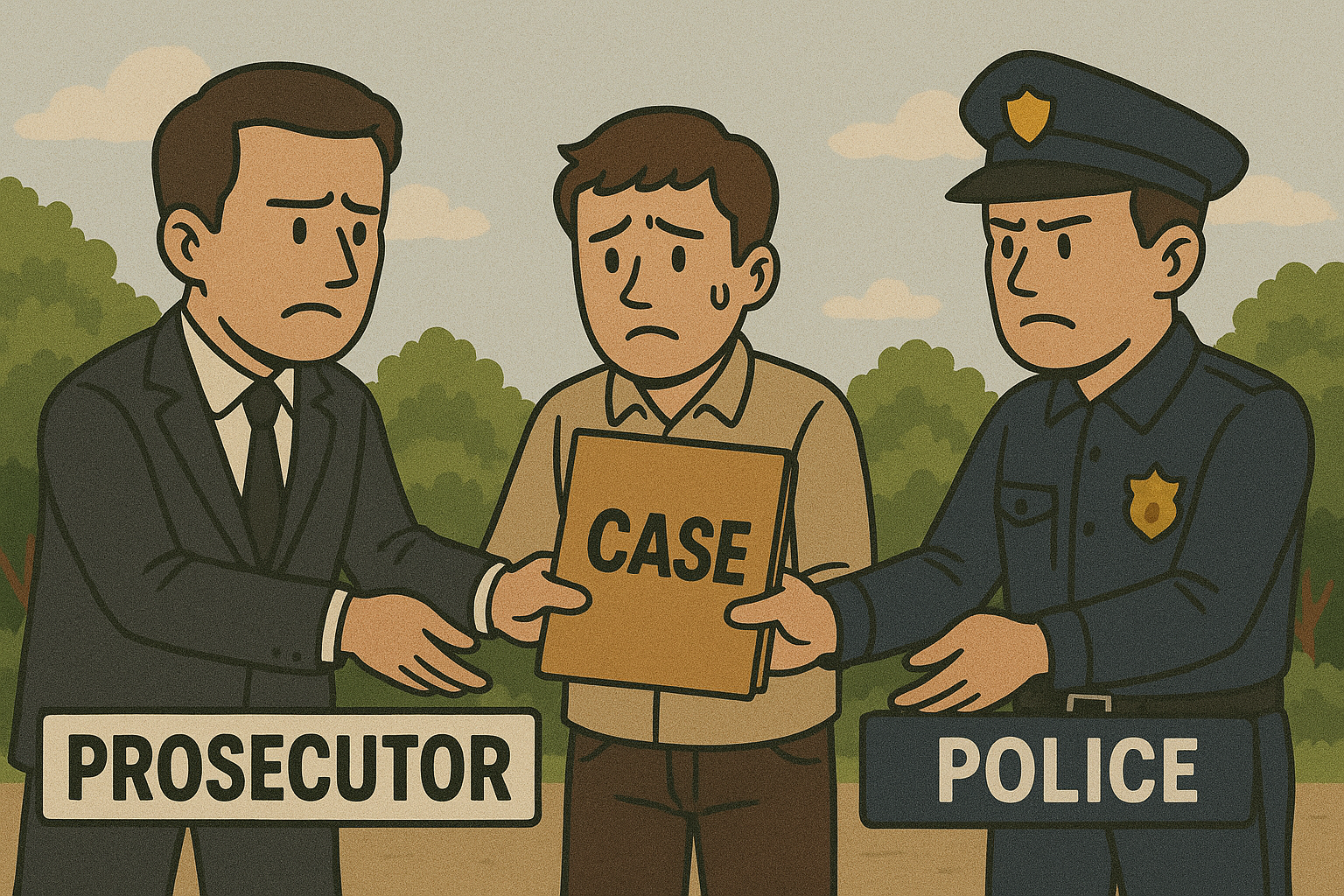
Since the adjustment of investigative authority between the prosecution and the police, victims of criminal cases have been suffering from endless 'case passing' between these two agencies. With the police now granted the authority to close investigations and prosecutors’ right to direct investigations abolished, cases are left drifting between the police and the prosecution. As a result, cases remain unresolved, never reaching a court judgment, and victims, worn out by the process, end up withdrawing their complaints or accusations.
According to the Supreme Prosecutors’ Office on the 1st, the average processing period for criminal cases-from initial police filing, through requests for supplementary investigation, to the prosecution’s final decision-increased significantly from 142.1 days in 2020 to 312.7 days last year. This is more than double the period before the adjustment of investigative authority.
Criminal Case Processing Period Average 142 days in 2020 Increased to 312 days last year More than doubled after investigation authority adjustment
When police decide not to prosecute Prosecutors request supplementary investigation Virtually no enforcement power Cases left neglected in the cabinet
Police 'investigation department' understaffed Victims also asked to collect evidence Photo by Getty Images Bank
Cases Are 'Reset,' Time Is 'Restarted'
Currently, in the criminal case process, if the police decide not to refer a case for prosecution, the victim can file an objection, and the prosecutor may request a supplementary investigation. However, these requests from the prosecution are virtually unenforceable, so it is common for police to simply shelve cases in a cabinet. If, during this process, there is a regular personnel transfer and the investigator changes, the case often has to be reinvestigated from the beginning, leading to endless waiting. In effect, cases are repeatedly reset and reinvestigated from scratch. Victims have no choice but to wait indefinitely for the police to process their cases. In some instances, attorneys have to plead with police investigators just to have the case reviewed by the prosecution and brought to a conclusion.
An attorney who previously served as a chief prosecutor said, "The first case I took on after opening my law office two years ago is still with the police. It’s not even a complicated case, but the fact that it hasn’t been resolved in over two years highlights the serious problems in the current criminal justice system. Both victims and suspects are plagued by anxiety for years, unable to live their daily lives properly."
"The Burden of Proof Falls on the Victim"
The fundamental cause of investigation delays lies in the fact that, except for cases subject to direct prosecution investigation, the police now handle all first-stage investigations and have the authority to close cases. In other words, the police control both the start and end of cases. The adjustment of investigative authority has concentrated cases with the police, but no corresponding increase in personnel or follow-up measures has been implemented. While the number of cases has grown exponentially, the number of staff handling them has remained nearly the same, leading to inevitable bottlenecks.
In the early days of the adjustment, police personnel were sometimes concentrated in investigation departments. However, as cases piled up, these departments quickly became undesirable assignments. Due to the nature of investigations, putting in more time does not reduce the workload; in fact, it only increases it. Officers face overwhelming workloads and a buildup of related complaints. This perception is now widespread within the police. One judicial police officer shared, "As the tendency to avoid investigations intensifies, departments now have to be staffed with investigators who have only two or three years of experience. Assigning cases to so-called 'veteran' investigators with more than ten years of experience has become as difficult as picking stars from the sky."
There are even cases where victims are asked to collect evidence themselves. In effect, the responsibility of proving the allegations is being shifted onto the victims. As a result, victims now hire attorneys from the police investigation stage. This practice has become entrenched not only for victims but also for suspects, who now routinely retain attorneys as soon as the police investigation begins. Naturally, legal costs are also rising. Another attorney noted, "The rate of retaining attorneys at the police stage has become much higher than at the prosecution stage."
IndexThe Stalled Investigation
"Case Shuffling" After Adjustment of Investigative Authority Between Prosecution and Police... Only Victims Suffer




!["Please Help Us": How Much Do Those Bowing 90 Degrees These Days Actually Earn? [Data Pick]](https://cwcontent.asiae.co.kr/asiaresize/323/2026052010120870131_1779239528.png)