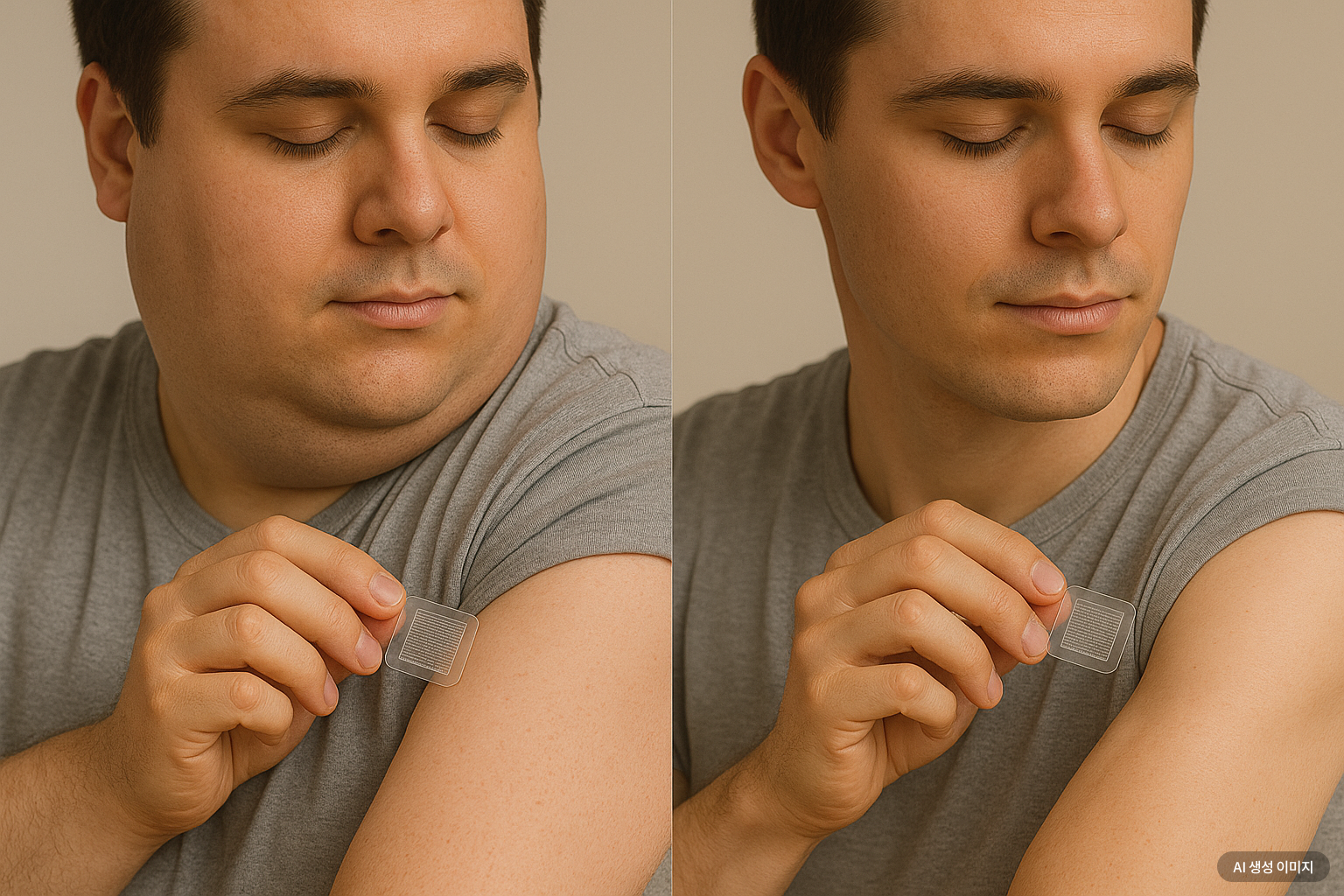
The domestic pharmaceutical and biotech industries are accelerating the development of microneedle (ultra-fine needle patch) technology, which is considered a next-generation drug delivery system (MDDS). This technology is attracting attention as an alternative that can reduce the pain and discomfort associated with injections and compensate for the low absorption rate of oral medications.
- Drug delivery using micro-needles one-third the thickness of a human hair
- Drug can be administered by attaching the patch to the skin
- Made from biodegradable materials → dissolves in the body
- Can be used for vaccines, obesity treatments, hormone therapies, etc.
- No cold chain required, enables mass production and self-administration → cost↓ accessibility↑


Microneedle Market Outlook
USD 620 million in 2019 → USD 1.24 billion in 2030 Annual growth rate of 6.5%
Pharmaceutical companies are competing to take the lead

Remaining Challenges
There are still no cases of product approval in the pharmaceutical field outside of cosmetics or quasi-drugs.
It is difficult to secure technology for uniform drug distribution within the patch and for the mass production of microneedle patches.
An industry insider stated, "There is a strong possibility that commercialization will become a reality before 2030."
According to Future Market Insights, a market research firm, the global microneedle market is expected to grow from USD 621.6 million (approximately KRW 867.1 billion) in 2019 at a compound annual growth rate of 6.5% to reach USD 1.239 billion (approximately KRW 1.7284 trillion) by 2030. As the market grows, companies such as Daewoong Pharmaceutical, Dong-A ST, JW Pharmaceutical, and Daewon Pharmaceutical are actively competing to secure technology in this field.
Microneedles are ultra-fine needles about one-third the diameter of a human hair. By attaching the patch to the skin, drugs can be delivered, which is why it is also called an "injectable patch." While conventional needles were used in the early stages of development, biodegradable needles that dissolve in the body are now being utilized. They are emerging as alternatives to injectable and oral medicines. If vaccines and other medications are made into patches, they can be mass-produced, do not require a cold chain for transport and storage, and do not need to be administered by healthcare professionals. However, there have been no cases worldwide of products being approved for pharmaceutical use outside of the cosmetics or quasi-drug sectors. This is due to the difficulty of developing technology to attach active drugs to the patch, ensure uniform drug distribution within the patch, and enable mass production of microneedle patches.
Daewoong Pharmaceutical is applying microneedle technology to growth hormone and GLP-1 (glucagon-like peptide-1) obesity treatments. Last year, it became the first in Korea to receive IND (Investigational New Drug) approval for a growth hormone microneedle patch Phase 1 clinical trial. This year, the company confirmed that the bioavailability (the degree to which the drug can be utilized in the body) of the semaglutide (the active ingredient in Wegovy) patch is over 80% compared to injections, far exceeding the average of existing technologies (30%). Daewoong has secured differentiated competitiveness through its proprietary platform "Clopharm," which enables the development of high-dose single patches and room-temperature distribution. This is expected to reduce cold chain costs and medical waste, drawing attention from an ESG (environmental, social, and governance) management perspective.
Dong-A ST also signed a joint development agreement with microneedle specialist company Juvis in 2023 and is preparing a GLP-1 obesity treatment patch formulation. If the patch formulation succeeds in the obesity treatment market, which relies heavily on injections, patient accessibility and treatment continuity are expected to improve significantly. Daewon Pharmaceutical is also developing an obesity treatment microneedle patch in collaboration with bio-venture Lapas and has already submitted an application for Phase 1 clinical trials to the Ministry of Food and Drug Safety.
JW Pharmaceutical, in collaboration with Theragen Etex Asia, is developing a microneedle patch for hair loss treatment. The goal is to overcome the low absorption rate of existing topical treatments and provide the convenience of self-administration.
An industry official said, "Microneedles are a next-generation technology that can overcome the limitations of both injections and oral medications. There is a strong possibility that commercialization will become a reality before 2030. Due to improved dosing convenience and treatment continuity, the speed at which domestic companies enter the market is expected to accelerate."
!["Please Help Us": How Much Do Those Bowing 90 Degrees These Days Actually Earn? [Data Pick]](https://cwcontent.asiae.co.kr/asiaresize/323/2026052010120870131_1779239528.png)