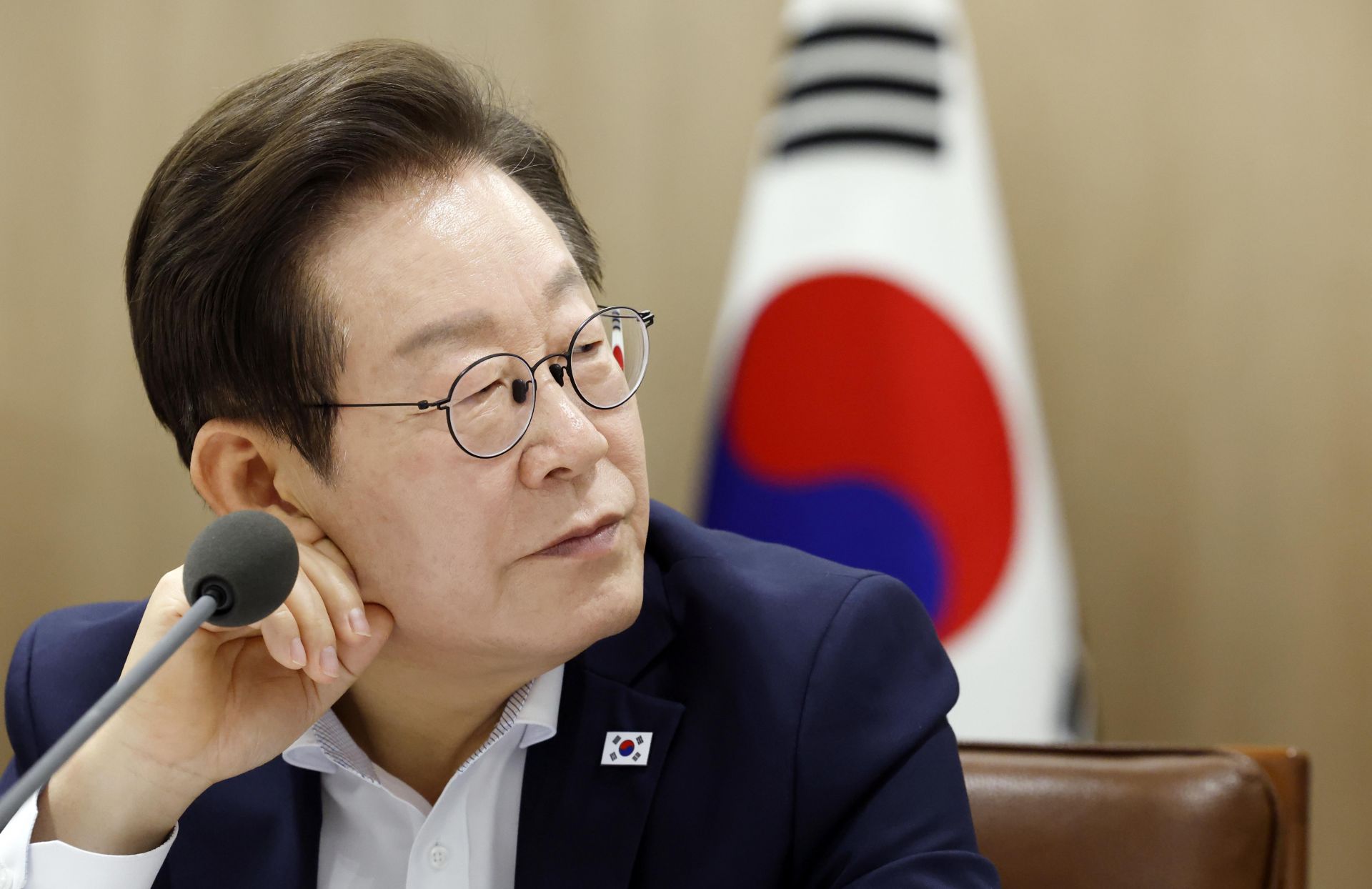
American experts have advised President Lee Jae-myung not to immediately correct President Donald Trump if he mentions incorrect figures or makes claims that differ from the facts regarding defense cost issues during the South Korea-US summit scheduled for the 25th (local time). This advice is due to the nature of the summit, which proceeds in real time like a 'reality TV show.' Since President Trump has referred to South Korea as a 'money machine,' it is expected that the issue of defense cost-sharing will be difficult to avoid.
"Even if he mentions incorrect figures, do not attempt to immediately correct him under any circumstances."
U.S. experts offer advice ahead of the South Korea-U.S. summit on the 25th
"It is unrealistic to expect real-time corrections"
Must also prepare for the possibility of impulsive and unexpected remarks"
Trump refers to South Korea as a 'money machine'
Defense cost-sharing issue also likely unavoidable
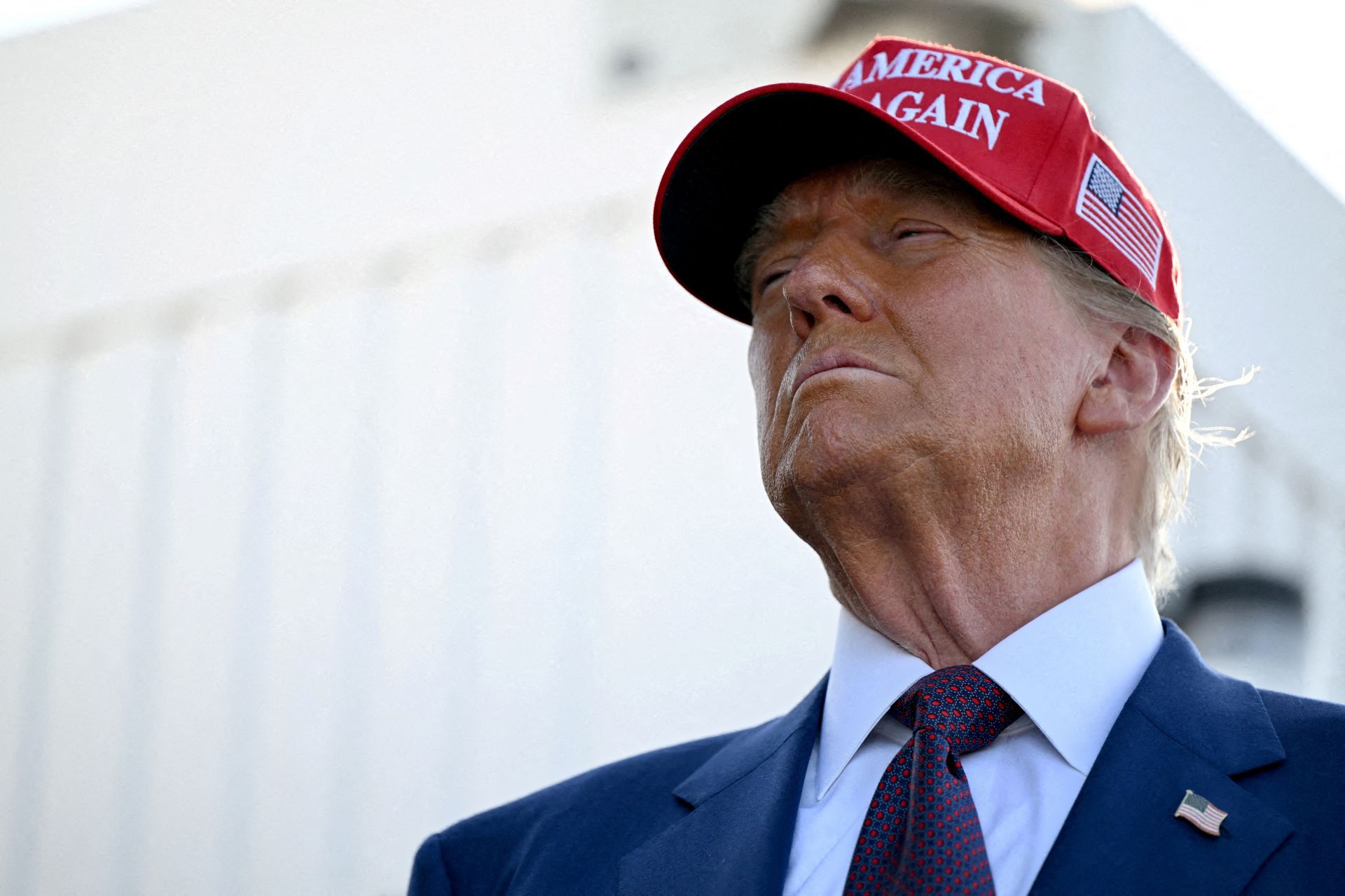
"Incorrect figures should be corrected by both sides after the summit"
Scott Snyder, President of the Korea Economic Institute (KEI), stated at a KEI-hosted seminar on the 21st that if U.S. President Donald Trump repeatedly brings up "incorrect defense cost figures" in front of the press during the South Korea-U.S. summit, it would be preferable for "both sides to correct them after the summit" rather than for President Lee Jae Myung to respond on the spot. During last year's presidential campaign, President Trump incorrectly stated that the number of U.S. troops stationed in Korea was 40,000, when the actual figure is about 28,500, while discussing the process of negotiating an increase in defense cost-sharing with South Korea.
Snyder said, "Even if President Trump makes incorrect remarks, it is unrealistic to expect real-time corrections," adding, "But it also cannot simply be ignored." He continued, "President Zelensky (of Ukraine) experienced a very uncomfortable moment in the Oval Office a few months ago, but he returned this week and had a fairly good moment," emphasizing, "What matters is not just what happens at that moment, but how you respond at the next meeting."

In President Lee's case, the situation differs from that of European leaders such as Ukrainian President Volodymyr Zelensky, as he must communicate through an interpreter. For this reason, Snyder pointed out that the difficulty of responding immediately to President Trump's remarks is both "an advantage and a disadvantage." In fact, some analyses suggest that the absence of an interpreter was a factor in the diplomatic fiasco last February, when President Zelensky was driven out of the White House amid insults. As Trump's aides pointed out that Zelensky "did not say thank you," Zelensky immediately retorted, "I said it several times," escalating tensions during the heated exchange. Regarding this, Japan's Nikkei newspaper commented, "If it had been a situation with a hostile counterpart, an interpreter would have been even more necessary."
Erius Dare, Director of Communications at KEI, also advised, "It is necessary to prepare for the possibility that President Trump may make impulsive or unexpected remarks regarding trade or North Korea that are completely different from, or even contradict, the achievements derived from existing bilateral agreements." He recalled that immediately after his first summit with then-President Moon Jae In in June 2017, President Trump tweeted that he would renegotiate the South Korea-U.S. Free Trade Agreement (FTA).

Expected agenda items include defense costs, China issues, and more
This summit is expected to focus primarily on discussions regarding defense spending, cost-sharing issues, the China issue, U.S. alliance modernization, and strategic flexibility. Victor Cha, Korea Chair at the Center for Strategic and International Studies (CSIS), also mentioned during a press briefing on the South Korea-U.S. summit on the 20th that President Trump is highly likely to demand solutions to the U.S. trade deficit with South Korea and South Korea's position in the event of a China emergency.
Ellen Kim, Director of Academic Affairs at KEI, predicted, "President Trump tends to actually try what he says," and considering that he has repeatedly raised the issues of defense spending and cost-sharing, "he may try to make these issues the achievements of this summit." She added, "There is also a strong possibility that he will ask about the China issue."
Regarding the discussion of "alliance modernization," which is also being mentioned as an agenda item, she said, "The overall U.S. (Trump administration's) defense strategy has not yet been announced," predicting that only a general direction for alliance modernization will be presented, rather than anything concrete. She said, "It is likely to come out in the form of a joint vision statement, such as 'the need to upgrade a strengthened alliance' or 'a strengthened alliance is very useful in dealing with increasingly complex security situations.'"
Director Dare also noted, "Strategic flexibility is an element discussed during negotiations, and it is still unclear how it will actually combine with (defense costs and other issues)," adding, "It is part of a process led by the Department of Defense through its defense strategy."
!['WHO Declares International Public Health Emergency' Why the Untreatable 'Variant Ebola' Is More Deadly Than COVID-19 [Reading Science]](https://cwcontent.asiae.co.kr/asiaresize/323/2026052110164072055_1779326201.png)
!["Please Help Us": How Much Do Those Bowing 90 Degrees These Days Actually Earn? [Data Pick]](https://cwcontent.asiae.co.kr/asiaresize/323/2026052010120870131_1779239528.png)